Comparison of the top-of-the-line robot vacuum cleaners Roborock S7 and Roborock S6 MaxV
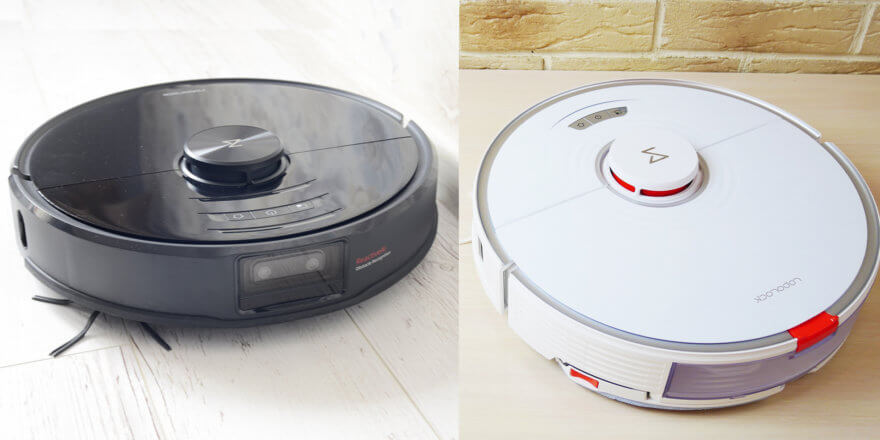
Hello to all readers of the project! We recently tested the new 2021 product – the flagship Roborock S7, which went on sale in Russia in June of this year. The robot proved to be quite interesting and one of the best in its price segment, thanks to its advanced features and specifications. After reading the review, many people began asking which was better: the new Roborock S7 or the Roborock S6 MaxV, which went on sale exactly a year earlier, in the first half of 2020. Based on the test results, I compared these two robots and expressed my opinion on which is better for certain conditions. This time, I won't be awarding points; I'll simply compare them based on key parameters and summarize the results. So, let's get started!
Price
First, let's compare the prices of robot vacuum cleaners. The new Roborock S7 costs $430 at the time of writing, while the price Roborock S6 MaxV fluctuates between $460-$500.
Roborock S7:
Roborock S6 MaxV:
Both robots are premium and not cheap, but the Roborock S7 is still the more affordable option. Keep in mind, however, that it doesn't include a self-cleaning station; it comes with a standard charging base.
Design
Now let's visually compare these robot vacuums and see how they differ. Both have three mechanical control buttons on the top and a lidar sensor equipped with a mechanical button to prevent the vacuum from getting stuck under furniture.
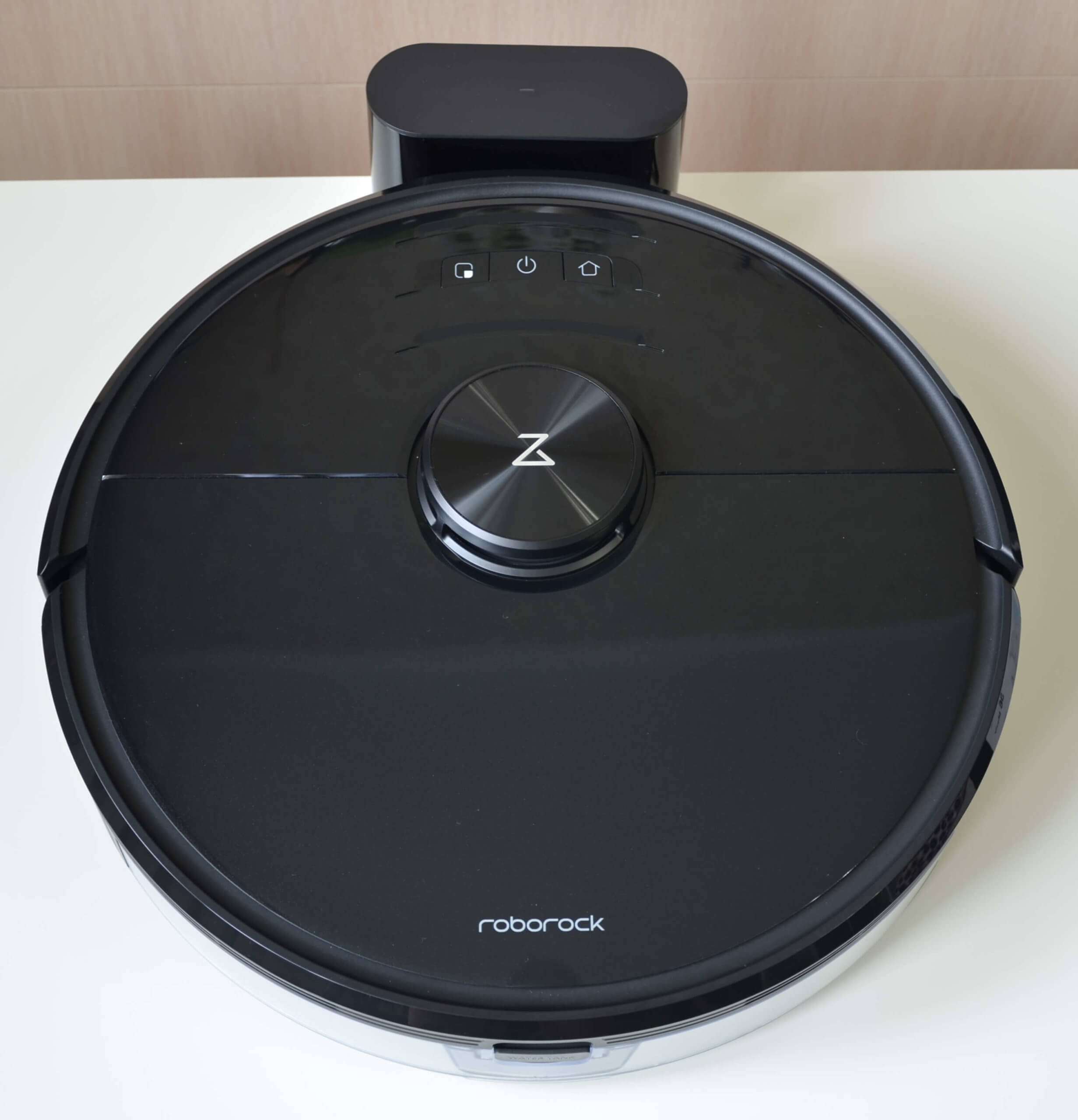
Top view of the S6 MaxV
The updated Roborock S7 has a new indicator light on the top that glows in different colors, indicating the robot vacuum's status. Additionally, holding the local mode button locks the control panel to prevent accidental activation by children or pets.
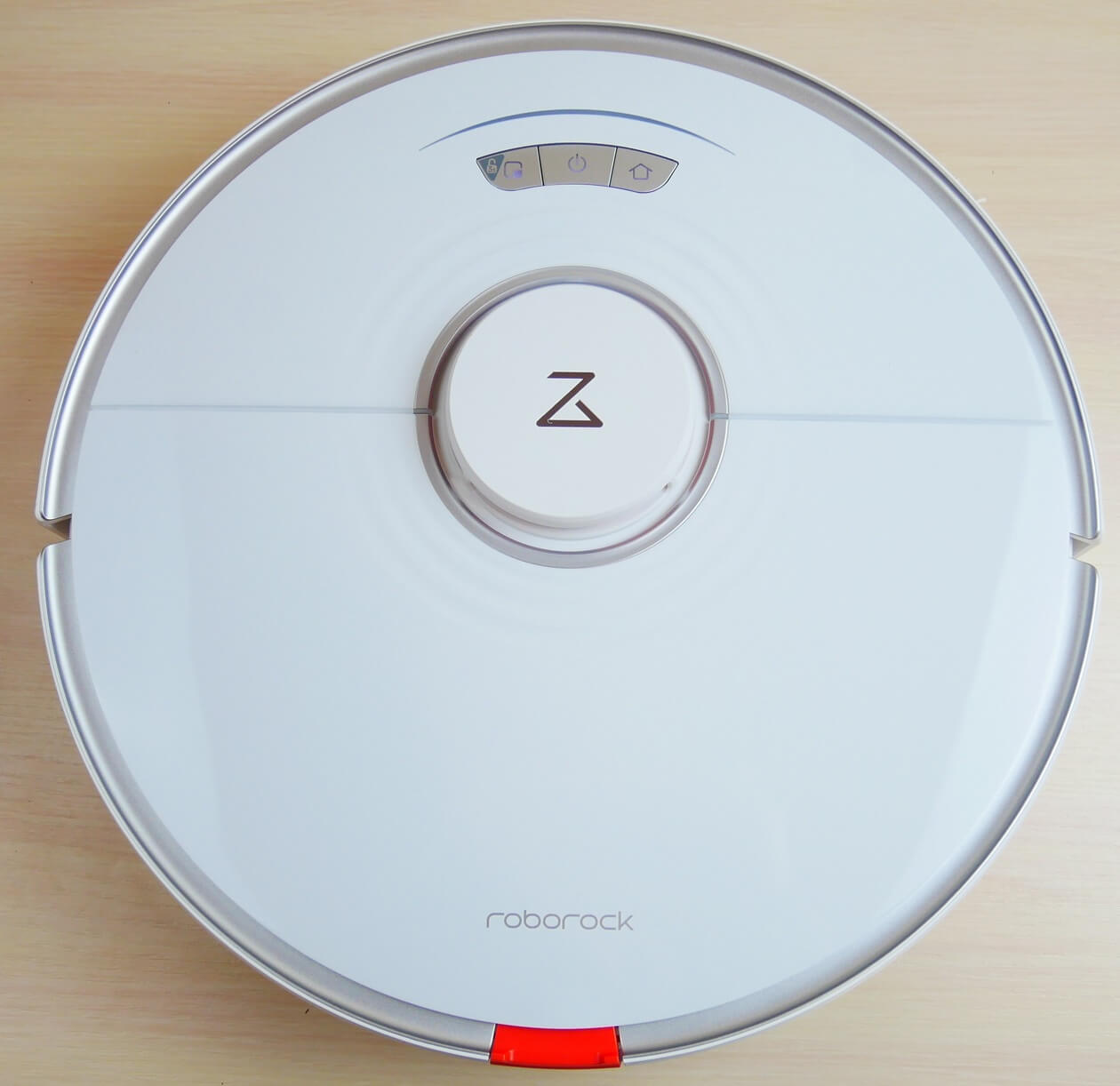
Top view of S7
Both robots have a single wall sensor on the right side of their bumpers. The Roborock S6 MaxV has a central camera for recognizing objects on the floor, which is one of the key highlights of this comparison.
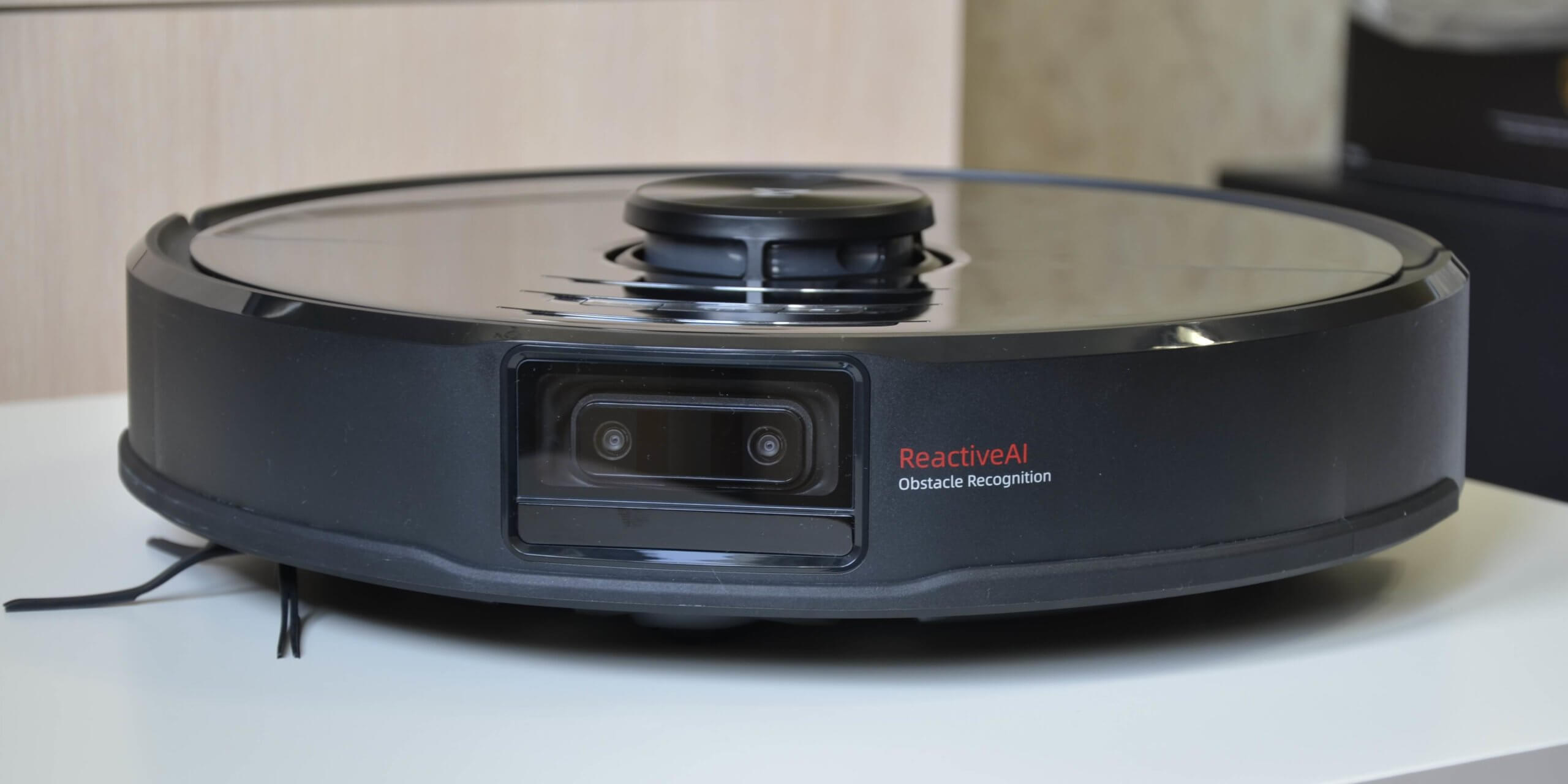
Front view, camera
The Roborock S7 has an obstacle detection sensor in this location.
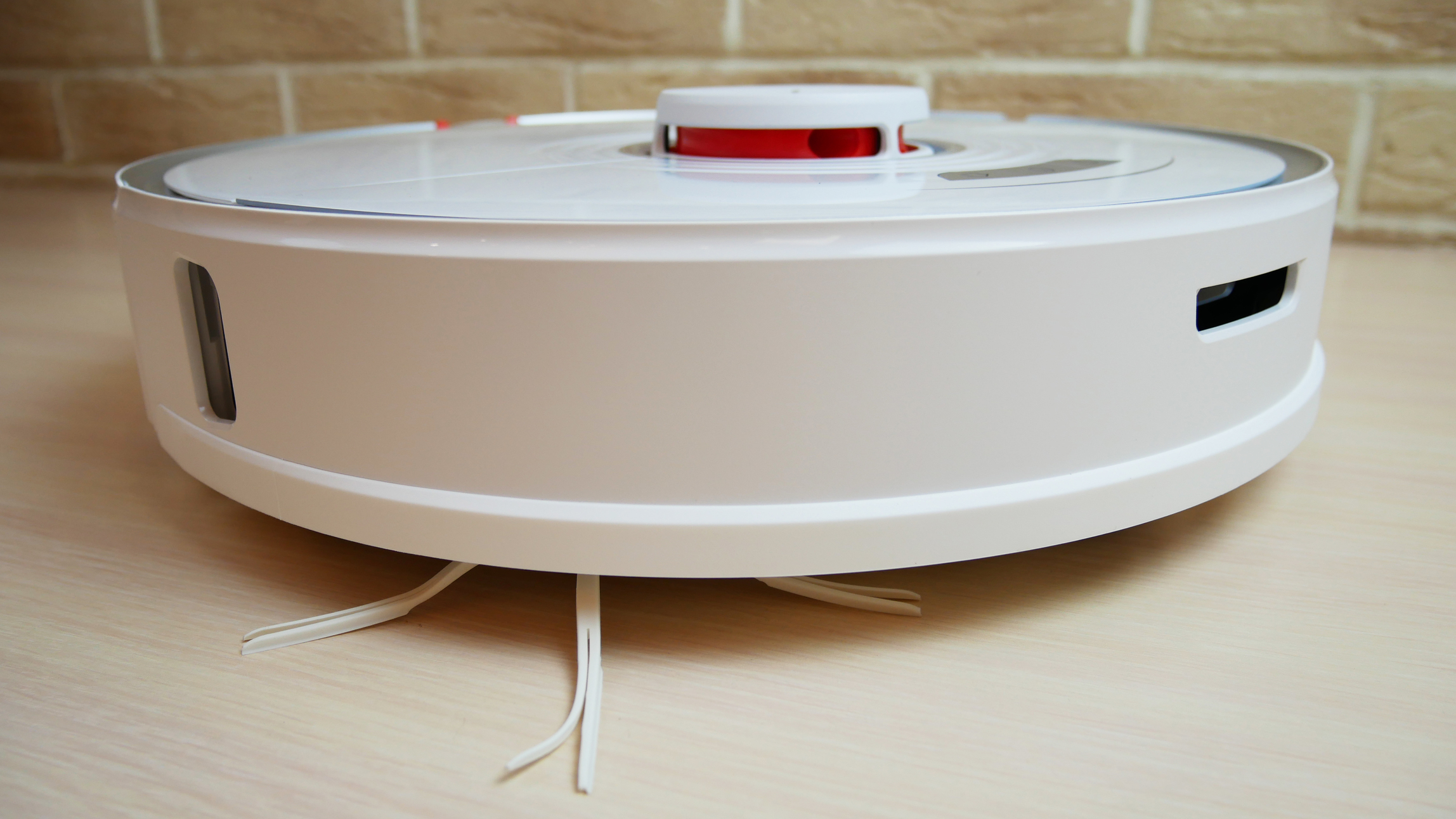
Side view, S7
In both cases, the dust collector is located under the top cover, and the water tank is removed from the back; in principle, there are no significant differences.
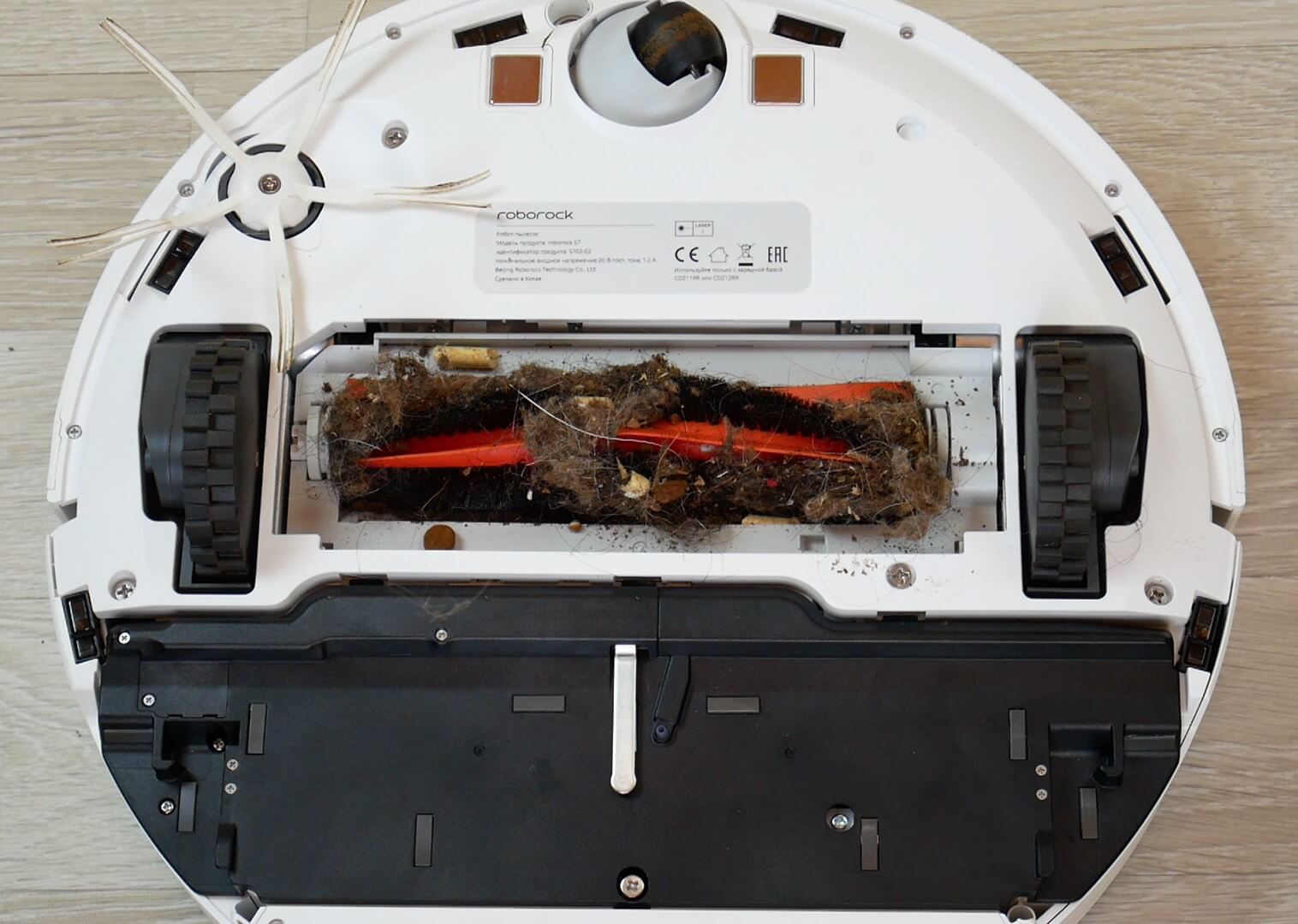
But if you turn the robots upside down, you will see that the Roborock S7 has a silicone brush installed in the center.
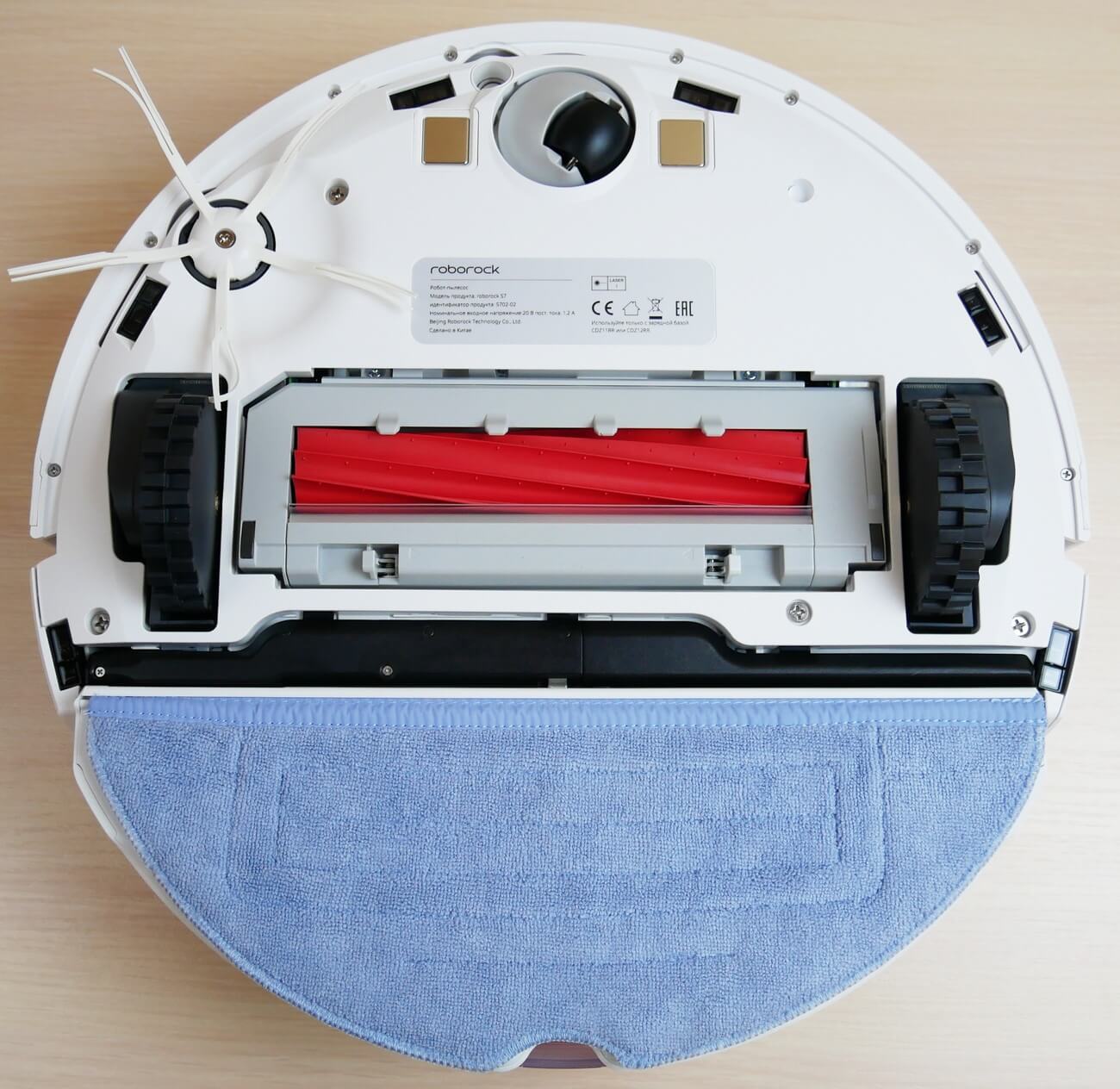
Bottom view, S7
And the Roborock S6 MaxV has a traditional bristle-petal brush:
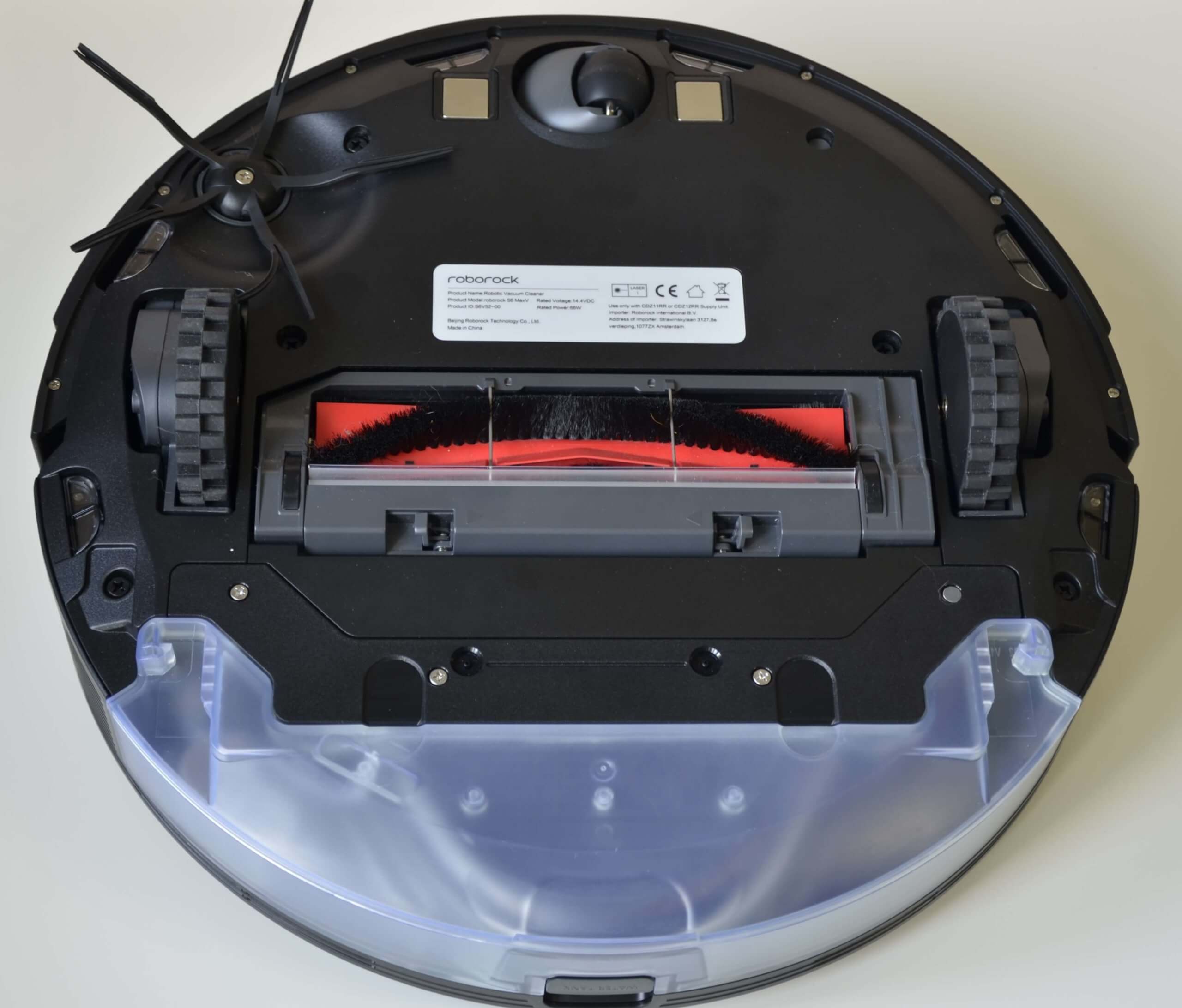
Bottom view, S6 MaxV
The side brushes are identical. The S7 has a carpet detection sensor near the swivel roller, which the S6 MaxV lacks. There's also a difference in the wet cleaning platforms. The S6 MaxV has a standard cleaning pad attached to the bottom of the robot, while the S7 has a special module called VibraRise. The pad has a moving section that vibrates up to 3,000 times per minute and can automatically raise itself 5 mm when encountering carpets. This is the key feature of the Roborock S7.
It's also important to note that the Roborock S7 supports the self-cleaning base, which will be available soon. The Roborock S6 MaxV will not be self-cleaning.
Otherwise, the robots are identical in size and build quality. So, design-wise, the S6 MaxV has the advantage of its active chamber, while the S7 has the advantage of its wet cleaning module and optional self-cleaning base. We're not taking the central brush into account for now; its effectiveness remains to be tested, which we'll do next.
Equipment
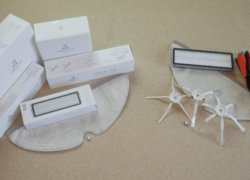
The Roborock S6 MaxV box includes a plastic docking station mat, instructions, a cleaning pad with a cleaning cloth attached, a charging base with a power adapter, and a spare HEPA filter. The package contents are rather sparse.
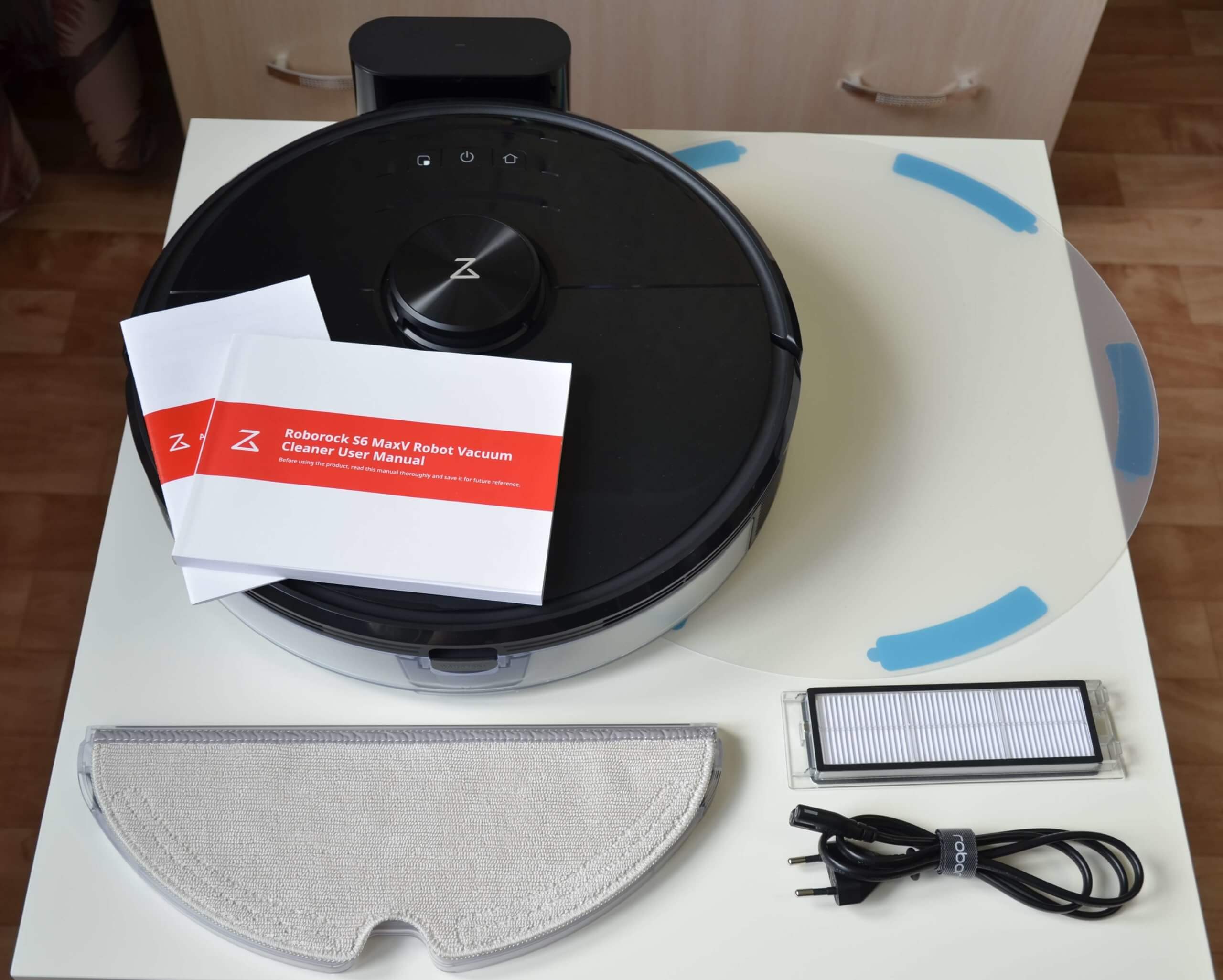
S6 MaxV trim level
But the Roborock S7 isn't any better equipped. It comes with a charging base with a power adapter, a cleaning nozzle with a cleaning cloth, and instructions. A spare HEPA filter isn't included, and there's no mat for the docking station, but one isn't needed. I'll explain why later.
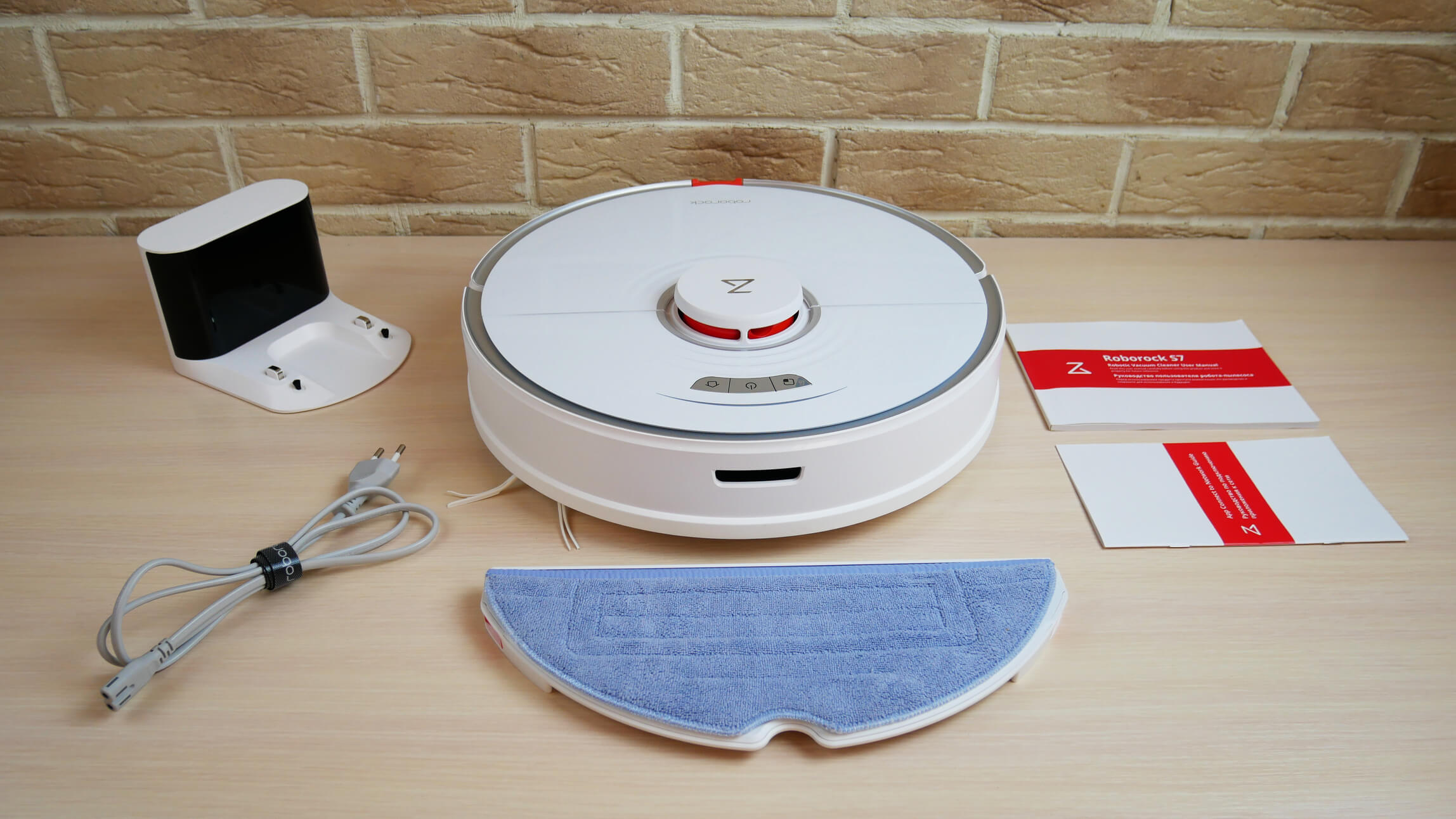
S7 configuration
Technical specifications
Now let's compare the key specifications of the Roborock S6 MaxV and Roborock S7. I've summarized them in a table for easy reference:
| Roborock S6 MaxV | Roborock S7 | |
| Battery | Li-Ion battery 5200 mAh | Li-Ion battery 5200 mAh |
| Suction power | Up to 2500 Pa | Up to 2500 Pa |
| Opening hours | Up to 180 minutes | Up to 180 minutes |
| Cleaning area | Up to 250 m2 | Up to 250 m2 |
| Dust collector | 460 ml | 470 ml |
| Water tank | 297 ml | 300 ml |
| Obstacle clearance | Up to 2 cm | Up to 2 cm |
| Dimensions | 350*97 mm | 350*97 mm |
| Noise level | Up to 67 dB (65-67 dB) | Up to 67 dB (73 dB) |
The specifications are essentially identical; the Roborock S7 has a slightly larger dust bin, but the difference is negligible. More importantly, it's louder; I've included the peak noise level in maximum mode during testing in parentheses. But there are reasons for this, which I'll discuss below.
Functional capabilities
These robots are largely identical in functionality, but each has its own key feature. Among the similarities, both robots can be controlled via Mi Home and the proprietary Roborock mobile app. Key features include storing multiple cleaning maps, automatically dividing the room into rooms, customizing the cleaning mode for each room, setting no-go zones and virtual walls on the map, and voice notifications in Russian if you order a Russian-language model.
Here are the differences in functionality: Thanks to its camera, the Roborock S6 MaxV can recognize objects on the floor and navigate around them while cleaning. It can also take photos of detected objects and display them on a map.


Definition of objects
What's so useful about this? If you have a pet that isn't litter-trained or frequently throws up hairballs on the floor, the robot can identify these surprises and avoid them, instead of smearing them around like almost all other robots. Furthermore, the camera can be connected remotely for remote monitoring of your home if needed. This is another useful feature of the Roborock S6 MaxV that many people appreciate.
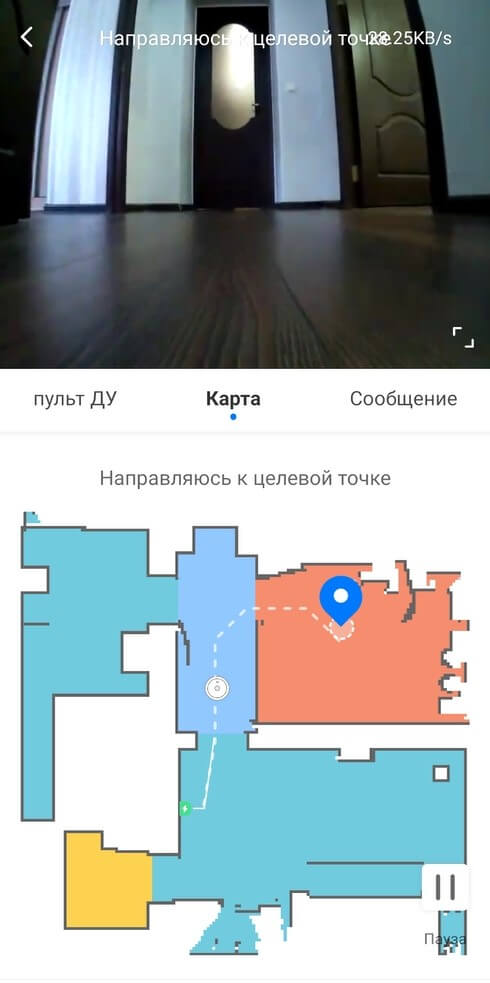
Remote home monitoring
The Roborock S7, meanwhile, boasts advanced wet cleaning thanks to its integrated VibraRise technology. The key concept behind this technology is that when the robot detects a carpet, it can lift its cleaning cloth 5 mm above the surface. This prevents contact between the wet cloth and the carpet when entering the carpet, allowing the robot to vacuum and mop the floor in a single cleaning cycle, leaving the carpets dry and clean.
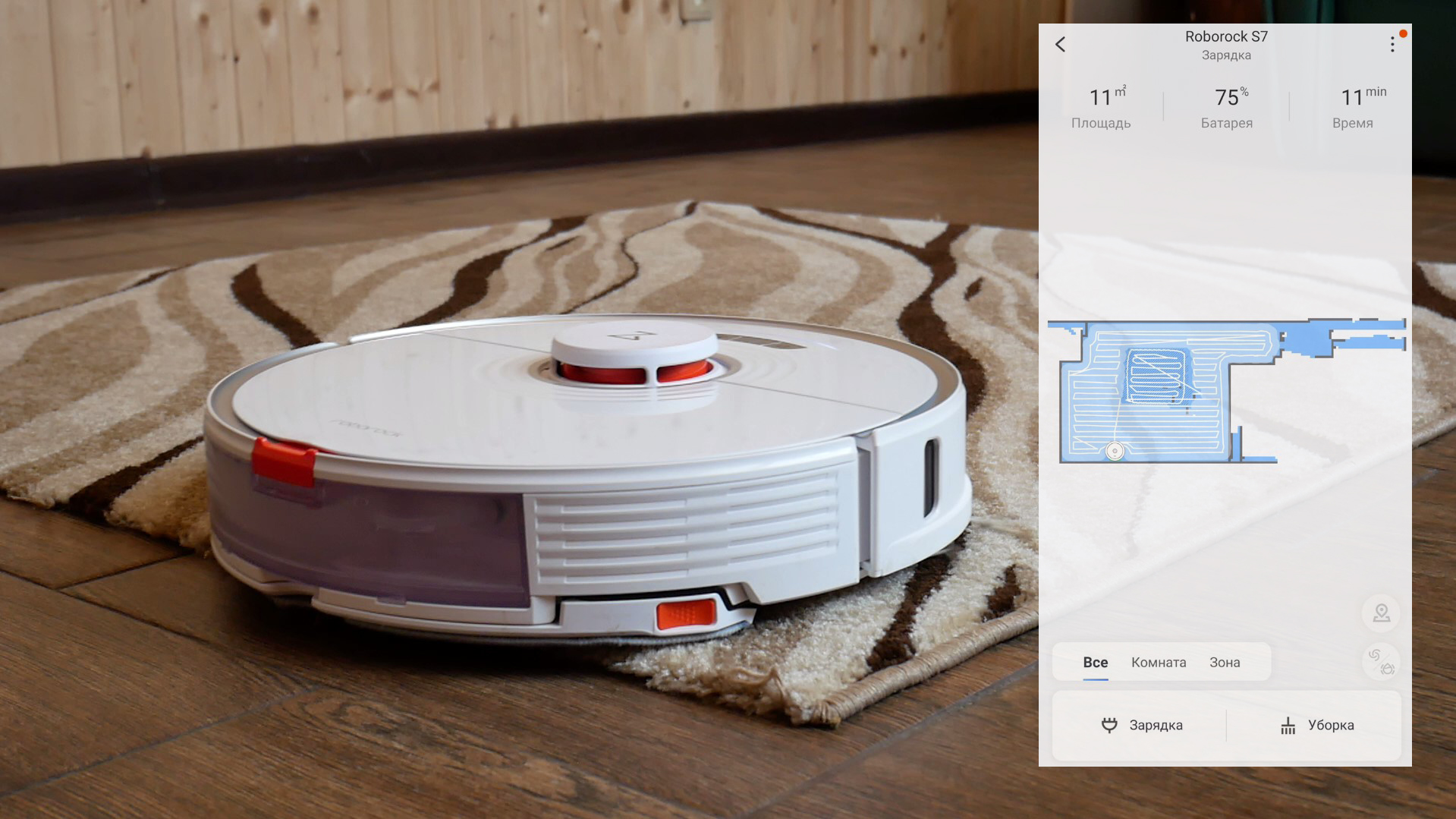
Lifting a napkin on a carpet
The cloth also automatically lifts when entering the charging base, eliminating the need for a plastic pad underneath. Extended contact with the floor is eliminated if the wet cloth isn't removed promptly after cleaning. No other robot on the market is capable of this yet; at least, I'm not aware of any that utilize similar technology.
Instead of automatically lifting the cleaning cloth, you can enable automatic carpet avoidance mode, eliminating the hassle of setting specific carpet exclusion zones for wet cleaning. As mentioned above, the cleaning cloth vibrates while cleaning, and the robot will soon learn to self-clean at the cleaning station—another distinctive feature of the Roborock S7.
The differences in functionality are as follows: the S6 MaxV has an active camera for object recognition and remote home monitoring, while the S7 has a vibrating platform that can rise on carpets, as well as when entering the base, and the base itself for self-cleaning.
Testing
And it's also important to compare how robots perform their primary task. We'll compare key aspects, namely:
- General navigation accuracy and directions around the house.
- Suction power.
- Quality of dry cleaning on laminate.
- Quality of dry cleaning on carpet.
- Quality of wet cleaning.
- Ability to drive on dark surfaces.
- And the cross-country ability of robotic vacuum cleaners.
A video version of the comparison has already been published on . You can watch the video:
The Roborock S7 and S6 MaxV have identical navigation in terms of general movement patterns and cleaning speed. The robots divide the room into rooms and clean room by room, first along the perimeter and then in a serpentine pattern. There's no difference in this regard.
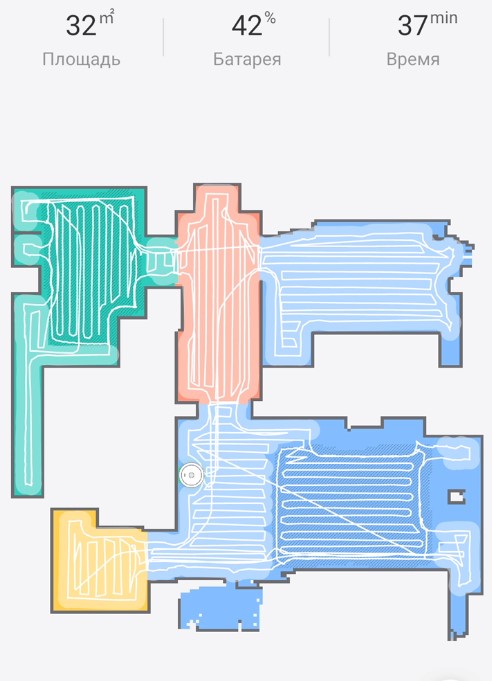
S7 navigation within the home
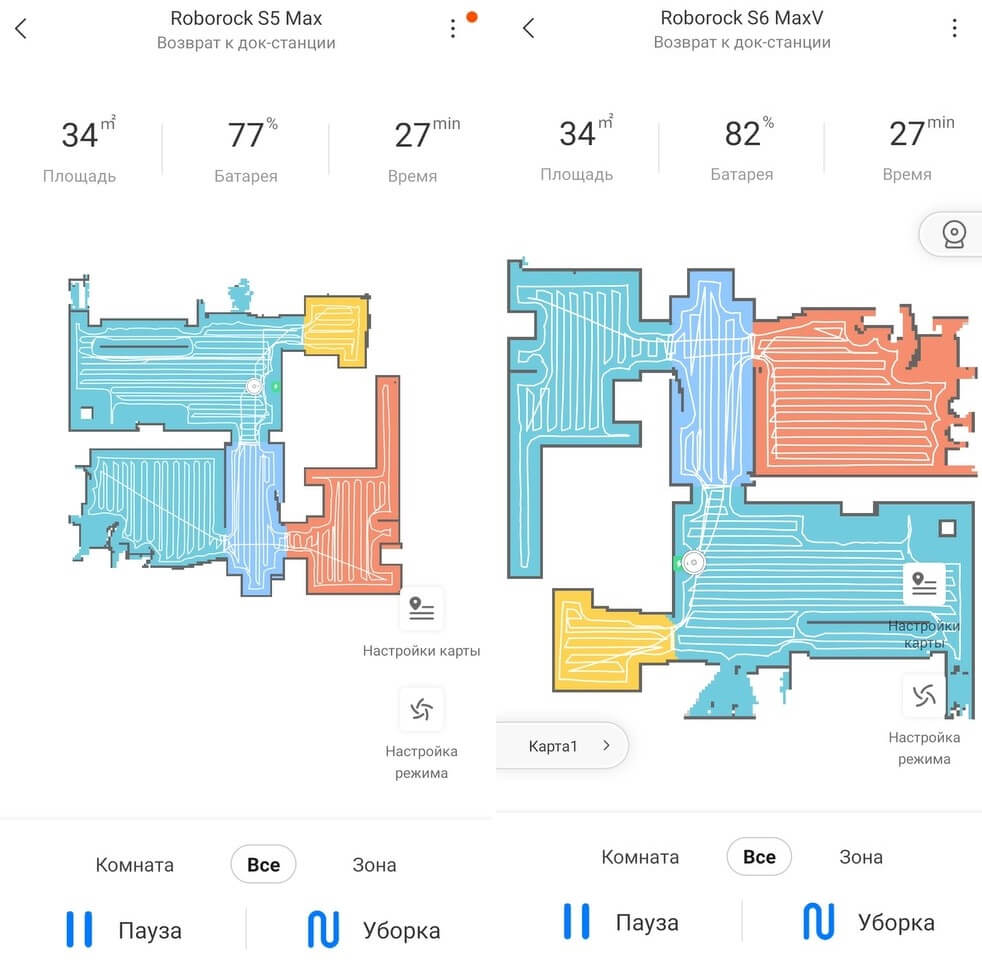
Navigation S5 Max and S6 MaxV
However, the Roborock S7 has significantly higher suction power, despite the comparable robots claiming 2500 Pa. The new brush design likely played a role here. For comparison, the S7 was able to vacuum debris from crevices up to 10 mm deep, while the S6 MaxV can only partially sweep debris from a 2 mm gap.
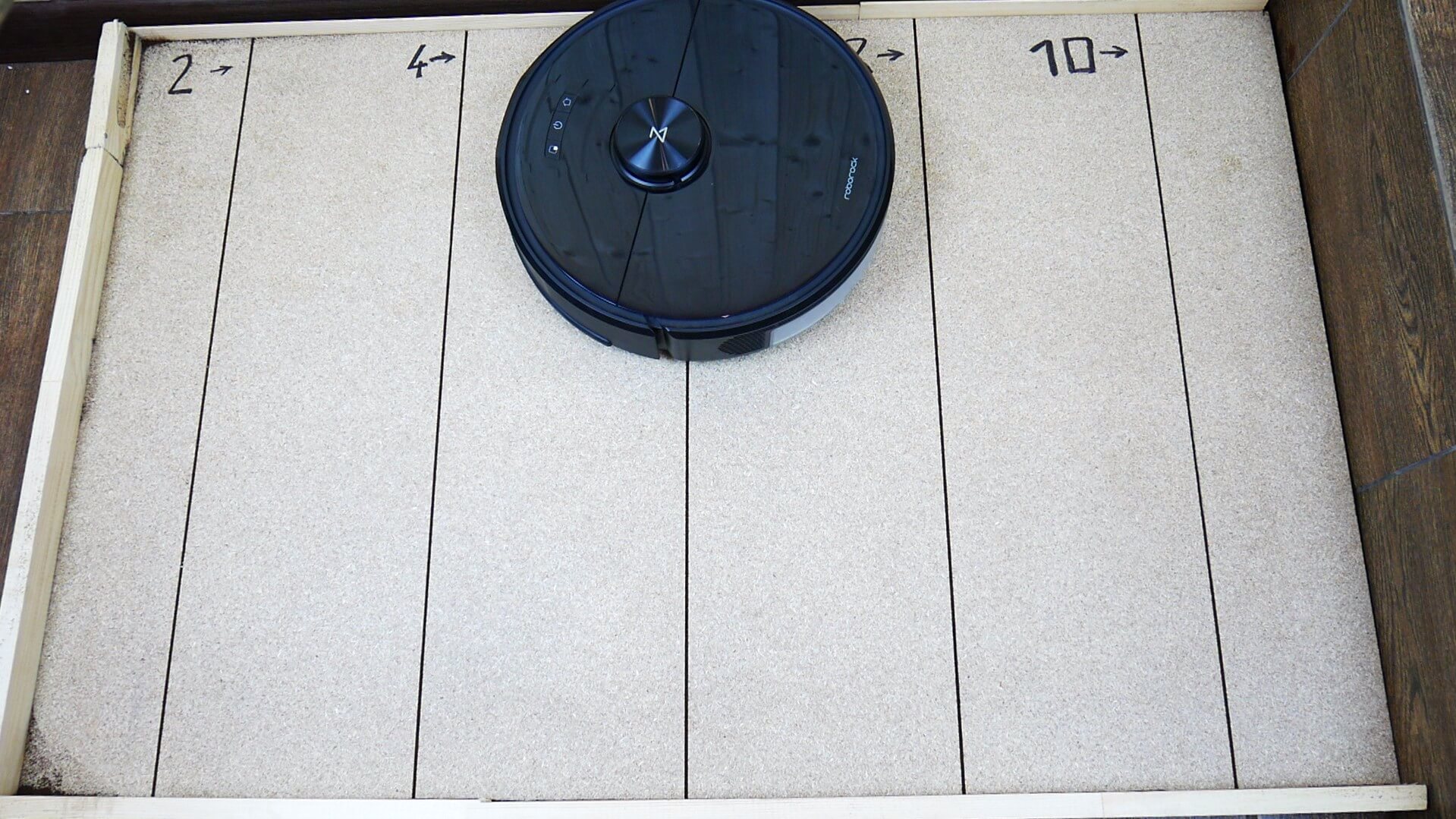
Suction power S6 MaxV
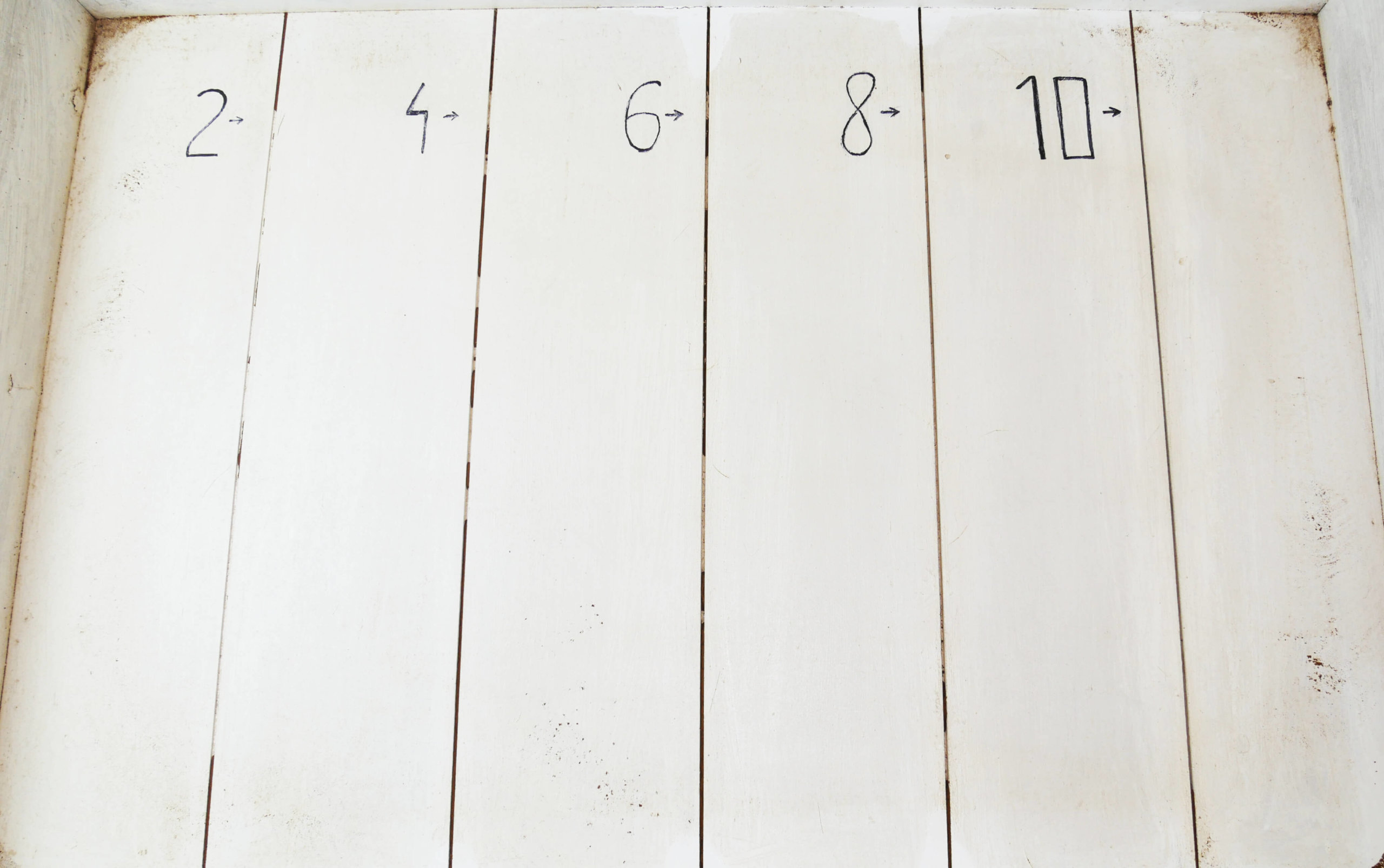
Suction power S7
This is actually why the Roborock S7 is louder at maximum power. The robot has stronger suction and, consequently, a higher noise level.
The robots' dry cleaning performance on laminate floors is essentially the same as their dust collection on carpet. The Roborock S6 MaxV has a slight advantage: its brush is better at picking up pet hair and fur from the floor thanks to its bristle inserts. The silicone roller also does a good job, but can still occasionally leave behind clumps of pet hair or fur, though only minimally. However, the silicone roller is much easier to clean of tangled hair and fur.
For those wondering whether the brushes between the Roborock S7 and S6 MaxV are interchangeable, no. They are different in diameter, so, for example, the brush from the S6 MaxV installed in the S7 gets clogged with debris and is unable to throw it into the dust collector.
Condition of the bristle-petal brush
As for wet cleaning performance, I didn't notice any particular effectiveness from the vibrating platform. Under roughly the same conditions, both robots removed dried-on dirt from shoes. However, the vibration module struggled to remove tough stains, making it a clear winner. However, for delicate wet cleaning, both robots are equally effective.
As for obstacle crossing ability, both robots are capable of crossing 2-centimeter thresholds, but the Roborock S6 MaxV passes them a little more confidently, so again, this robot has a slight advantage in terms of obstacle crossing ability.
Both the Roborock S6 MaxV and Roborock S7 are sensitive to dark surfaces. So, in this regard, Roborock engineers haven't solved the problem.
Let's sum it up
So, what's the bottom line? The robot vacuums being compared are both excellent and have their own strengths, which could be compelling reasons to buy. If we summarize all the key points in a table, we get:
| Roborock S6 MaxV | Roborock S7 |
| Recognizes objects on the floor | The cloth rises above the carpets when cleaning |
| Remote home monitoring is available via a robot camera. | A self-cleaning base is optionally available. |
| Works quieter | The suction power is significantly higher |
| Works a little better on carpets | The central brush is better at cleaning tangled hair and fur. |
| Slightly better obstacle clearance | Perhaps, under certain conditions, a vibrating mop can demonstrate its effectiveness. |
| Lower price (in a standard base configuration) |
Therefore, I would recommend the Roborock S6 MaxV if your home or apartment doesn't have carpets but has pets that could leave surprises in the robot's cleaning area. Or if you would benefit from remote monitoring of your home via the robot, or if, for example, you have children who leave things on the floor, which could cause the robot to make mistakes, such as chewing socks or the charging cord.
If such situations are out of the question and you have carpeted floors, and you're looking for a robot vacuum with a wet mopping function and a self-cleaning base, I recommend considering the Roborock S7. It has its own undeniable advantages, and given its higher suction power, it's clearly capable of removing dust and small debris from carpets more deeply.
If you're not rushing to buy a robot vacuum and are interested in both the strengths of the Roborock S6 MaxV and the Roborock S7, I recommend waiting for the release of the most advanced model in the Roborock lineup, which combines the strengths of both robots. This is the Roborock T7s, which was announced immediately after the S7. It features a self-cleaning base, a lifting nozzle for wet cleaning, and an object detection system. This is a very interesting solution that will take the robot vacuum market to a whole new level. We hope that this new model will be available for purchase this fall, so we can test it out.
On that note, I'd like to conclude our comparison of the Roborock S7 and Roborock S6 MaxV. If you have any questions, please ask them in the comments. Happy shopping, everyone. Bye!
Where can I find a full-coverage microfiber cloth like the one in the photo (for an S5 Max vacuum cleaner)?
Well, these are the new wipes that are in the latest robots, they are sold on Ali.
I wonder what the price will be for the Roborock T7s.
With its release, the price of the S6 Max V should drop even further and become generally attractive.
The S7 is attractive because it will be possible to install self-cleaning in the future.
And it's strange, why didn't they put a camera in the S7?! Or should we expect the S7 MaxV with a camera in 2022?!
The agonizing choice of a vacuum cleaner continues.
Yes, I think it's precisely because of this, so that they have something new to release and continue to rip off money)
Could you please tell me what the Russian version means? And if I order from Ali, is there any kind of warranty? Thanks for the answer.
Russian – Russified. Local stores usually sell this version, while Ali most often sells the global version. The seller provides a warranty.
Thank you for such great reviews. Please advise which robot vacuum cleaner to buy. I was considering the Roborock S7, but after reading your reviews, I'm hesitant. I have a dog, which can cause surprises, and the kids throw socks and toys around. The floors are laminate and tile, there are no rugs, the curtains hang to the floor, and most importantly, my daughter and I have long hair (that's why the silicone brush attracted me to the S7), and there's dog hair.
Hello! For your conditions, I think a good option would be https://robotvac.washerhouse.com/en/obzory/mi/robovac-xiaomi-mijia-vacuum-cleaner-pro.html or Ecovacs Deebot OZMO T9 AIVI.
Could you please tell me if the s7global version has a Russian-language package? Or can I install it myself? And where can I download it from, if so?
The Roborock S6 MaxV's camera is really cool! Can you tell me which other vacuums in the same price range or cheaper have this feature?
The Ecovacs Deebot OZMO T9 AIVI also has this feature.
Hello, please clarify about the turbo brushes. If I use the S7 version of the Roborock S6 MaxV, what happens?
I don't think so. The brush diameters are different.