Compare the Roidmi EVE Plus and Xiaomi Lydsto R1 in terms of cleaning performance, features, and other parameters.
Hello to all readers of the site! As promised, after a detailed review Lydsto R1 And Roidmi EVE Plus I've prepared a comparison of these two robot vacuum cleaners. They hit the market almost simultaneously, with a slight price difference. The Lydsto R1 costs around $250-$300, while the Roidmi EVE Plus ranges from $270-$350. However, these robots share a number of similarities: lidar for navigation, a similarly positioned combined water and waste container, a self-cleaning base, and virtually identical app functionality. This raises an important question: which robot vacuum cleaner is better and are there any significant differences between them? Looking ahead, I'll say there are! Below, I'll take a closer look at the differences between these two robot vacuum cleaners. So, let's get started!
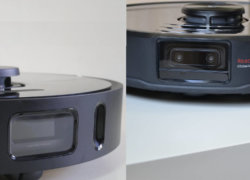
Appearance
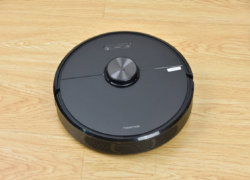
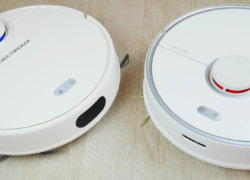
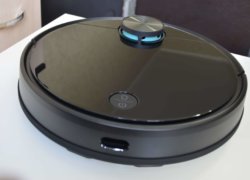
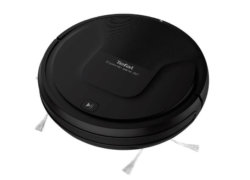
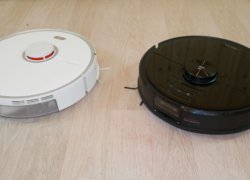
First, let's compare the robots' appearance and design. They are identical in size, measuring 350 x 98 mm. Lydsto R1 is available in both black and white. Roidmi EVE Plus is available only in white with black accents.
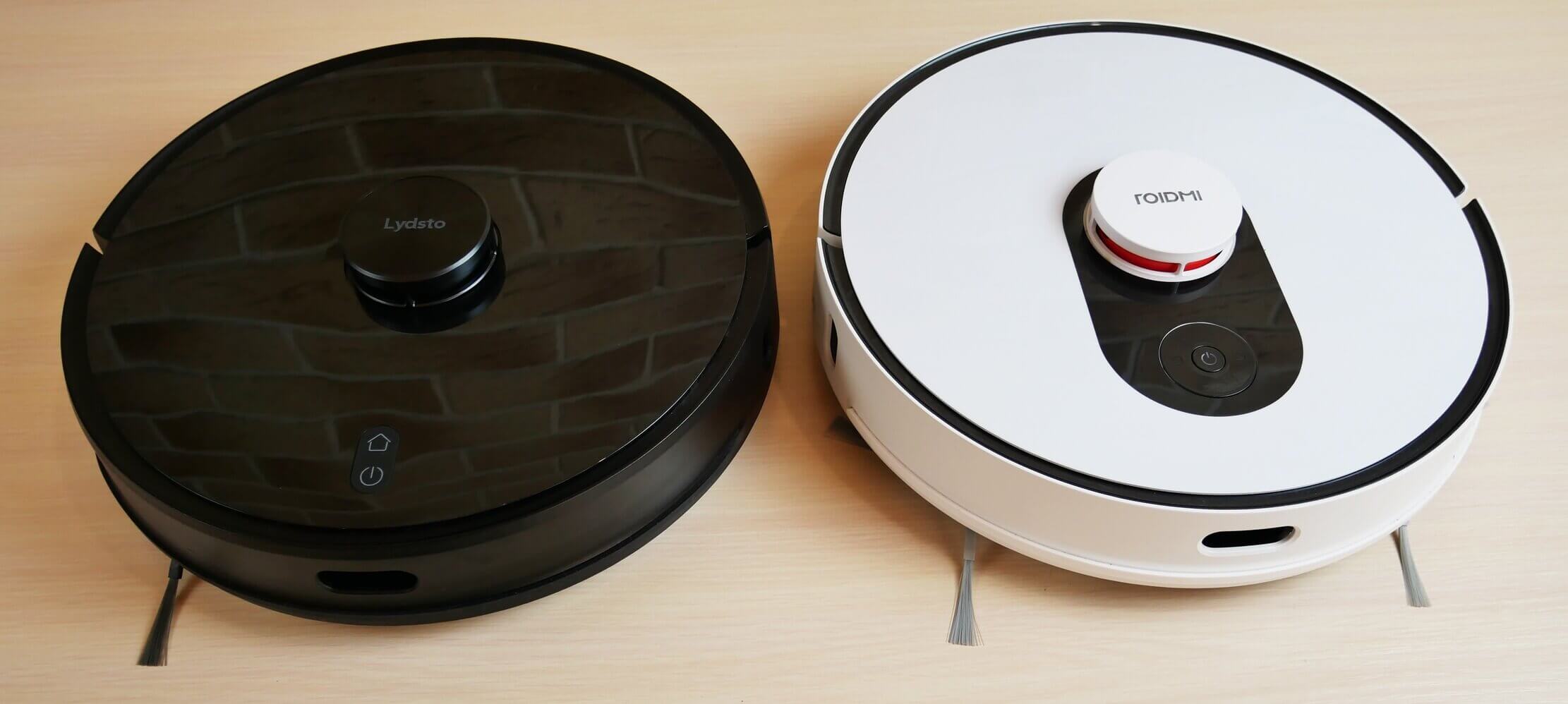
Top view
The Lydsto R1's body houses a lidar unit with a button and two mechanical control buttons: start/pause and forced return to the charging base. The Roidmi EVE Plus also has a lidar unit with a button, while the control panel houses three mechanical buttons: local cleaning mode, start/pause, and forced return to the charging base.
Both robot vacuum cleaners feature a combined dust container mounted on the rear of the body. Roidmi's charging terminals are located on the robot's body, while Lydsto's are integrated into the dust bin, resulting in a smaller dust container. By comparison, Roidmi's combined dust container holds up to 300 ml of dry waste and 250 ml of water, while Lydsto's holds 250 ml of dry waste and 200 ml of water. This is the first difference between these robot vacuum cleaners.
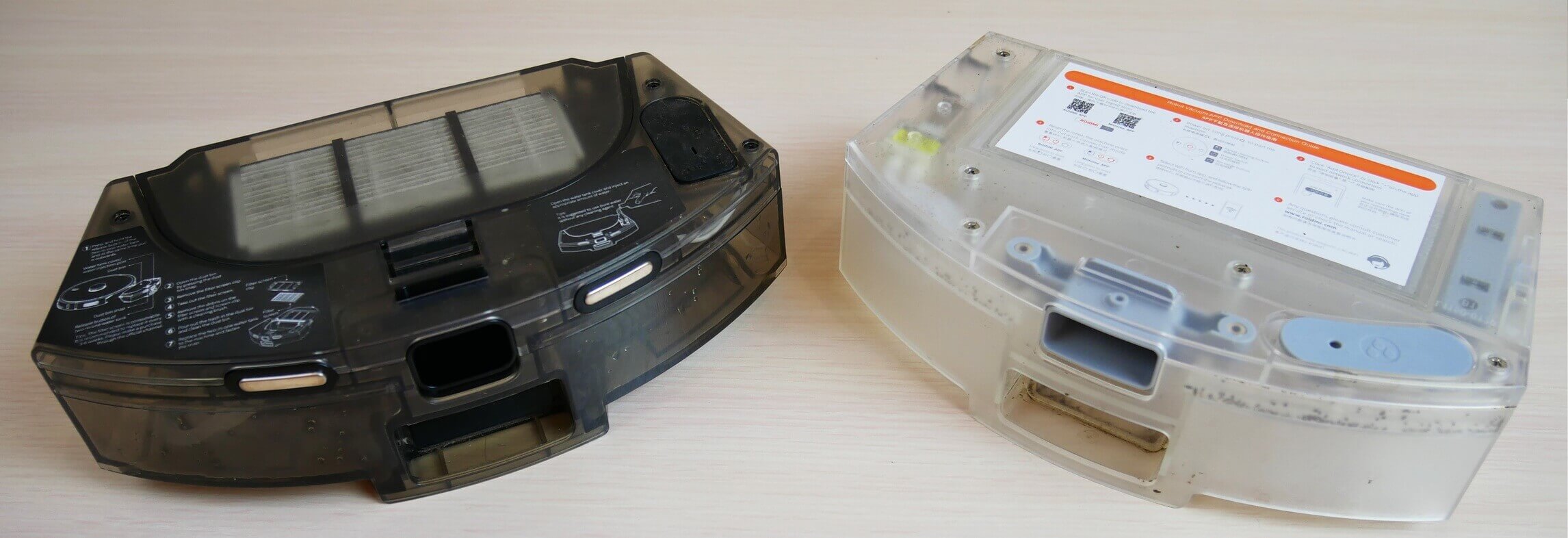
Combined containers
Let's move on. The Roidmi dust collector only has a HEPA filter, while the Lydsto has a triple filtration system consisting of a mesh filter, a foam filter, and a HEPA filter. Both have an in-tank pump for electronically regulating the water flow.
The Roidmi EVE Plus's bumper has two wall sensors on either side and an obstacle detection sensor in the center. The Lydsto R1 has a similar bumper sensor system.
The twins have the same number of anti-fall sensors: four each. Turning the robot vacuums upside down reveals another important difference: Roidmi has two side brushes, while Lydsto has only one.
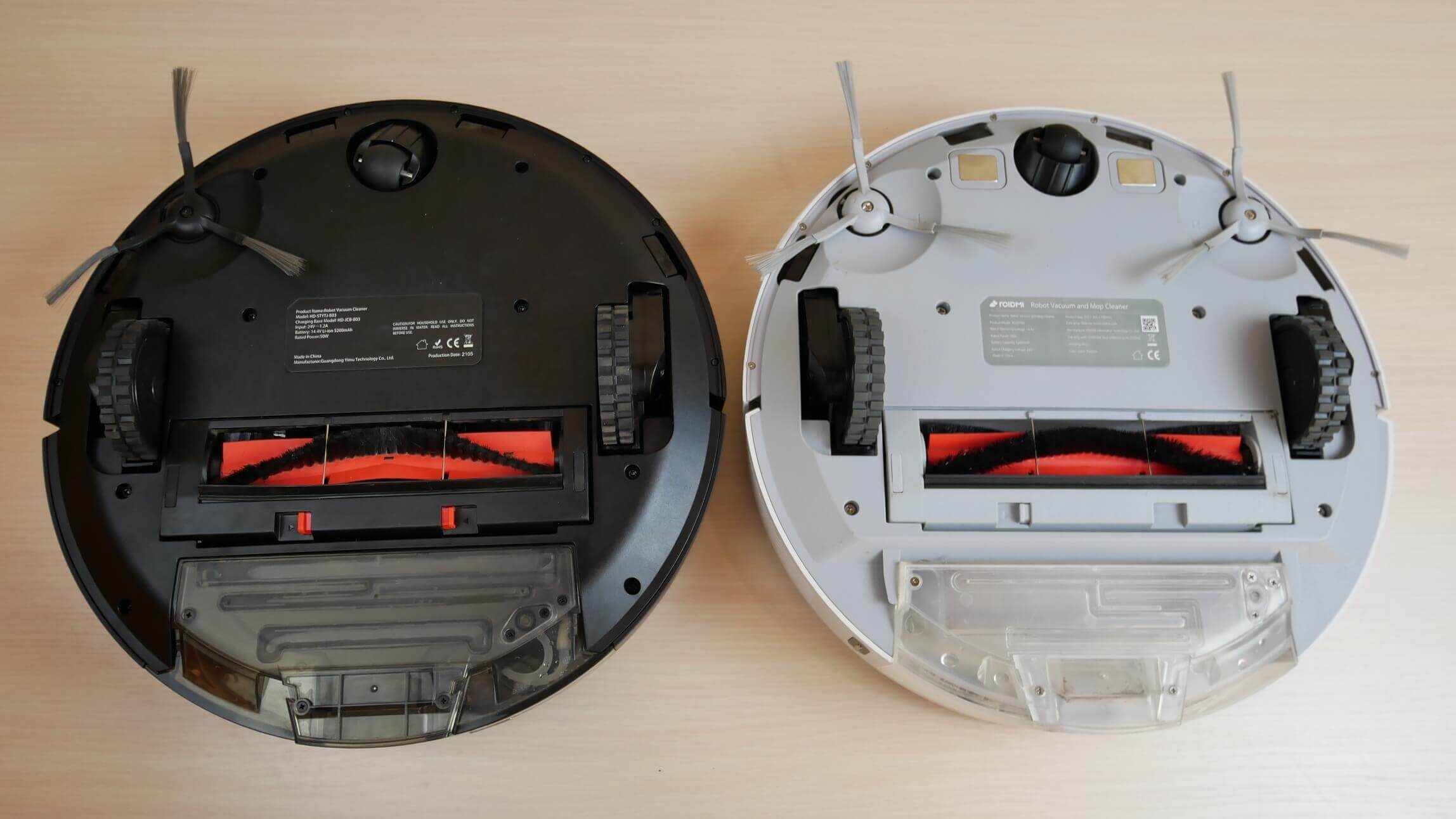
Bottom view without napkins
In reality, there's virtually no difference in cleaning performance when it comes to lidar robot vacuums. If there is any difference, it's at most 1-2% better for the robot with two side brushes. Nevertheless, this is a very compelling feature for many.
The central brushes of the Lydsto R1 and Roidmi EVE Plus are almost identical in design. They are made of bristles and petals, but the Roidmi brush has a denser bristle structure, making it a better-designed brush in my opinion. Both brushes are removable on both sides for cleaning out tangled hair and pet hair, which is a plus.
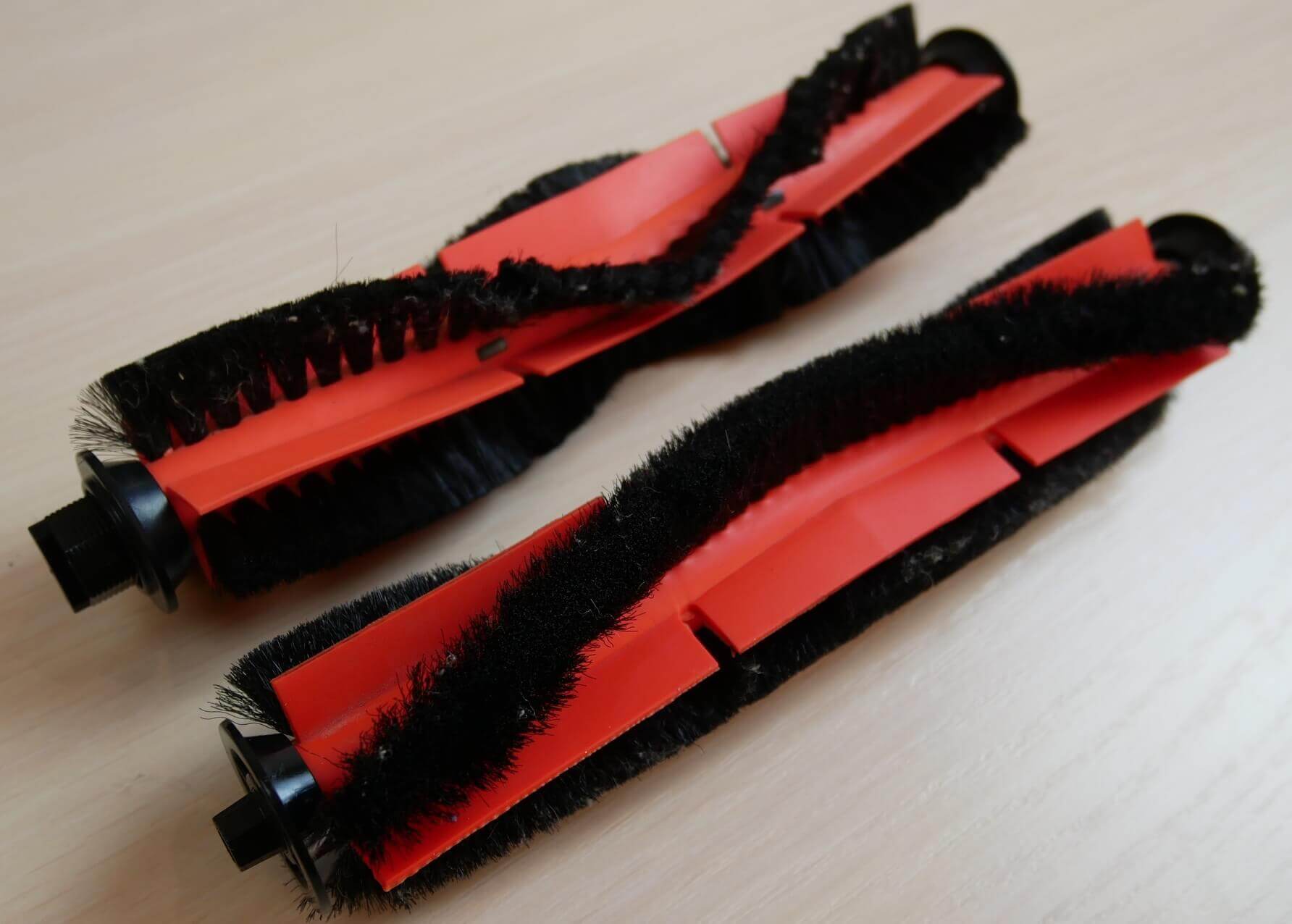
Central brushes
The wet cleaning nozzle and the cleaning cloth are virtually identical and are attached to the bottom of the body. However, the Roidmi's cleaning cloth is attached to the nozzle via a pocket and Velcro, while the Lidst uses a groove and Velcro, like most Xiaomi robot vacuums. This attachment method is more convenient and secure.
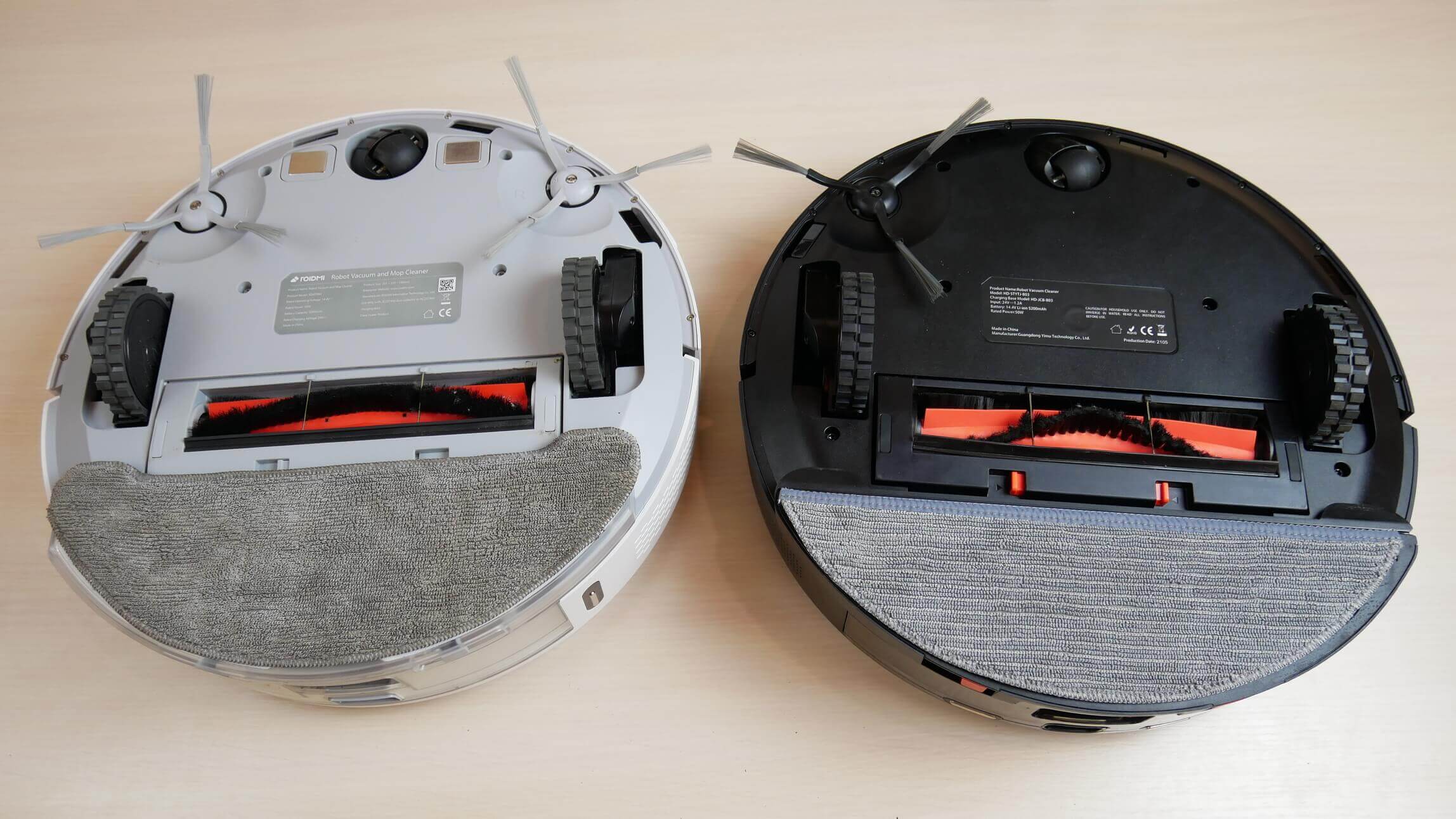
Bottom view with napkins
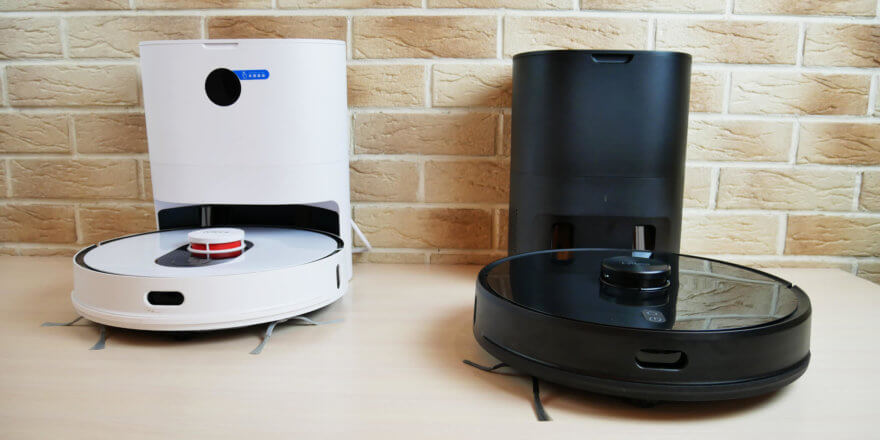
Now let's compare the self-cleaning bases, and there are several important differences. First, the Roidmi EVE Plus base has a special recess where it connects, while the Lydsto R1's docking vent is less neat and noticeably takes up space.
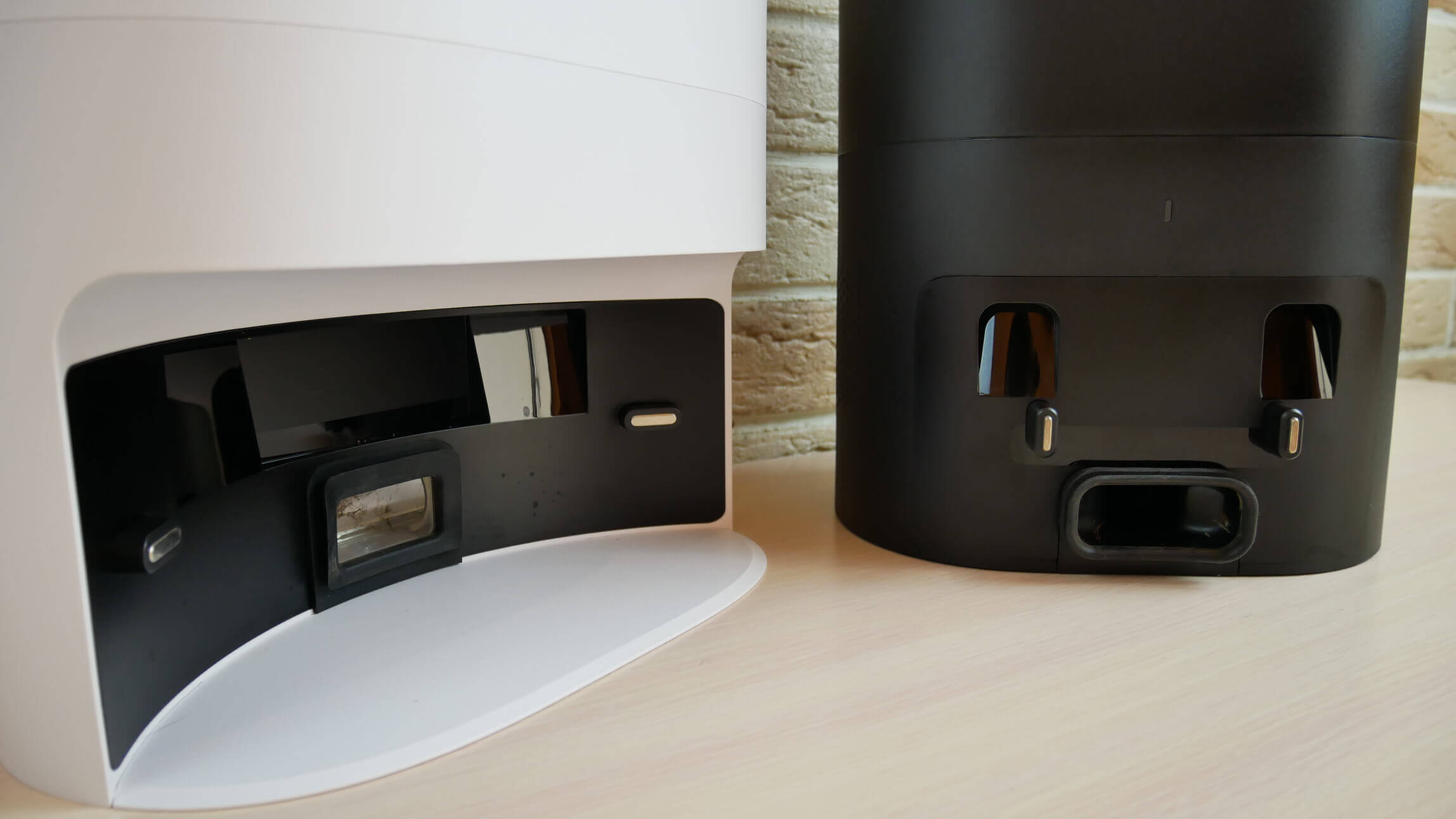
Docking place
You can see for yourself how much less space Roidmi takes up when charging on the base. For me, this is a clear advantage:
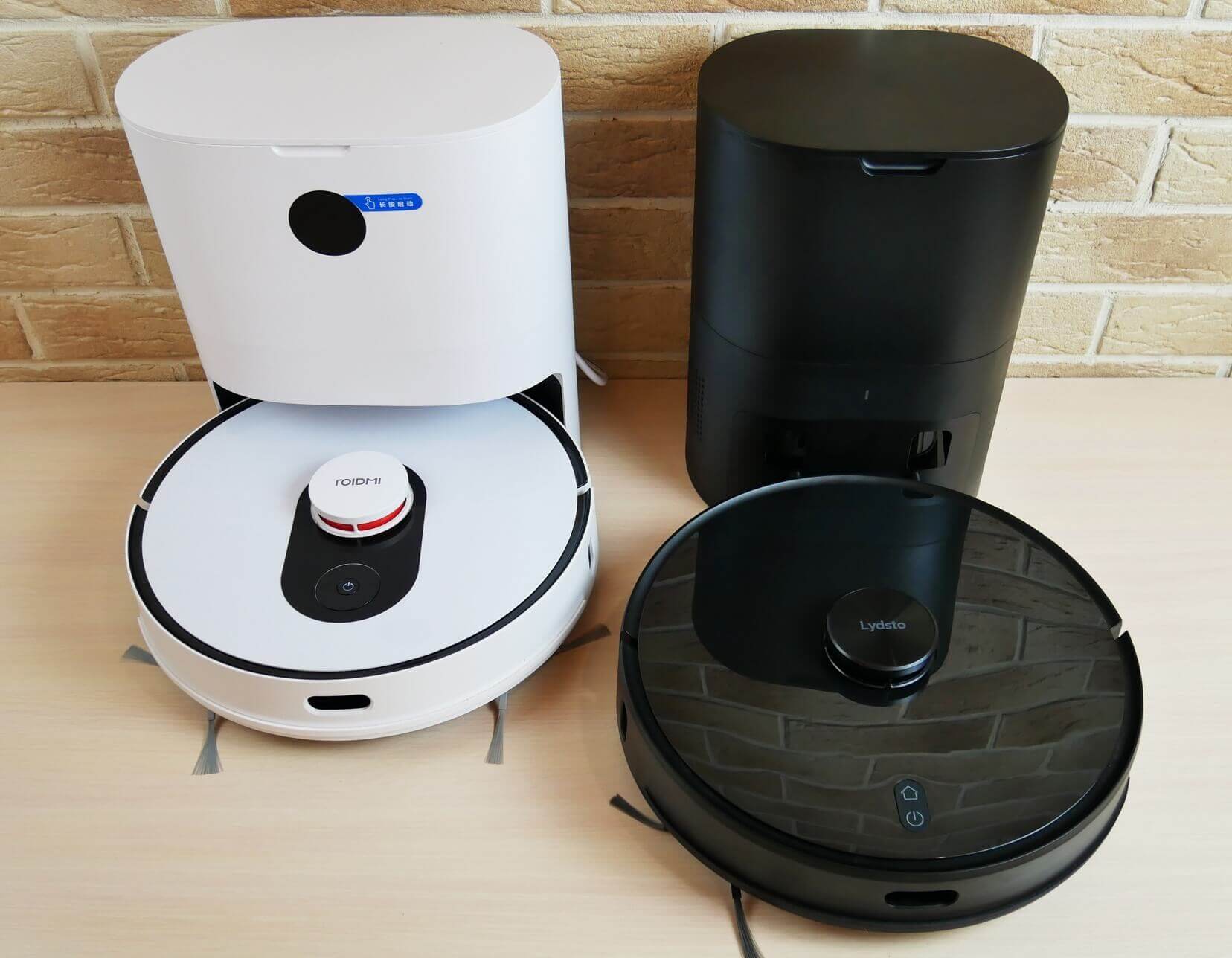
Robots at the base
Furthermore, the Roidmi EVE Plus base is equipped with an informative display and an air ionizer, while the Lydsto R1 only has a small indicator on the body. Overall, the Roidmi base's design clearly wins.
Let's summarize the comparison of appearances. Lydsto has the following advantages:
- Triple filtration system.
- The napkin attaches to the nozzle more securely and conveniently.
- Sold in black and white.
However, Roidmi has more advantages, namely:
- The combined container has a larger capacity.
- Two side brushes.
- Better execution of the central brush.
- Compact placement on the base.
- The self-cleaning station is equipped with an indicator. I'm not counting the ionization feature, as I don't really trust that feature; it seems more like a marketing ploy.
In the end, for me personally, Roidmi's advantages are more significant, but even if we evaluate each advantage of the compared robots in points, we get:
Lydsto R1 3:5 Roidmi EVE Plus
Equipment
Now let's compare the Roidmi EVE Plus and Lydsto R1 packages.
The Lydsto box contains:
- Self-cleaning base.
- Wet cleaning nozzle with a microfiber cloth installed.
- Operating instructions in several languages, including Russian.
- Six spare bags for the base, with one more already installed inside the station.
- Set of 30 disposable wipes for wet cleaning.
- Tool for cleaning the dust collector and central brush.
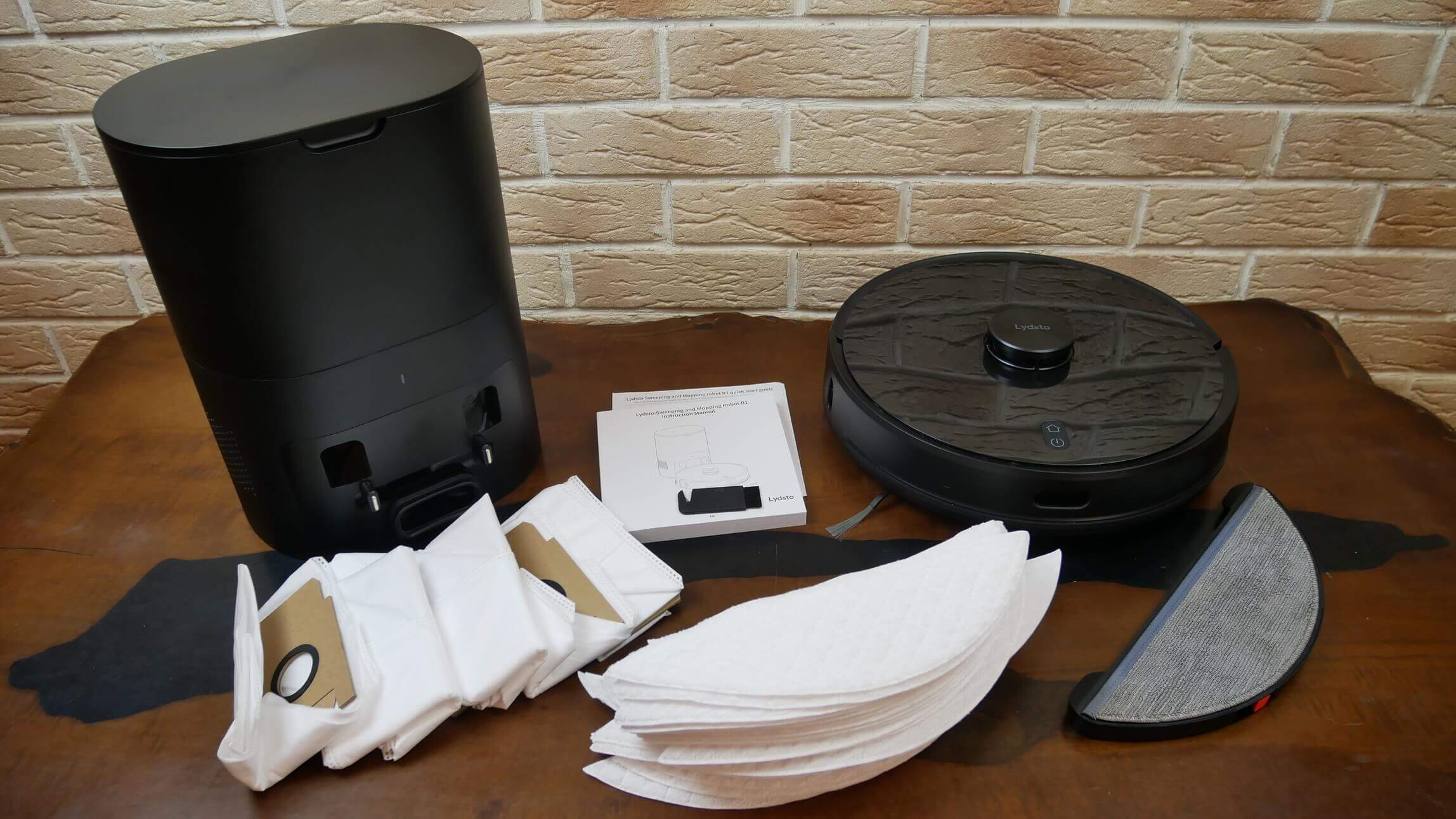
Lydsto equipment
The kit does not include spare brushes or even one spare HEPA filter, so in my opinion the kit is not complete.
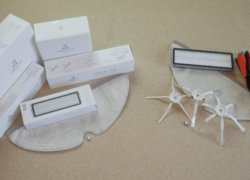
At the same time, Roidmi is equipped with:
- Self-cleaning base.
- A power adapter for connecting the base to the network.
- A wet cleaning attachment with a microfiber cloth attached.
- A set of disposable napkins (10 pcs).
- Spare HEPA filter.
- Two spare bags for the base (one of which is already installed inside).
- Operating instructions and a quick start guide for the robot.
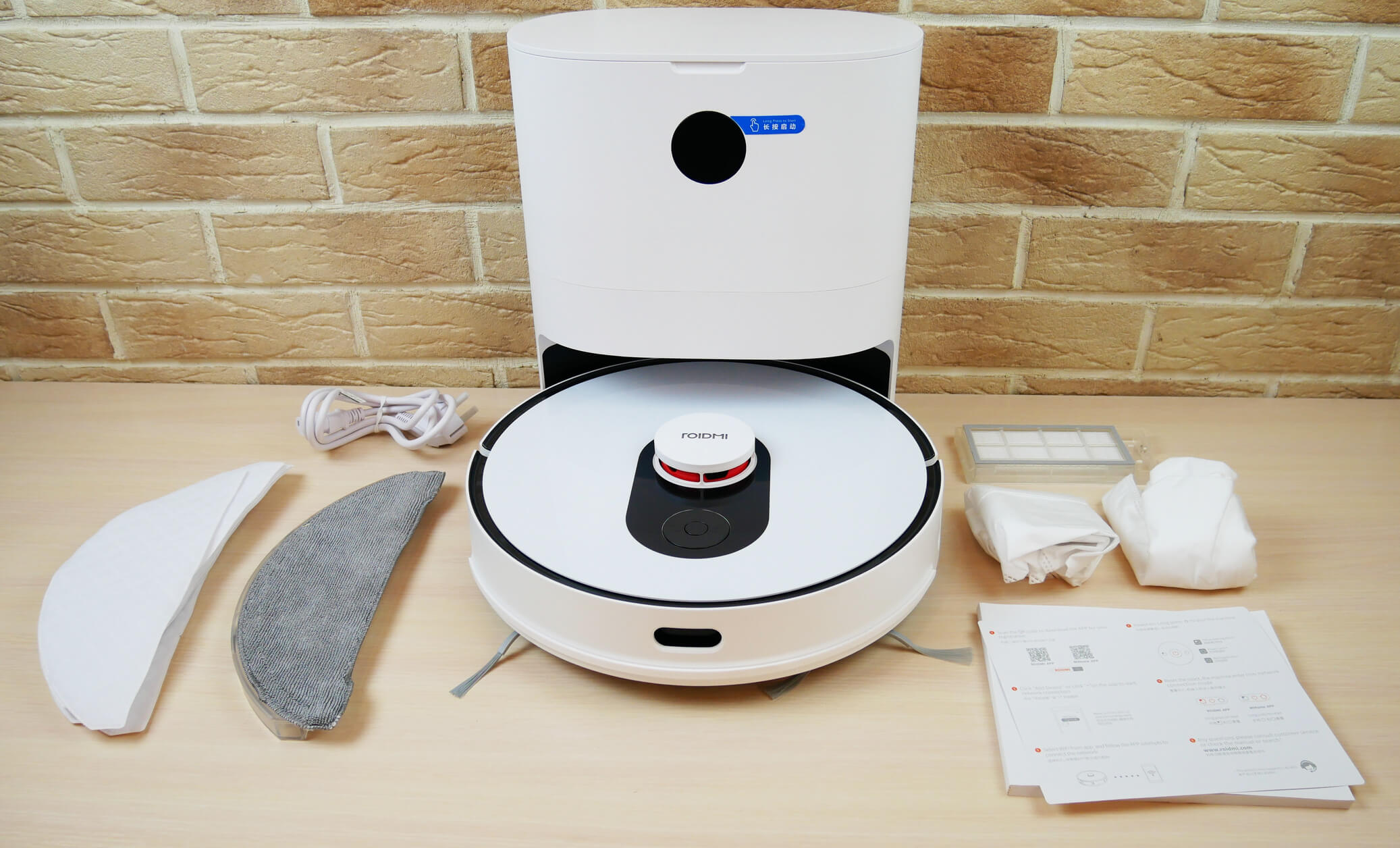
Roidmi package contents
The kit also doesn't include spare side brushes, but at least there is a replacement HEPA filter, bags, and disposable cloths, albeit in smaller quantities.
So I think that in terms of configuration, the robots are identical and there is no compelling reason to award points to one.
Technical specifications
Now let's compare the specifications of the Roidmi EVE Plus and Xiaomi Lydsto R1. They are summarized in a table for easy reference:
| Roidmi EVE Plus | Lydsto R1 | |
| Battery | Li-Ion battery 5200 mAh | Li-Ion battery 5200 mAh |
| Suction power | Up to 2700 Pa | Up to 2700 Pa |
| Self-cleaning station capacity | 850 W | 1000 W |
| Opening hours | Up to 200 minutes | Up to 150 minutes |
| Cleaning area | Up to 200 m2 | Up to 200 m2 |
| Obstacle clearance | Up to 2 cm | Up to 2 cm |
| Dimensions | 350*98 mm | 350*98 mm |
| Noise level | 57-72 dB | 59-69 dB |
It's important to note that during testing, the robot vacuums' self-cleaning performance was roughly the same. They can't completely empty the container on the first try if it's loaded to the top. They manage to do this with double self-cleaning. I'll demonstrate the self-cleaning performance during comparative tests (see the video below). It's important to note that the difference in power doesn't provide any real advantage.
As for noise levels, Roidmi is indeed slightly louder with the same suction power. The difference is barely perceptible to the ear, but it's still there, and it's worth noting.
As for the stated operating time, despite the fact that Roidmi has a higher operating time, in fact, due to the same motors and batteries, the operating time is approximately the same in the same cleaning mode.
So, in the end, I can only add a point to Lydsto for the slightly lower noise level during operation:
Lydsto R1 4:5 Roidmi EVE Plus
Functional capabilities
Since both robot vacuums are part of the Xiaomi ecosystem, they can be controlled via the Mi Home app. However, this only works if the China region is selected, which results in slower response times when using the app, as everything is hosted on Chinese servers.
However, each robot has its own branded mobile app, Roidmi and Lydsto, respectively. We won't demonstrate the full functionality of each app now, but will simply summarize the main features in a table for comparison:
| Roidmi Eve Plus | Lydsto R1 | |
| Multi-card support | + | + |
| Automatic room zoning | + | + |
| Suction power adjustment | + | + |
| Adjusting the water supply level | + | + |
| Individual cleaning mode for each room | + | + |
| Restricted areas (including wet cleaning mode) | + | + |
| Voice notifications in Russian | + | + |
| Automatic power increase on carpets | + | + |
| Moving in wet cleaning mode | Zig-zag, Y-shape | Zigzag |
As you can see, the functionality is identical. The only difference is that Roidmi can also move in a herringbone pattern when mopping. This feature, in my opinion, deserves two points overall.
Lydsto R1 4:7 Roidmi EVE Plus
Testing
Finally, let's compare the key aspects of cleaning quality and the overall performance of the robots during operation. I recommend watching the video review, which shows all the tests in detail and clearly. It has already been prepared and published on the channel:
I'll explain the whole point in more detail below. The navigation of the compared robots is at a similar, fairly high level. The robot vacuums thoroughly clean the entire available area, leaving no uncleaned areas, while the cleaning speed is on par with premium models.
The suction power is the same. Both robots can only vacuum debris from 2mm gaps.
The quality of dry cleaning on laminate is just as high as the quality of collecting the same debris on carpet.
Self-cleaning performance is also on par. A test was conducted with the same amount of buckwheat in the dust container, and then hair, fur, and a small amount of buckwheat were added to the dust container. All in the same quantities. Neither the Lydsto nor the Roidmi managed to completely self-clean on the first try.
Robot vacuum cleaners remove dirt equally well from the stand, leaving no streaks or marks.
Roidmi and Lydsto have comparable obstacle clearance. They can overcome two-centimeter thresholds without the wet cleaning attachment.
What's more interesting is that the Roidmi Eve Plus isn't afraid of dark surfaces and easily navigates a black rug, while the Lydsto R1 has trouble recognizing dark surfaces, such as elevation changes. This is a problem with many robot vacuums, in fact.
As a result, Roidmi received another two points precisely because of their adequate performance on dark surfaces, and the final score was 9:4 in favor of Roidmi.
Lydsto R1 4:9 Roidmi EVE Plus
Let's sum it up
The comparison showed Roidmi Eve Plus to be a clear winner, and rightfully so, in my opinion. Even if I'd given the last two parameters one point each instead of two, the score would have been 4:7 in Roidmi's favor. I didn't bother evaluating the price, as it's roughly the same price, even with all the discounts and other offers.
Here are the current offers for Roidmi Eve Plus:
And here's what about Lydsto R1:
You've seen for yourself that Roidmi has many advantages that make this robot vacuum cleaner a more attractive purchase. These include the design of the base, the two side brushes, the larger capacity of the combined dustbin, the Y-mopping mode, and even the fact that the robot is resistant to dark floors. These are compelling arguments, and therefore my choice of these two robot vacuum cleaners falls on Roidmi.
Actually, even in our overall rating Roidmi Eve Plus scored 78 points, while Lydsto R1 only managed 70. This is further indirect evidence that Roidmi is superior.
But I have a very important caveat about these two robots, which is why I'd advise you to think twice before choosing one over the other. The Lydsto R1 and Roidmi EVE Plus have only recently been released, and there are already a significant number of reviews online about issues with navigation, water supply, parking at the base, and connecting to the app. Due to the lower cost of assembly, these robots are less reliable than the same ones. Viomi S9, which costs a little more and does not have such problems, or a more premium one Roborock S7 and self-cleaning models from the Ecovacs Deebot line. So, if price isn't a primary concern and you think you can simply save money without sacrificing cleaning quality or reliability, you're wrong. Remember, a miser pays twice, so when choosing the Roidmi EVE Plus or Xiaomi Lydsto R1, I can only advise you to buy the robot from trusted sellers, or better yet, from local stores, to avoid problems with after-sales service and return policy in the event of a breakdown.
On that note, I'd like to end this review. Thank you all for your attention! If you have any questions, please ask them in the comments. Happy shopping. Bye!