Dreame X50 Master vs. Roborock Saros 10R: Differences in Stations and Features! Which is Better?!

Hello to all readers of the project! In this review, I decided to compare two of the best embedded systems on the market – Roborock Saros 10R And Dreame X50 MasterConsidering that there's not a huge selection of robotic vacuum cleaners with built-in stations, it's important to at least understand which one is the best at the time of writing this review. So, I'll compare the features, efficiency, and ease of maintenance, and even disassemble both stations to determine which is better built. I'll also express my opinion on this type of station. So, let's get started!
Price
First, let's compare the prices of competing built-in vacuum cleaners. The Dreame X50 Master is priced between $950 and $1,400. During the November sales, the price dropped to a record-breaking $760, which is a great deal considering the robot's capabilities.
The Roborock Saros 10R with a built-in docking station retails for $1,200-$1,400. However, given that this version of the robot was released two months ago, the price will likely drop soon. For now, Dreame offers a better deal.
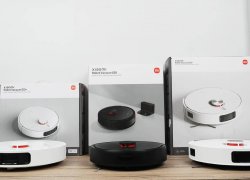
Moreover, the Dreame X50 Master comes with a spare dust bag, a convenient cleaning brush, a bottle of proprietary detergent, and a convenient cleaning brush for the station. The Roborock Saros 10R, on the other hand, only comes with a dust bag as an accessory.
Appearance
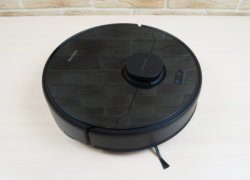
Next, let's compare the design of the robot vacuum cleaners and their stations. Both robots are round and come in black. Both are equipped with precise navigation, working in tandem with an object recognition system with a backlight and remote home monitoring.
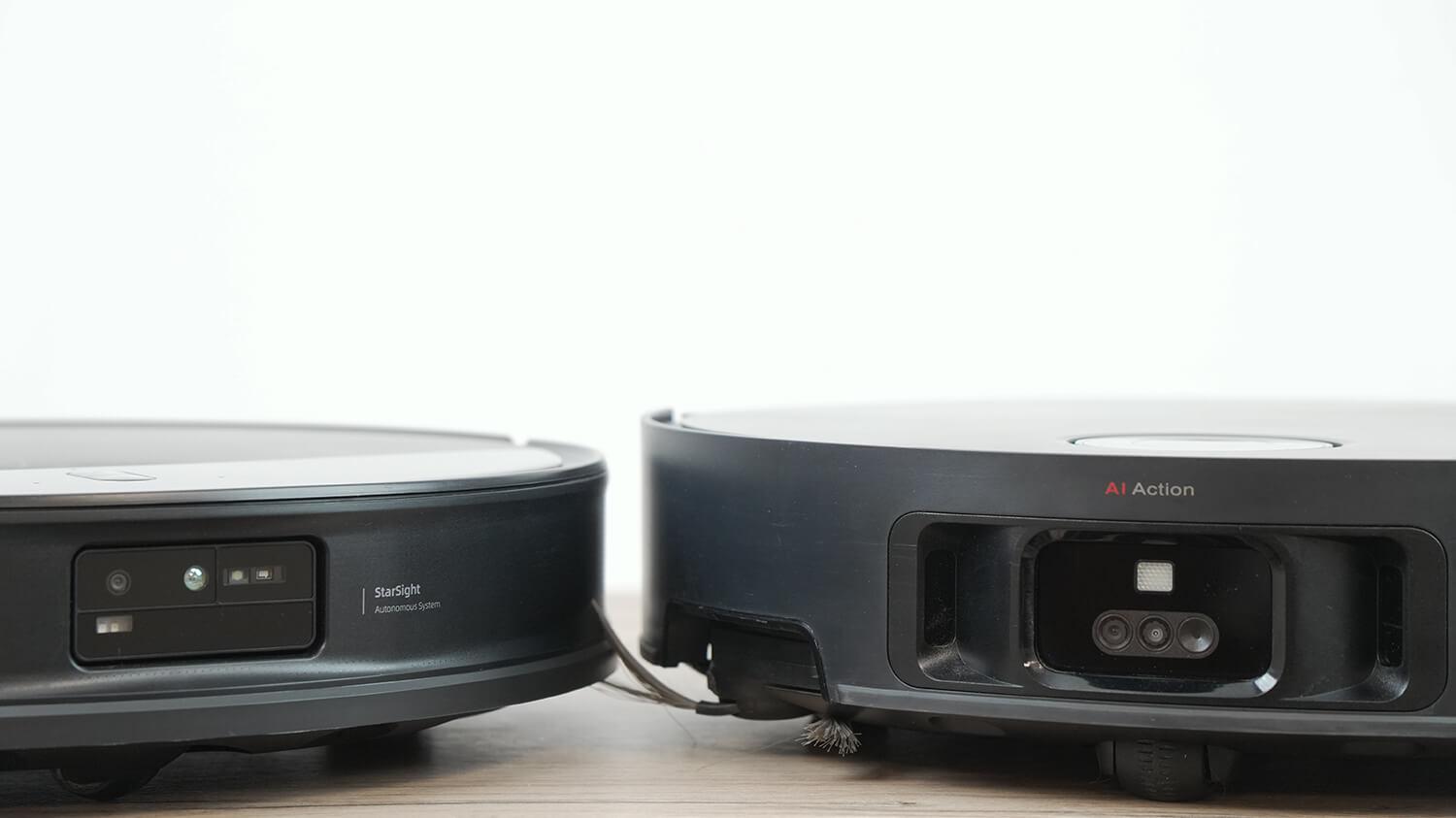
Object avoidance system
The Dreame's navigation is handled by a lidar integrated into its body, while Roborock's turret-like lidar is nonexistent. All navigation is accomplished using front and side cameras.
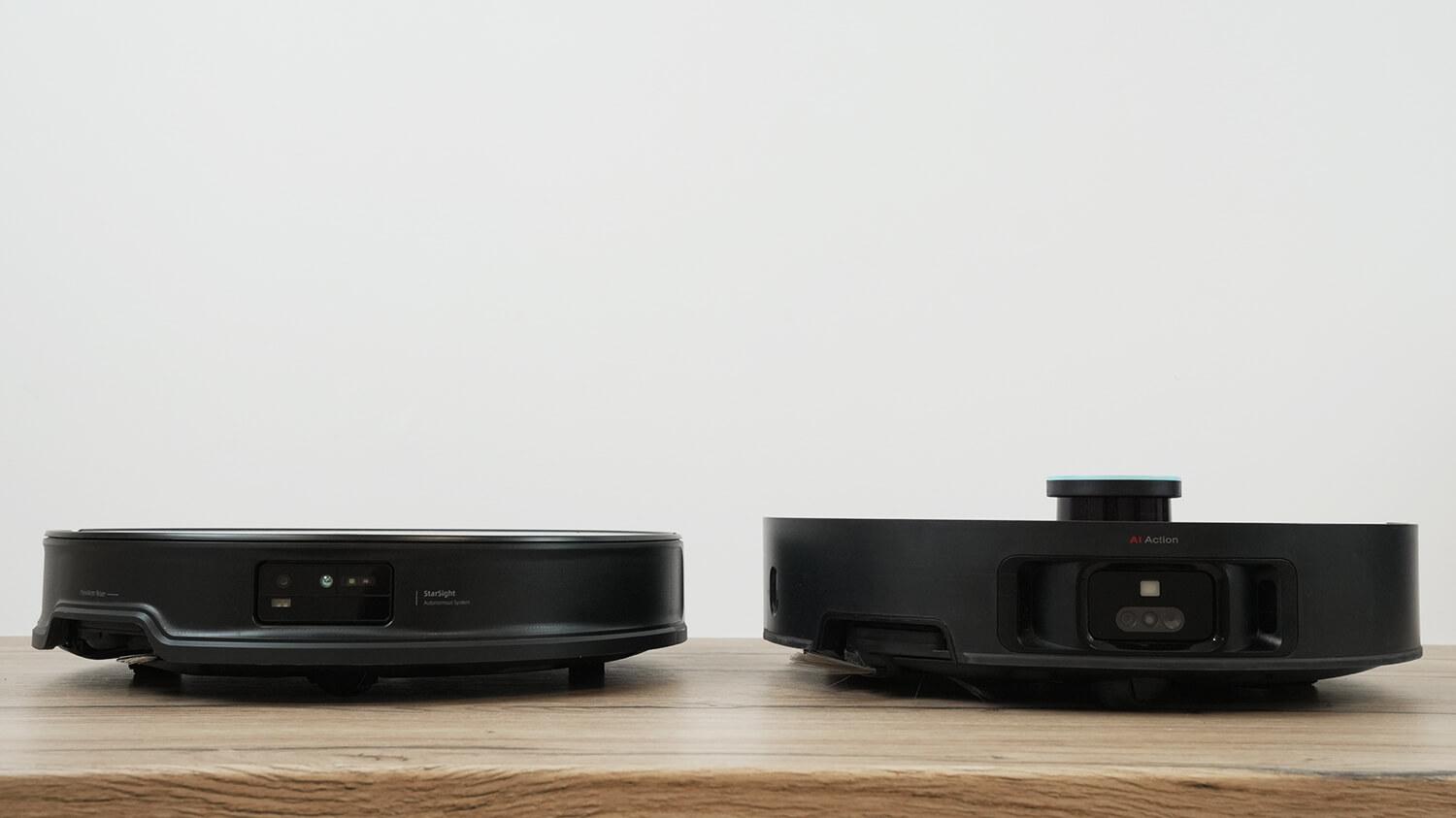
Navigation
Thus, Roborock's engineers managed to achieve a body height of 7.98 cm, while the Dreame's robot with its hidden lidar is 8.9 cm. This means that Roborock is thinner than Dreame, which is an advantage.
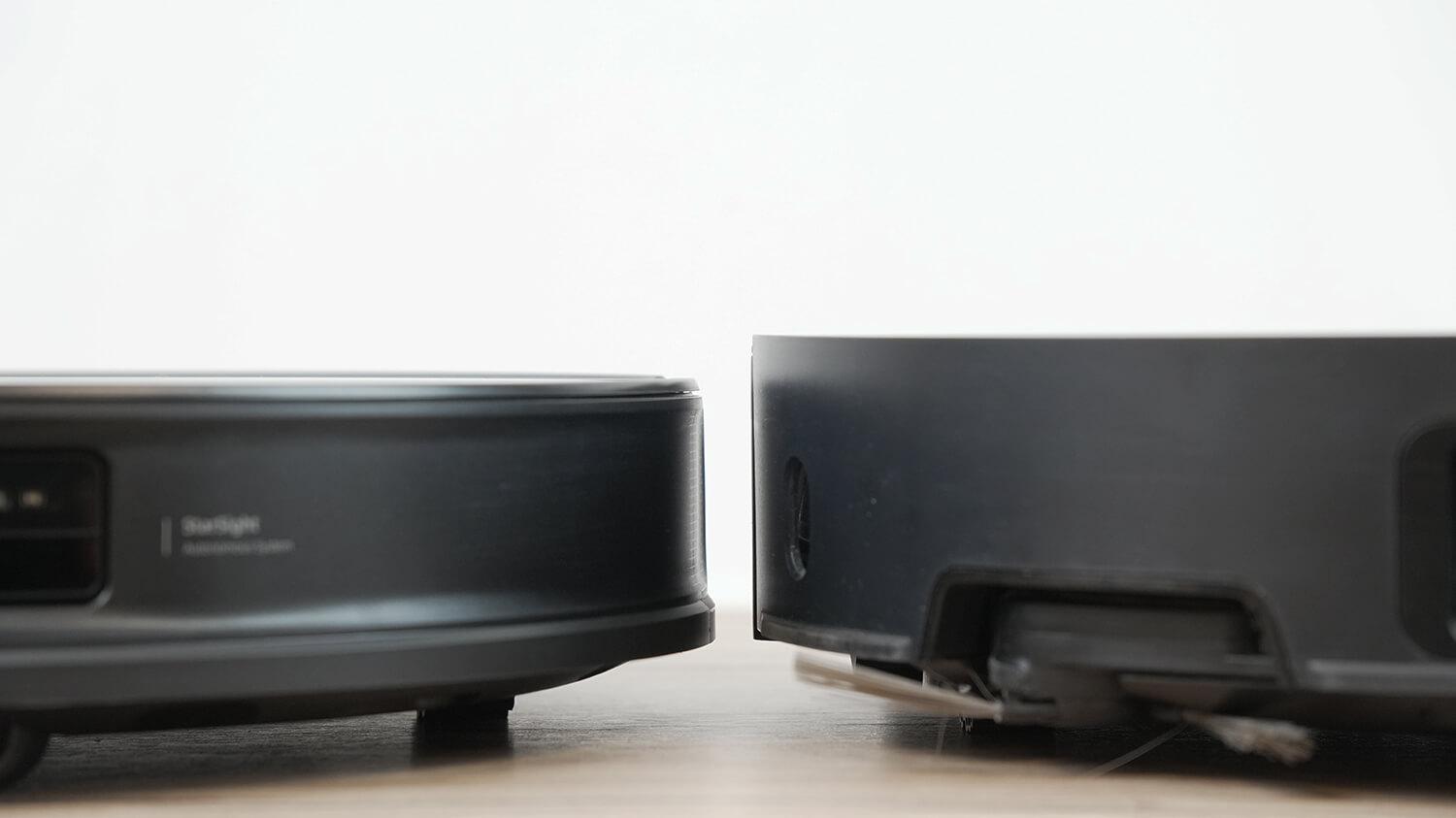
Difference in height
The dust collectors in both models are located on top, under a magnetic lid. The Roborock's dust container is slightly smaller; according to various sources, its capacity ranges from 270 to 350 ml. The Dreame's capacity is 395 ml. Both models use only HEPA filters for filtration.
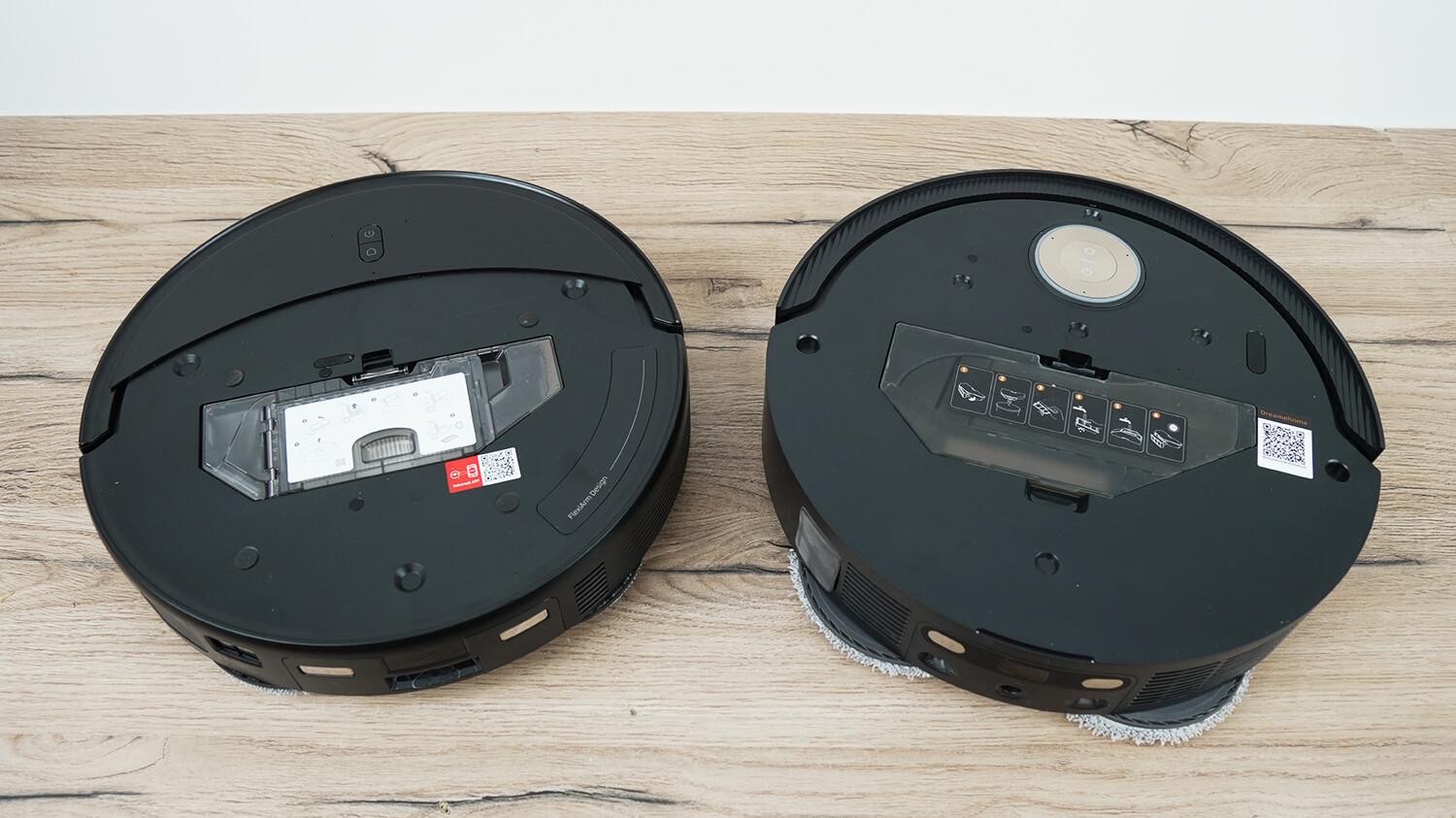
Location of dust collectors
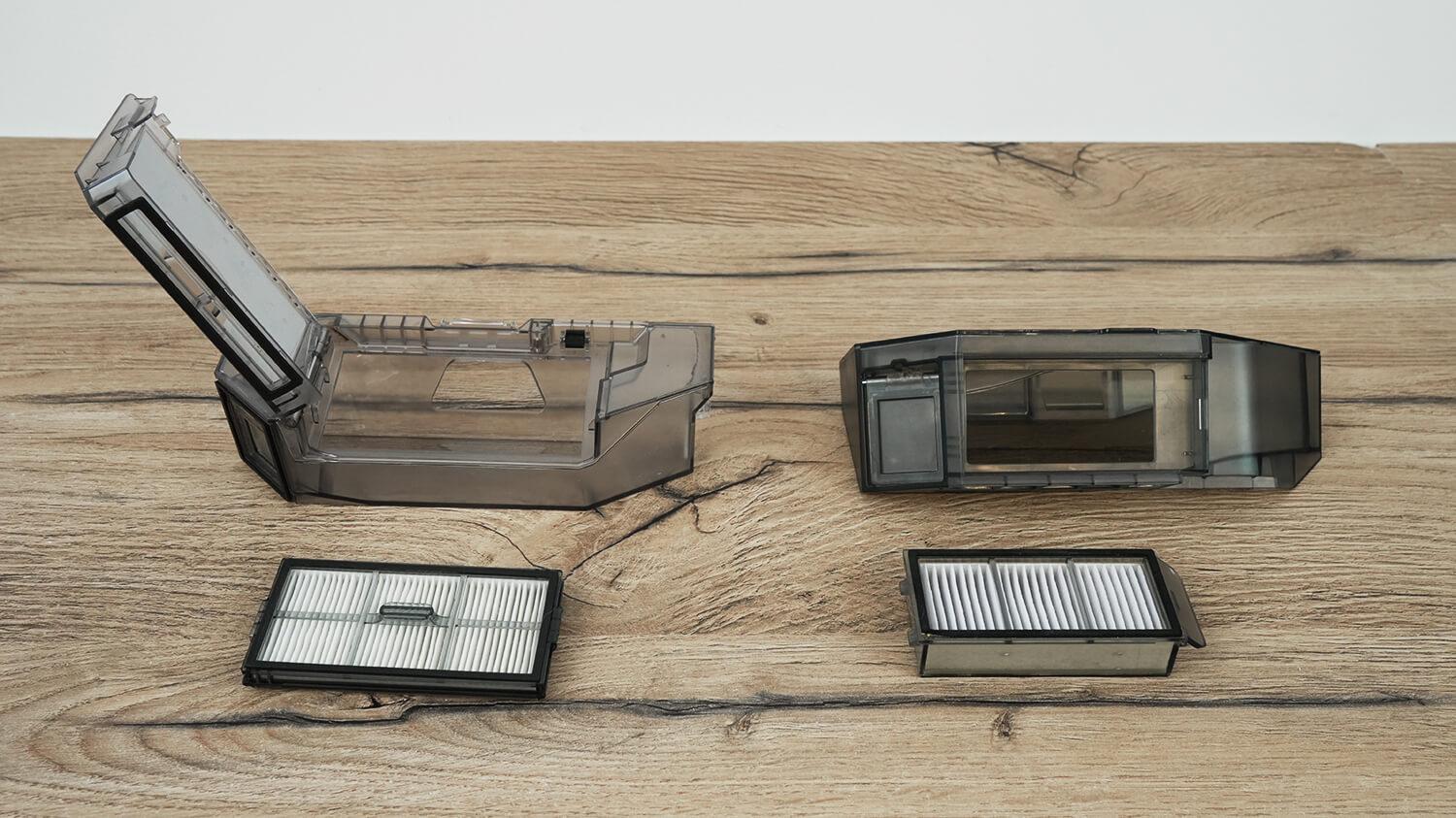
Filtration system
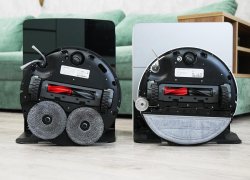
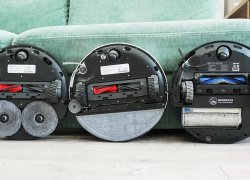
The cleaning modules differ slightly. Each brand has its own approach to brush design. Roborock has a retractable dual-beam side brush and a center brush with a clear opening. Dreame has a retractable triple-beam side brush and a center brush with two turbo brushes. In our experience, both robots perform well at picking up debris on various surfaces, but the Roborock Saros 10R has better anti-hair-tangle protection.
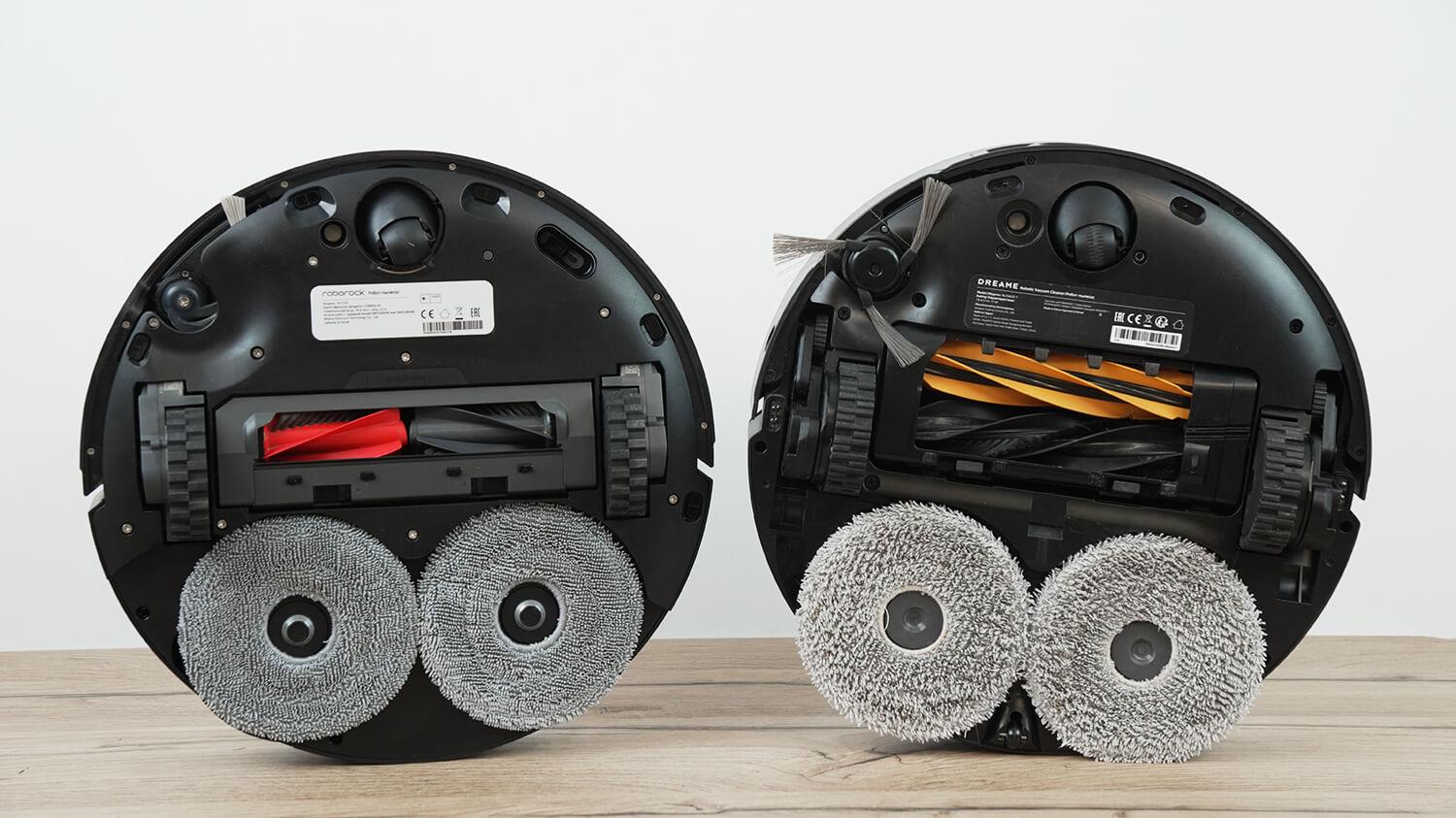
Cleaning modules
The wipes appear identical at first glance and feature an edge-extending mechanism, but the Dreame X50 Master also features a mechanism that allows it to reverse into corners and rotate the body under furniture. This makes it superior to its competitor.
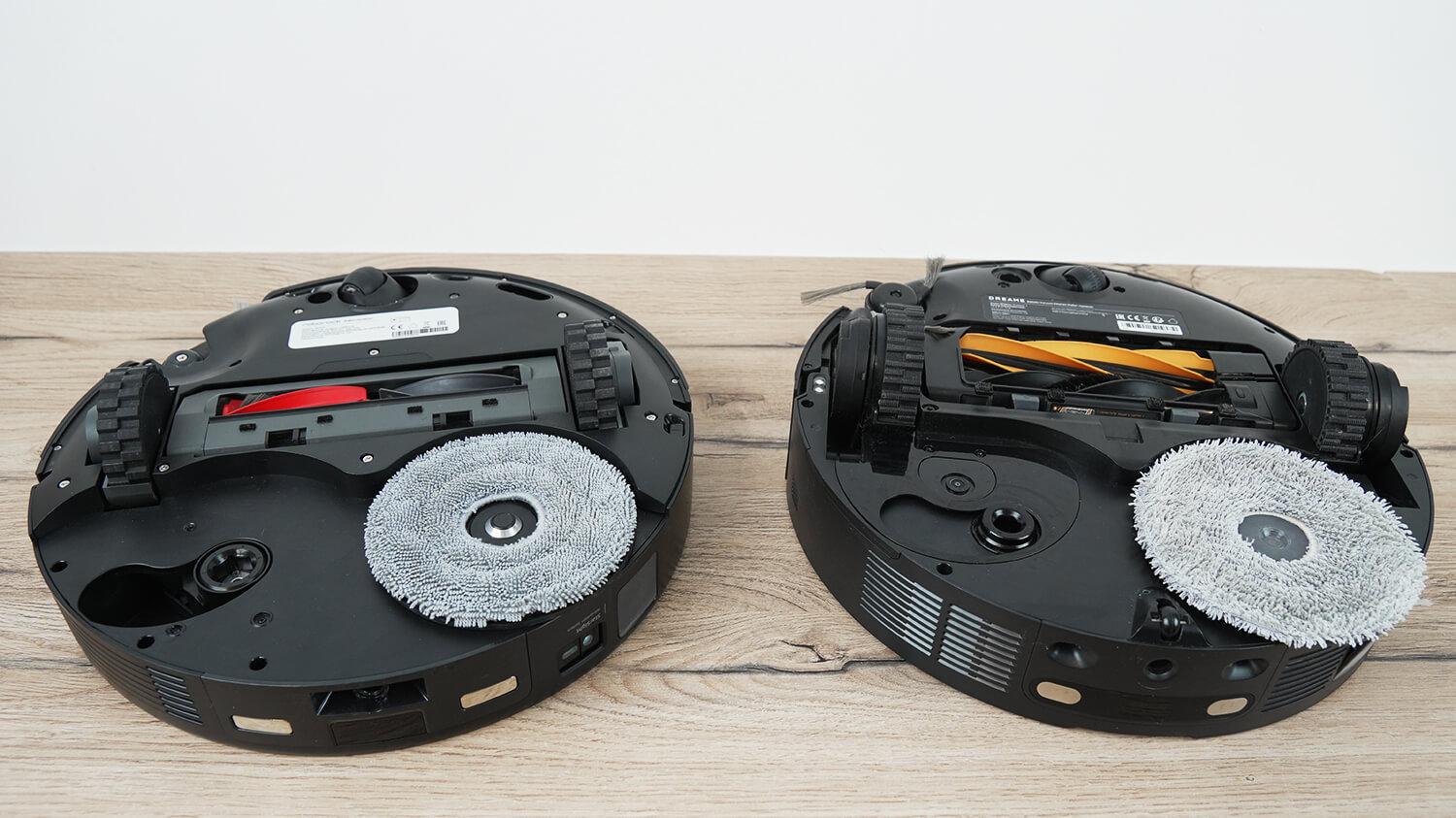
Napkin delivery
In terms of cross-country ability, the Dreame has a better mechanism, allowing it to overcome thresholds up to 6 cm high. Roborock's cross-country ability is limited to 4 cm.
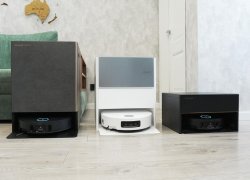
Now let's compare the stations, which is more interesting. Firstly, they differ in size. The built-in Dreame station is slightly lower and shallower, but also slightly wider.
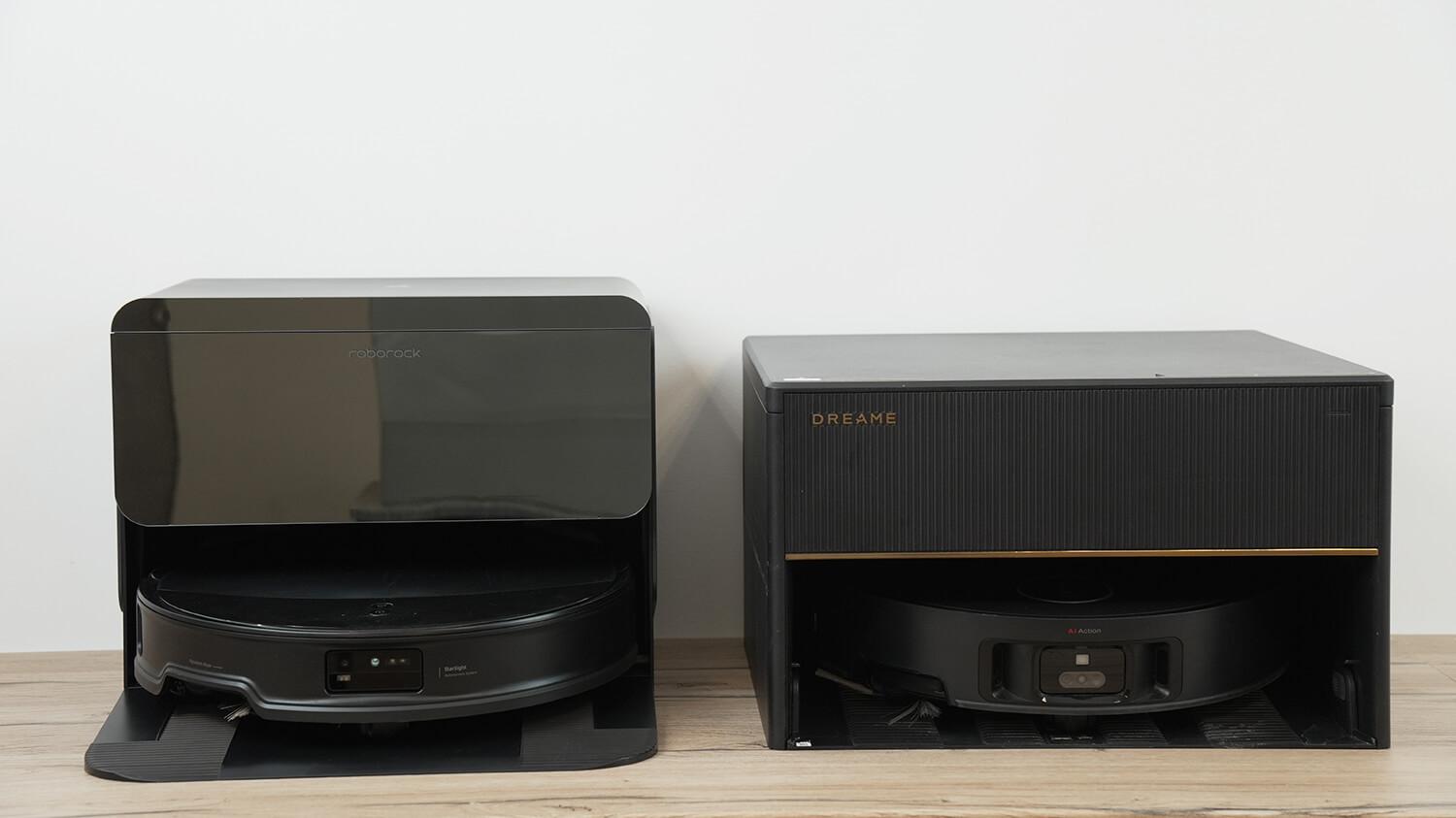
Robots at stations
Size difference:
- Roborock station dimensions (W*D*H): 381*475*300 mm.
- Dimensions of the Dreame station (W*D*H): 416*418*249 mm.
In any case, both stations will fit into a standard 45 cm wide kitchen unit.
Connecting them to utility lines is equally simple. Each unit has two outlets, to which you simply connect the supplied pipes, and the other ends of the pipes are then connected to the water supply and sewer system.
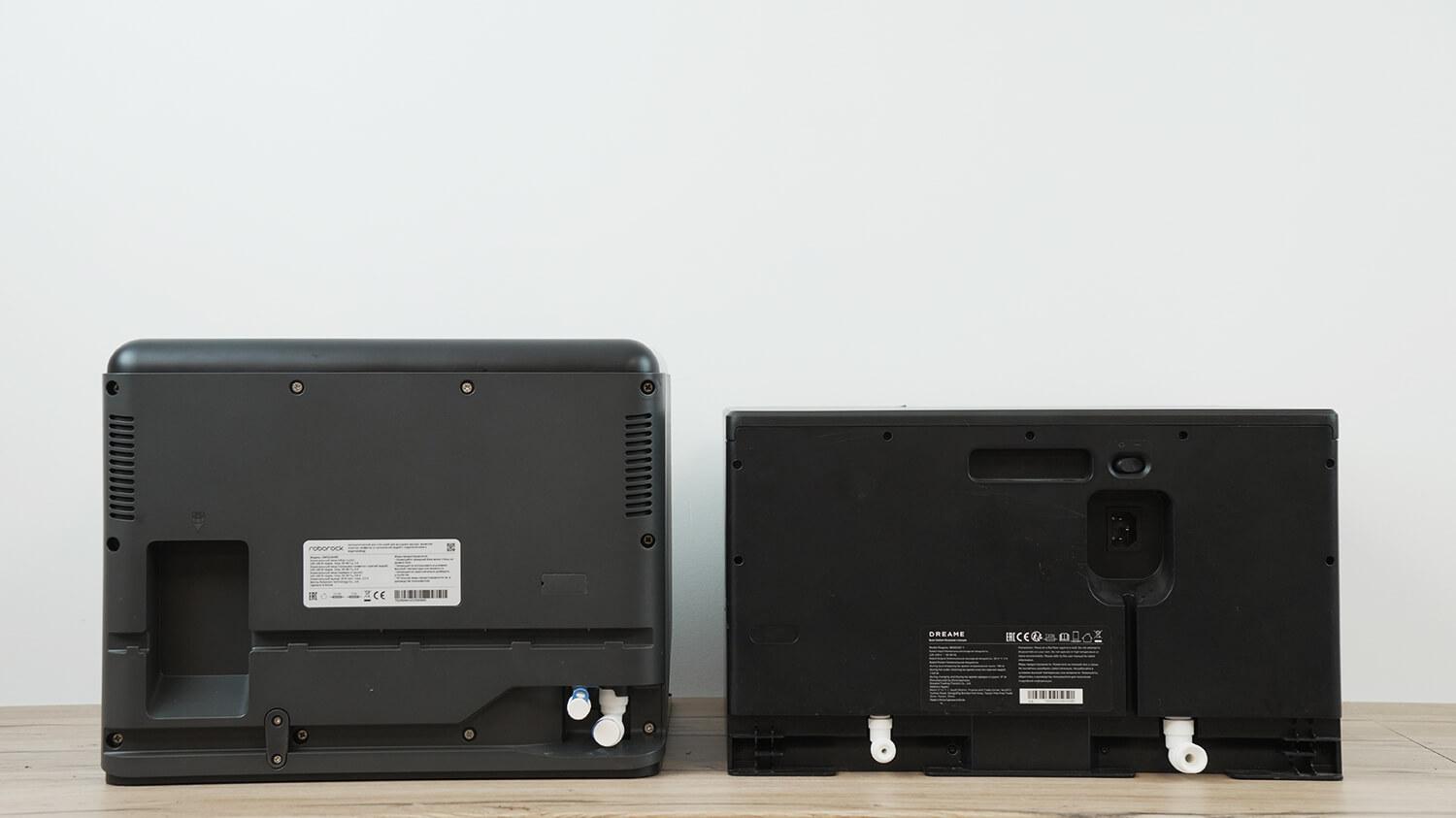
Stations at the back
But what I really like about the Dreame X50 Master's station is that the bottom section is completely removable and can be washed in the sink. With the Roborock, you can remove the drain and the wipes tray separately. However, if dirt and debris gets stuck on the non-removable parts, you'll have to get in there and clean it all out, which is less convenient.
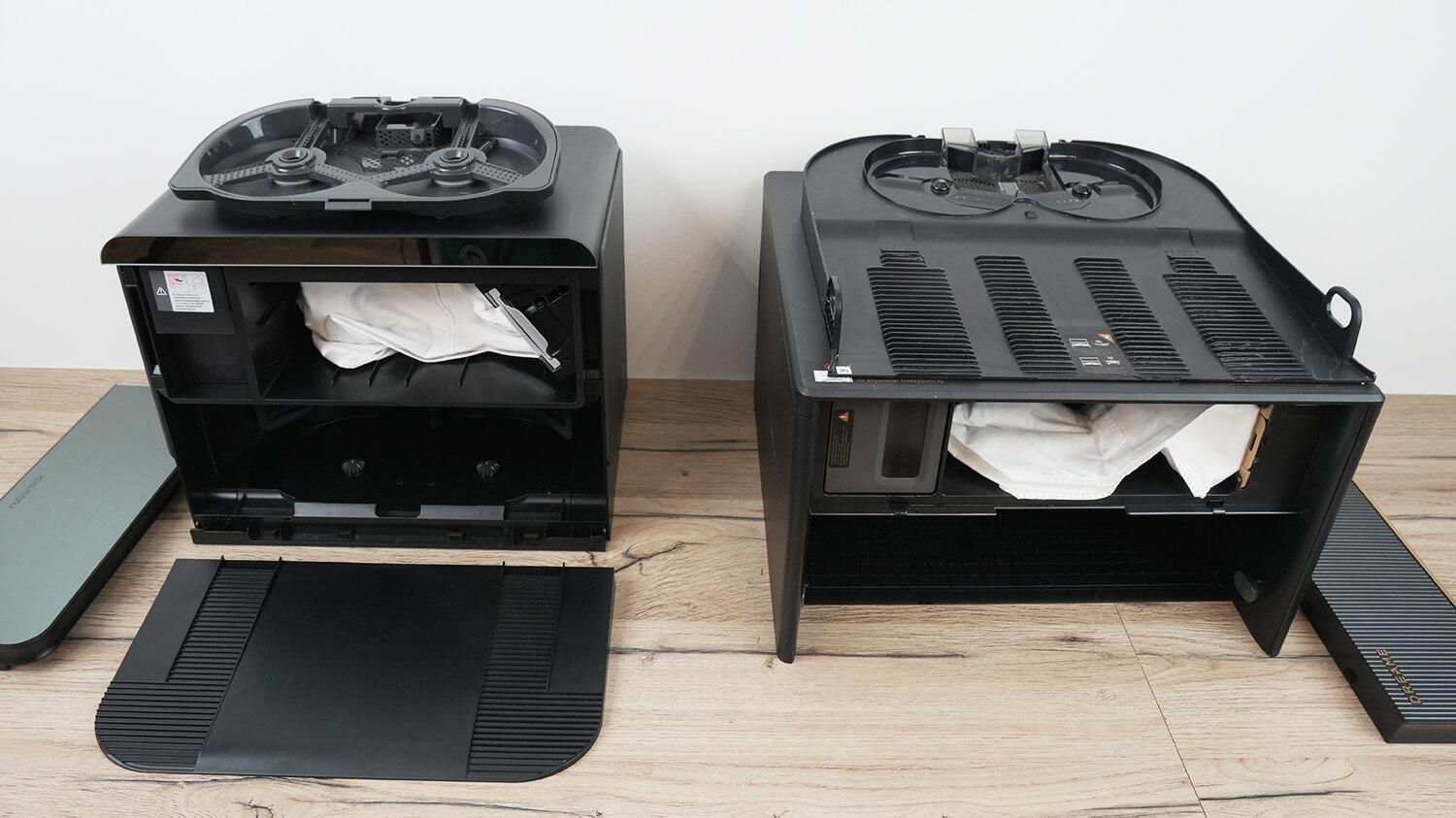
Removable parts
Additionally, the Dreame X50 Master station is equipped with UV lamps in the garbage chute and wipe washing area to disinfect the units.
The two stations have a garbage bag and a detergent container under the covers; there are no significant differences here.
And now one of the key points: there's no way to service both stations. I'm talking about the internal tanks for clean and dirty water, which are located in both stations. I even disassembled both stations to check how everything was arranged inside.
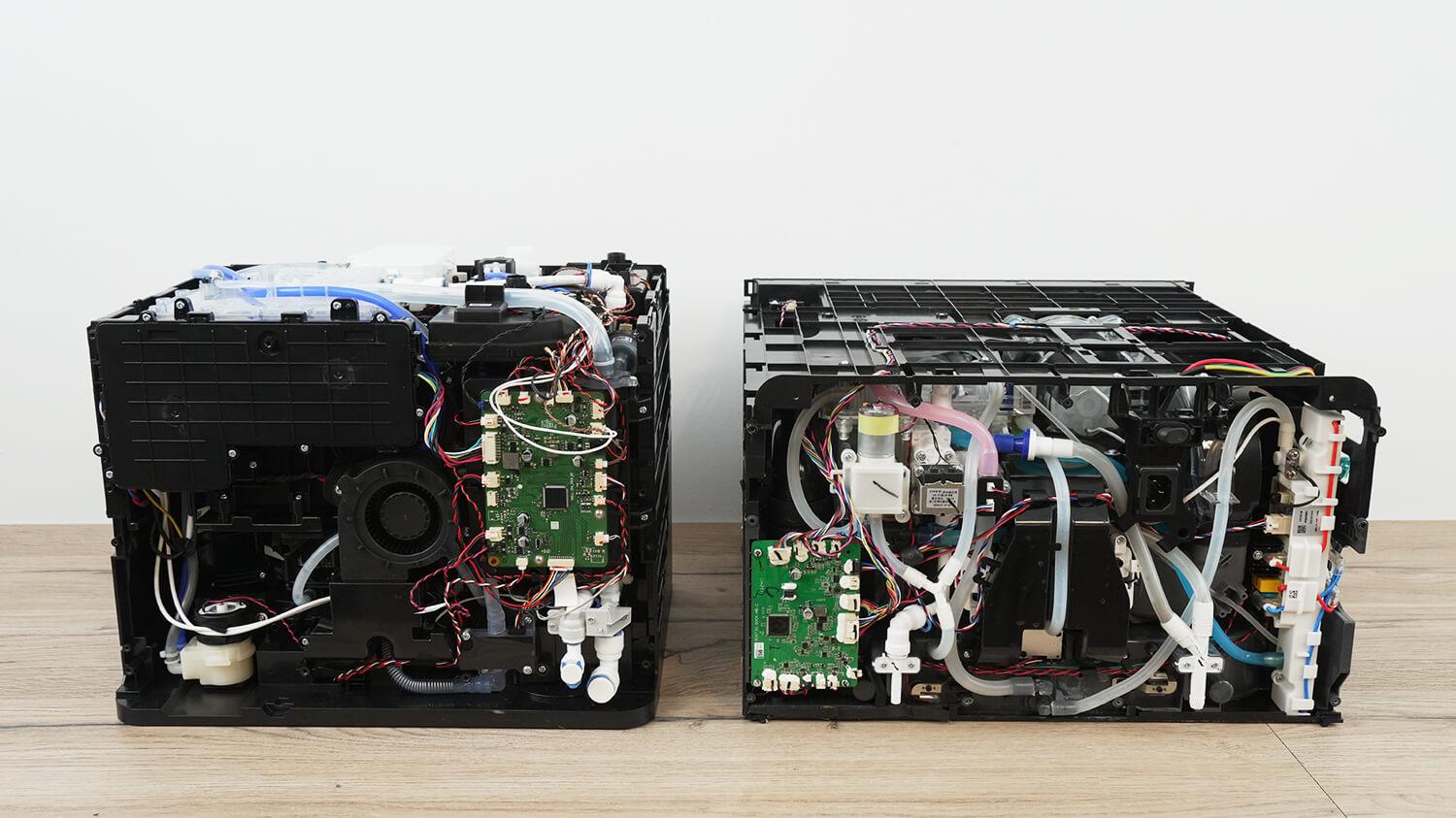
Stations in disassembled form
The Dreame X50 Master's station is very difficult to disassemble. It needs to be completely disassembled to access the internal tanks. This will be beyond the capabilities of most robot owners.
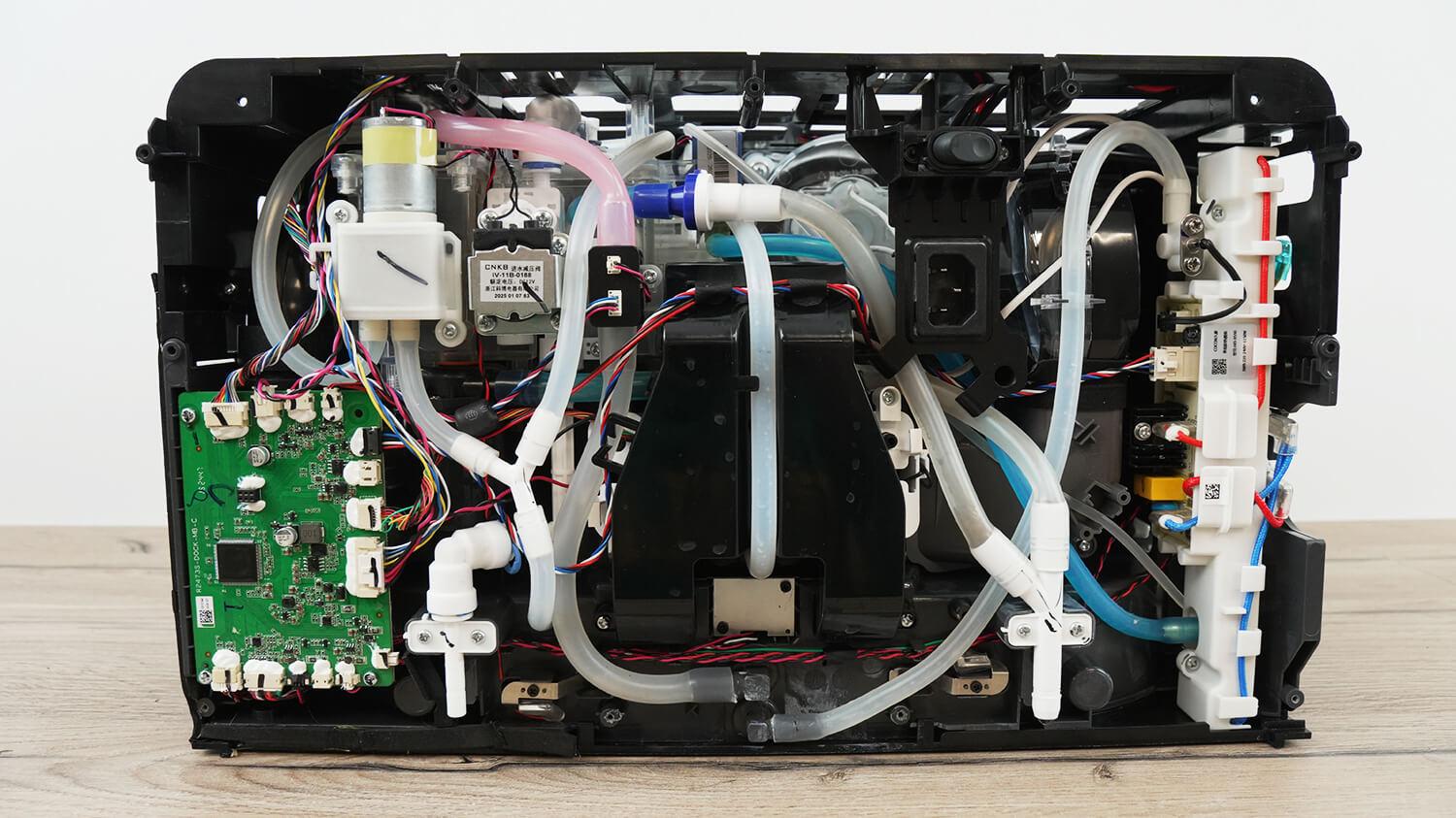
Disassembled Dreame station (rear view)
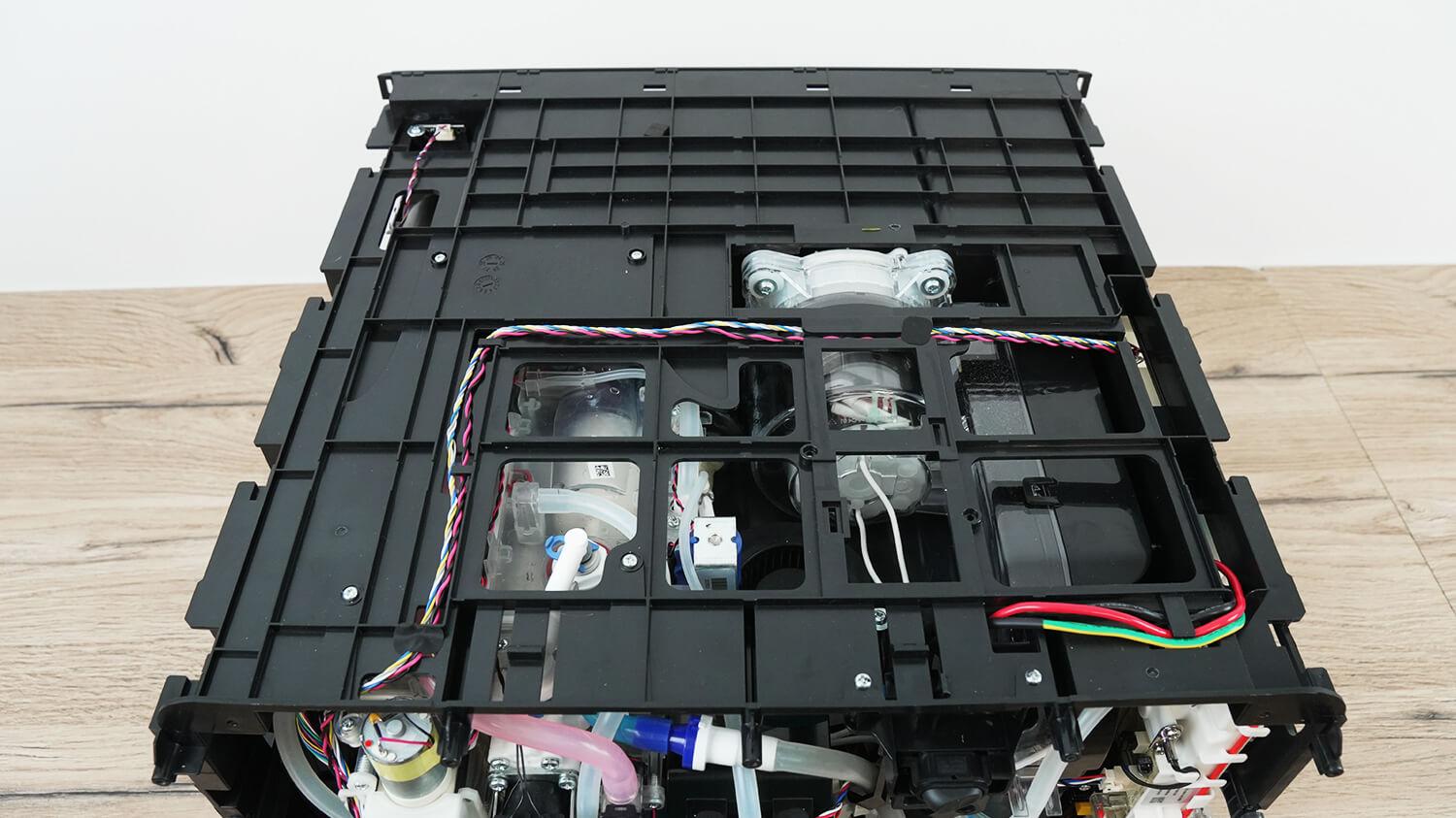
The dismantled Dreame station (view from above)
But the most important thing is that the compartment for draining dirty water can be opened and cleaned if necessary.
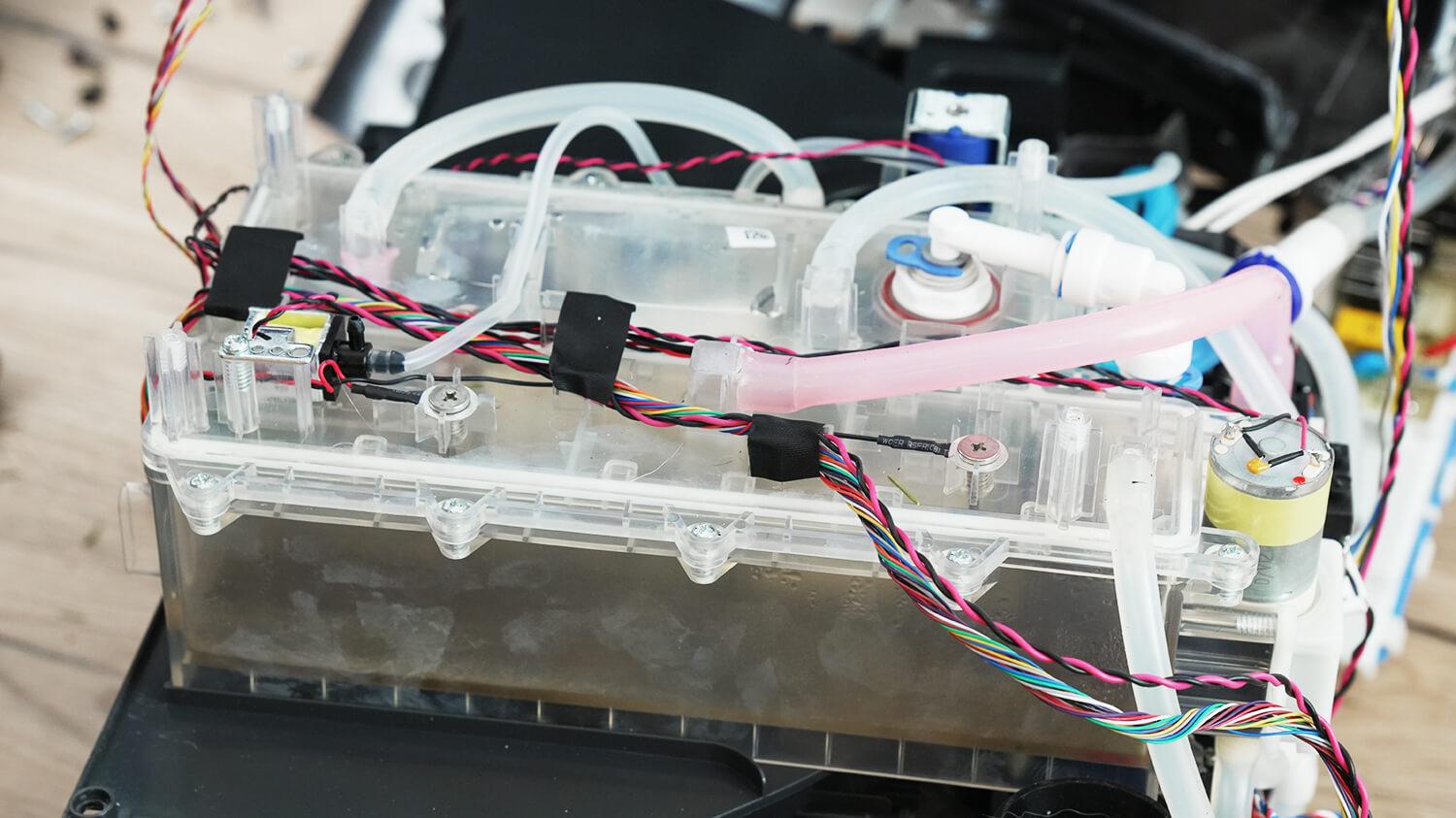
Dreame's dirty water tank
By the way, here's the condition of this tank after six months of active use. In my opinion, things aren't that bad, and the station probably doesn't even require cleaning. At least with this level of contamination, everything would certainly have continued to function without intervention for a long time.
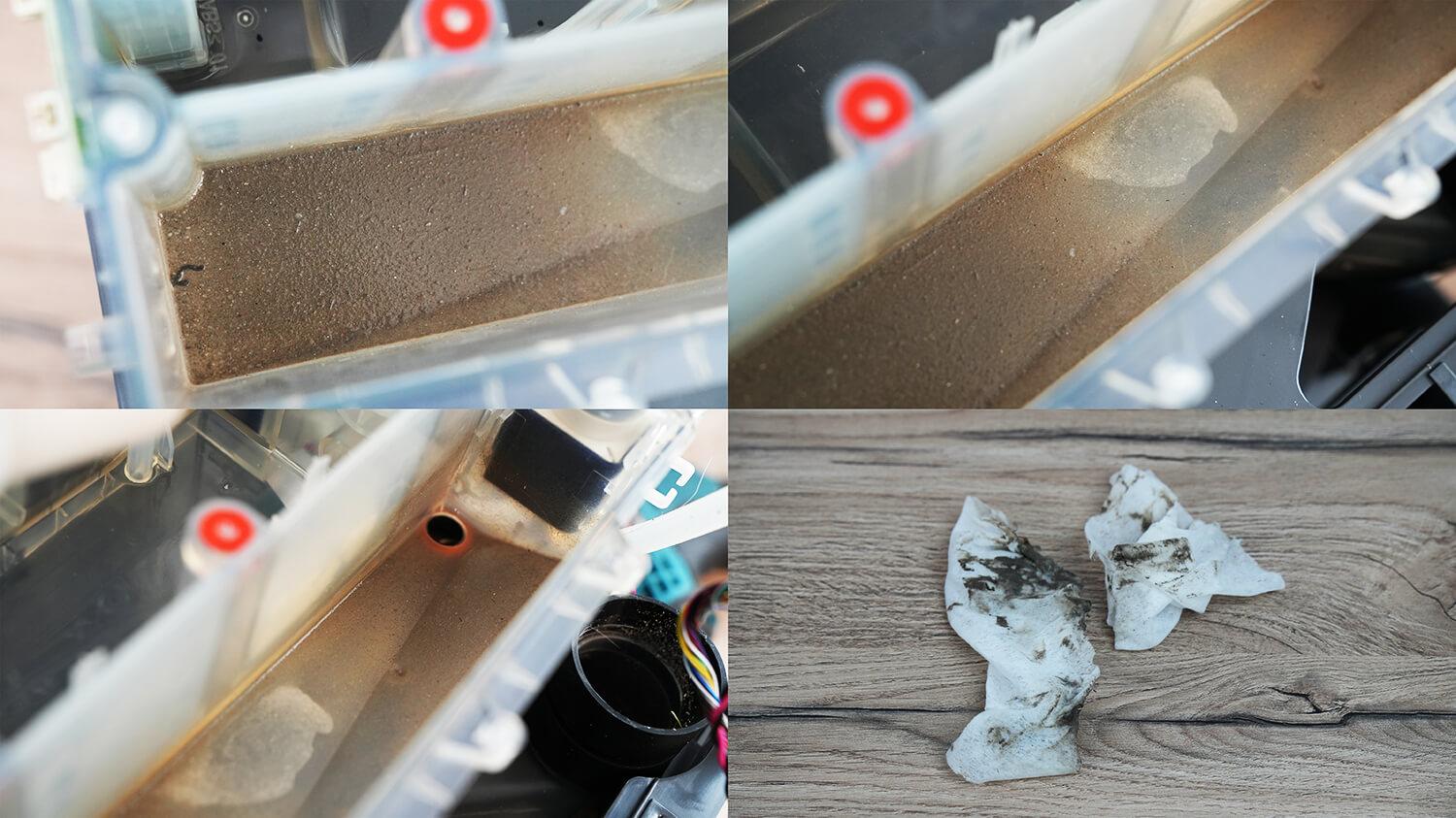
The condition of the dirty water tank after 6 months of use
I'll add that the clean water tank contains a scale inhibitor, which is a plus.
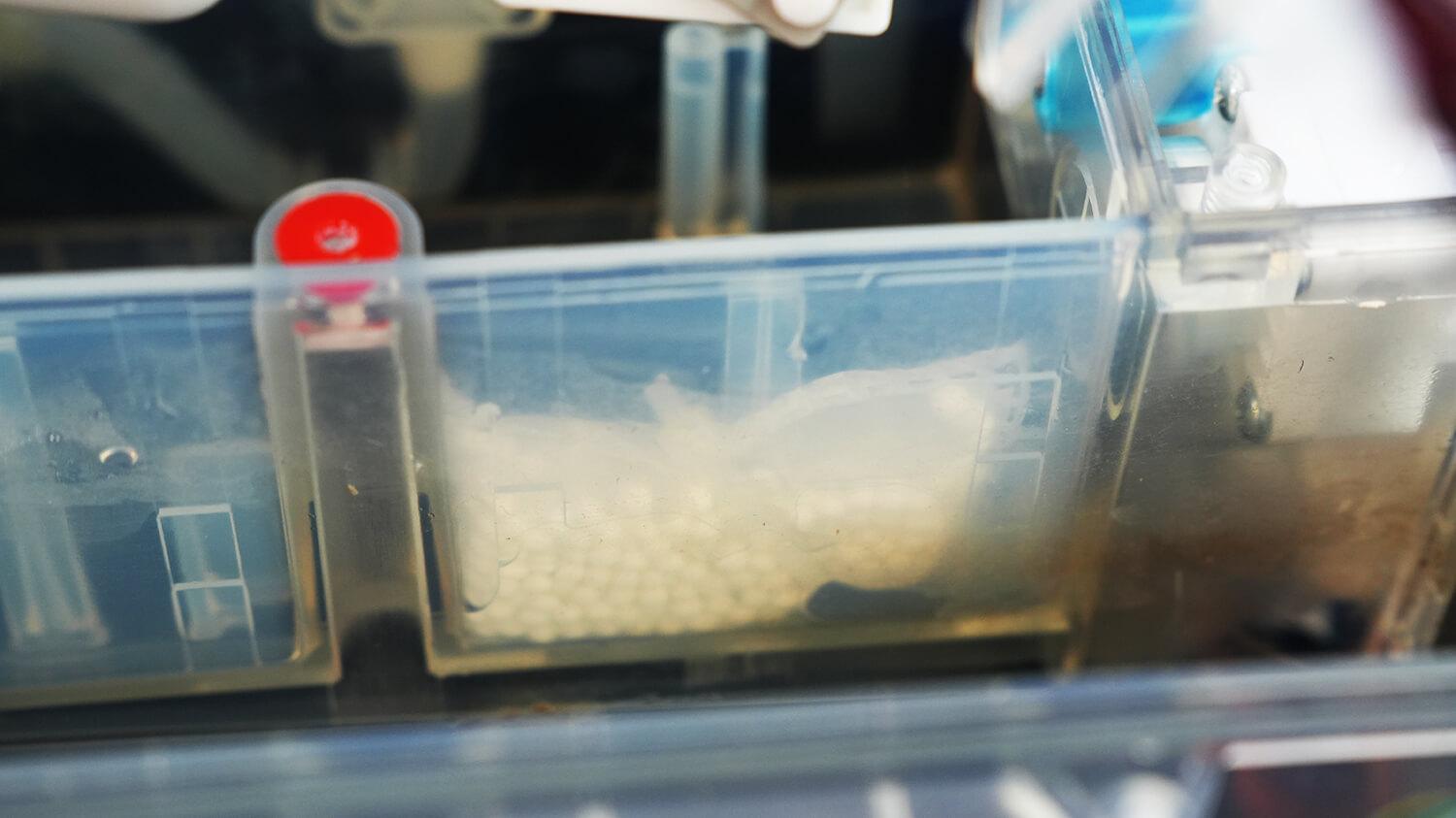
Scale inhibitor
The Roborock station is much easier to disassemble, and most importantly, removing only the covers gives immediate access to the containers. In this regard, the Roborock's assembly, as always, is more pleasing.
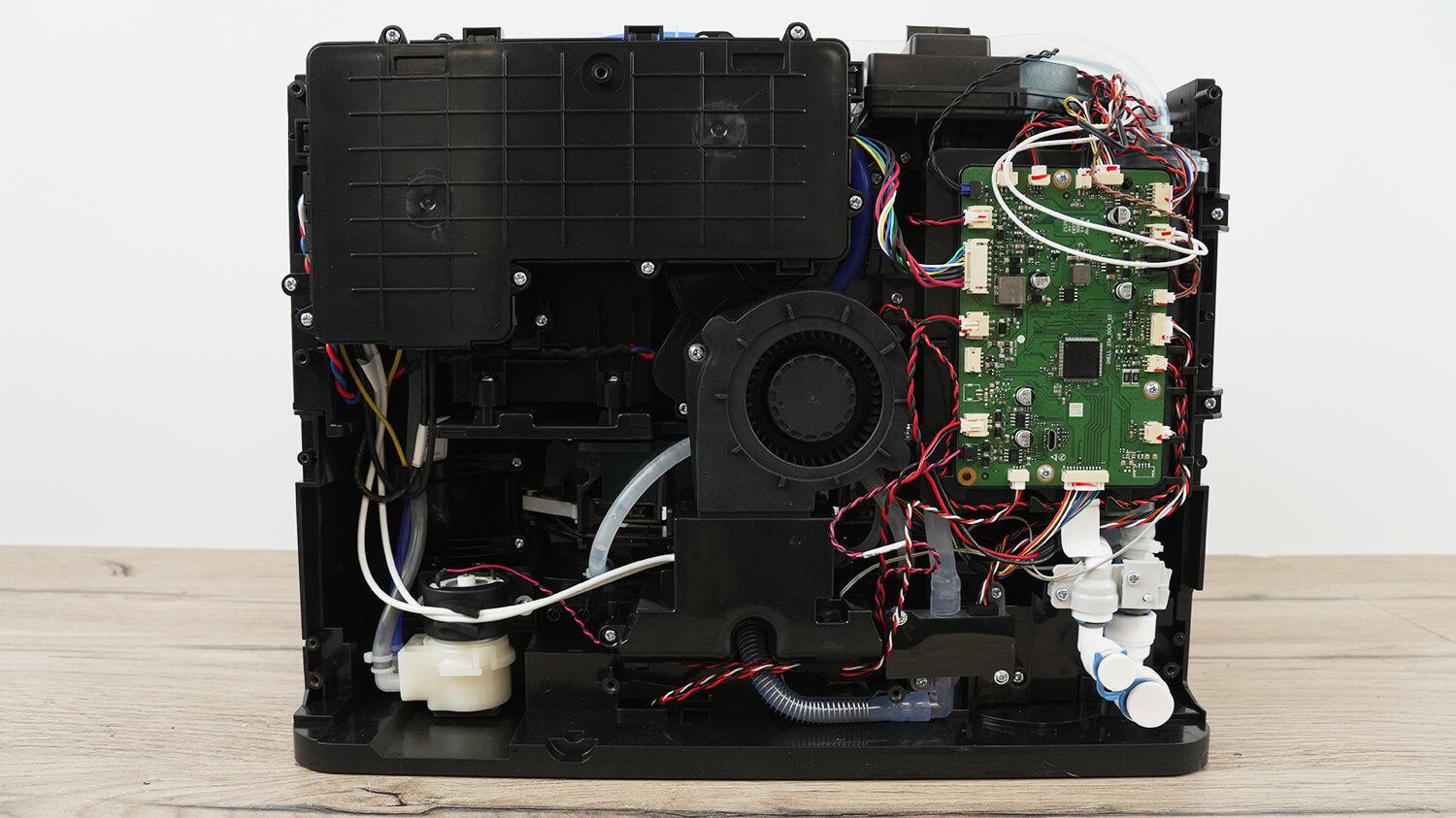
Disassembled Roborock station (rear view)
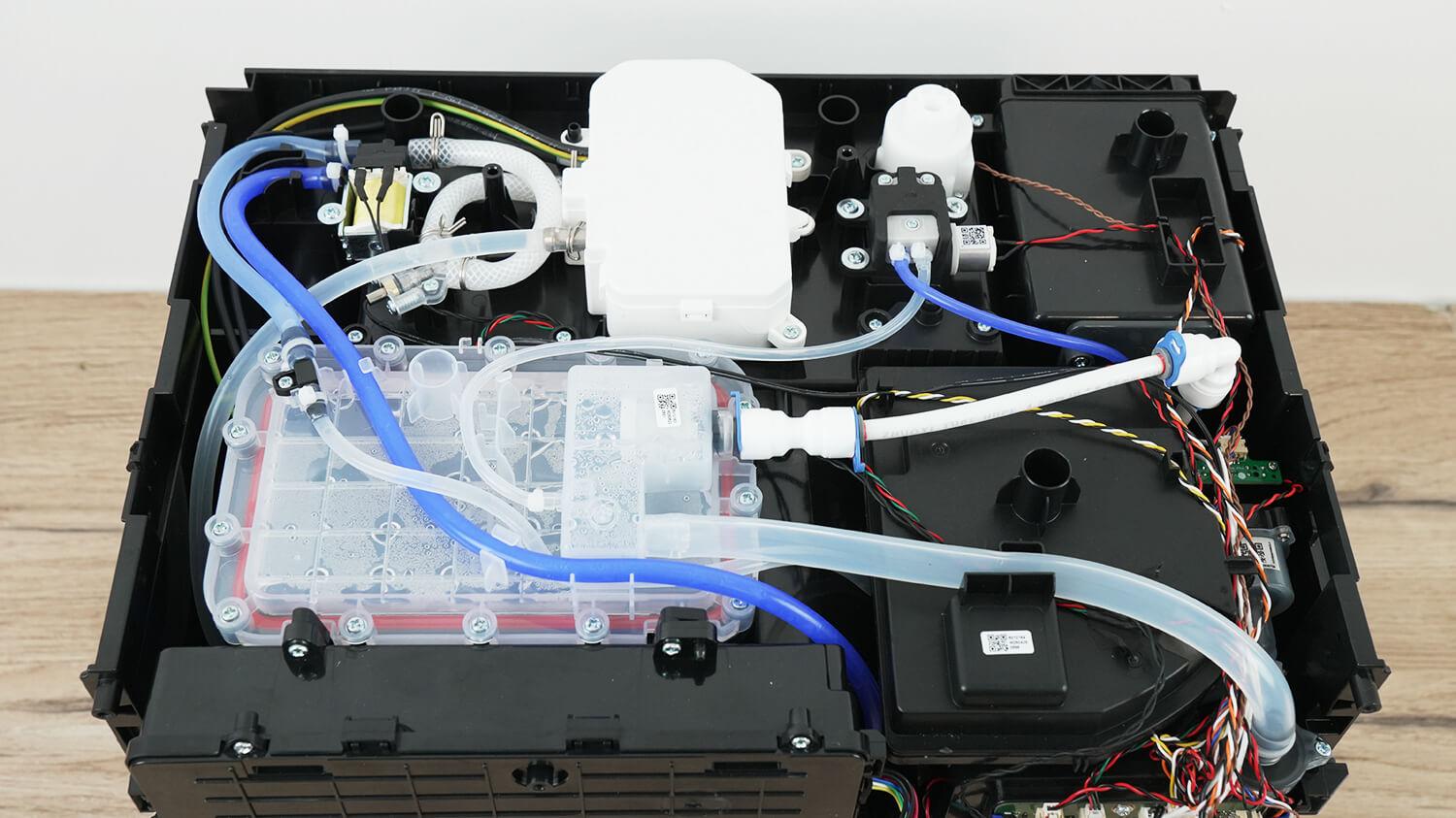
A disassembled Roborock station (top view)
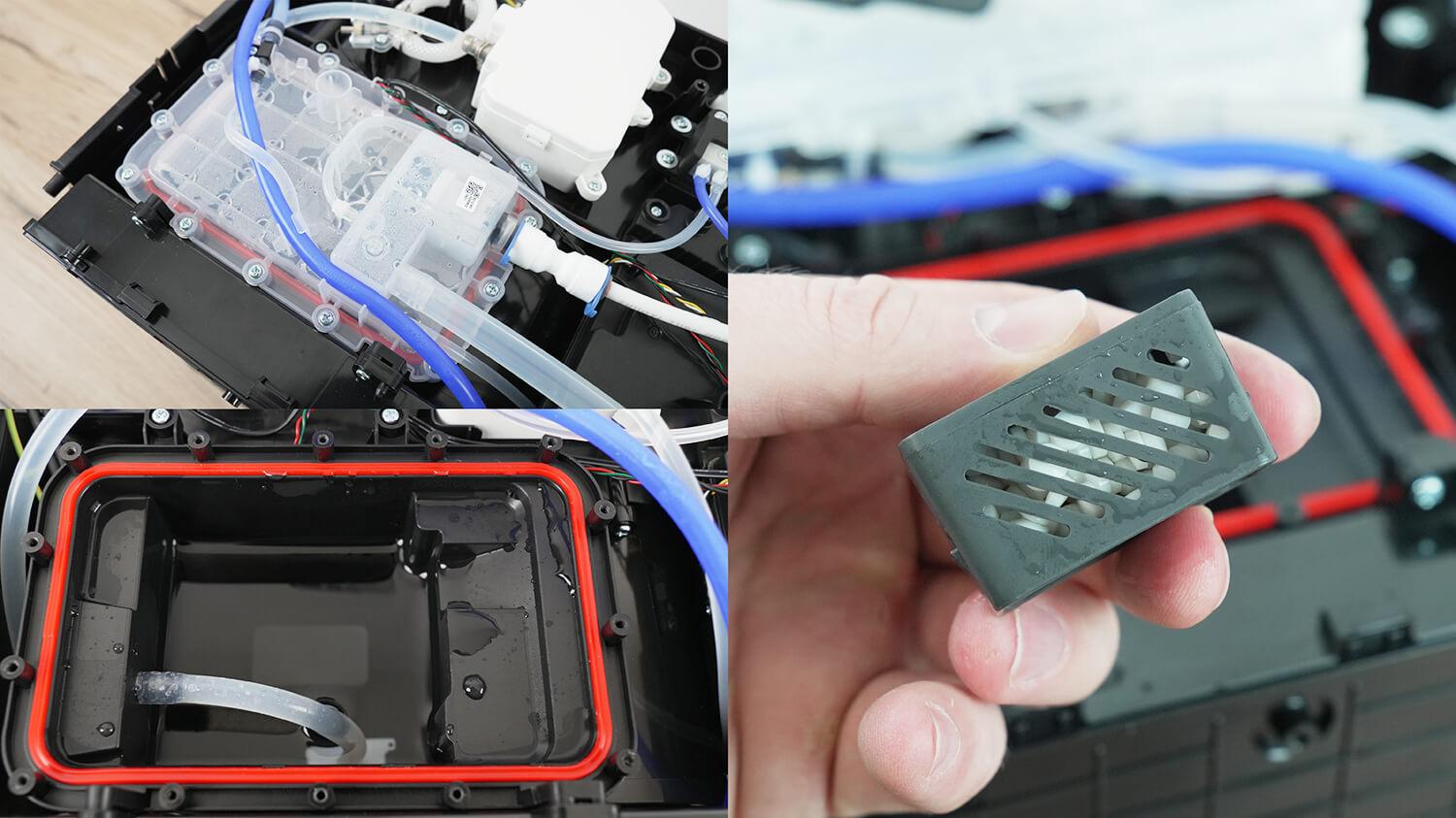
Clean water tank
The catch is that the dirty water tank in this station is non-detachable. It's sealed at the factory, so you can't clean anything inside.
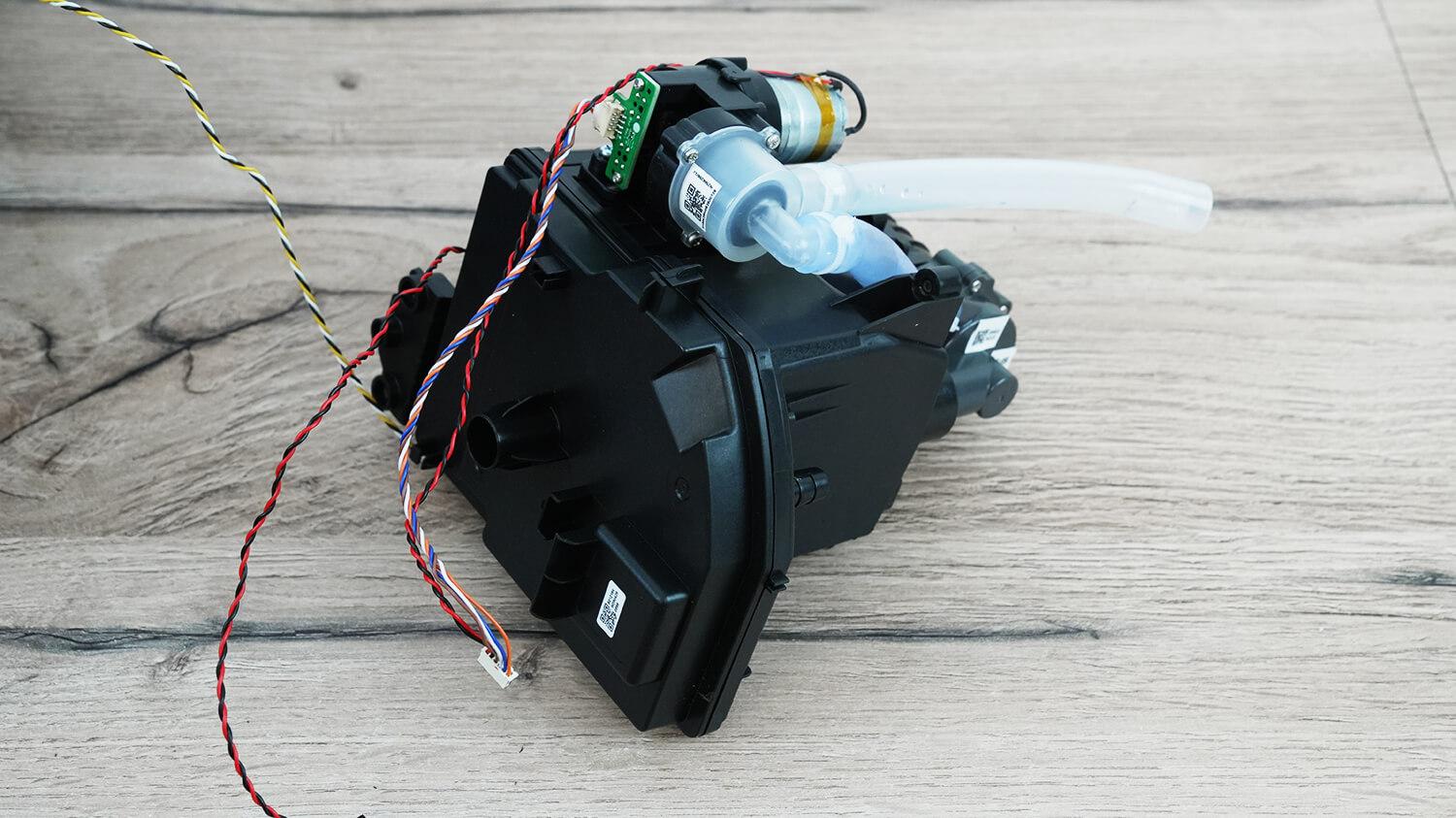
Non-detachable tank for dirty water
Compared to the Dreame station, it's entirely possible that this unit doesn't require periodic cleaning at all. But why not at least make it transparent so everything is visible? In any case, the pump or something else could fail sooner or later, and it would be a good idea to clean this unit right after disassembling the station. Overall, I have mixed feelings about this solution.
But, I repeat, the assembly itself inside the station is better in my opinion. There are more sealed components and clamps, and overall, everything is arranged more conveniently for repair and diagnostics.
A detailed disassembly video has already been published on the channel:
Test results
Regarding the test results, I've compiled all the key information in a table for easy reference. If needed, you can view each review for a detailed examination of each test:
| Dreame X50 Master | Roborock Saros 10R | |
| Operating time and useful cleaning area at maximum settings | 128 min / 102 sq.m. | 122 min / 88 sq.m. |
| Object recognition day:
6 different items 3 socks 4 wiring 6 simulated excrement |
6/6 3/3 4/4 6/6
|
6/6 3/3 4/4 6/6
|
| Object recognition at night:
6 different items 3 socks 4 wiring 6 simulated excrement
|
6/6 3/3 2/4 6/6 |
5/6 3/3 4/4 1/6
|
| The depth of suction of debris from cracks in different modes:
Level 1: Level 2: Level 3: Level 4: Level 5:
|
2 mm (good) 2 mm (better) 2 mm 4 mm (partially) 8 mm (partially) |
2 mm (partially) 4 mm (partially) 4 mm (partially) 2 mm (better) and 4 mm (better) 6 mm (better) and 8 mm (partially)
|
| Cleaning behind the curtains | Yes | No |
| Anti-tangle Hair Protection | It didn't work in difficult conditions, but in everyday conditions the brushes are clean. | He coped better in difficult conditions, in domestic conditions the brushes are clean |
| Quality of waste collection | High on different surfaces | High on different surfaces |
| Removing difficult stains | 6 passes | 6 passes |
| Obstacle clearance | up to 5 cm (one level)
up to 6 cm (two levels: 4+2 cm) |
up to 3 cm (one level)
up to 4 cm (two levels: 3+1 /2+2 cm)
|
| Robot noise level | 58.5-72 dB | 56.5-66.1 dB |
| Noise level of the station | 72 dB | 72 dB |
We see that the Dreame X50 Master has slightly better battery life, higher object recognition accuracy, can clean behind curtains, and is more easily navigated. Meanwhile, the Roborock Saros 10R has better hair tangle protection and is quieter. Each has its own strengths, but in my opinion, the Dreame's advantages are more compelling, despite many of its results being relatively similar.
One subscriber also asked to test the cleaning performance under low furniture. The Roborock Saros 10R, with its 8 cm clearance, cleans without missing any spots, using a smooth serpentine motion. The Dreame X50 Master also cleans well with its hidden lidar; you can see that the serpentine motion is smooth, without any unnecessary movements. So, there's no clear winner here.
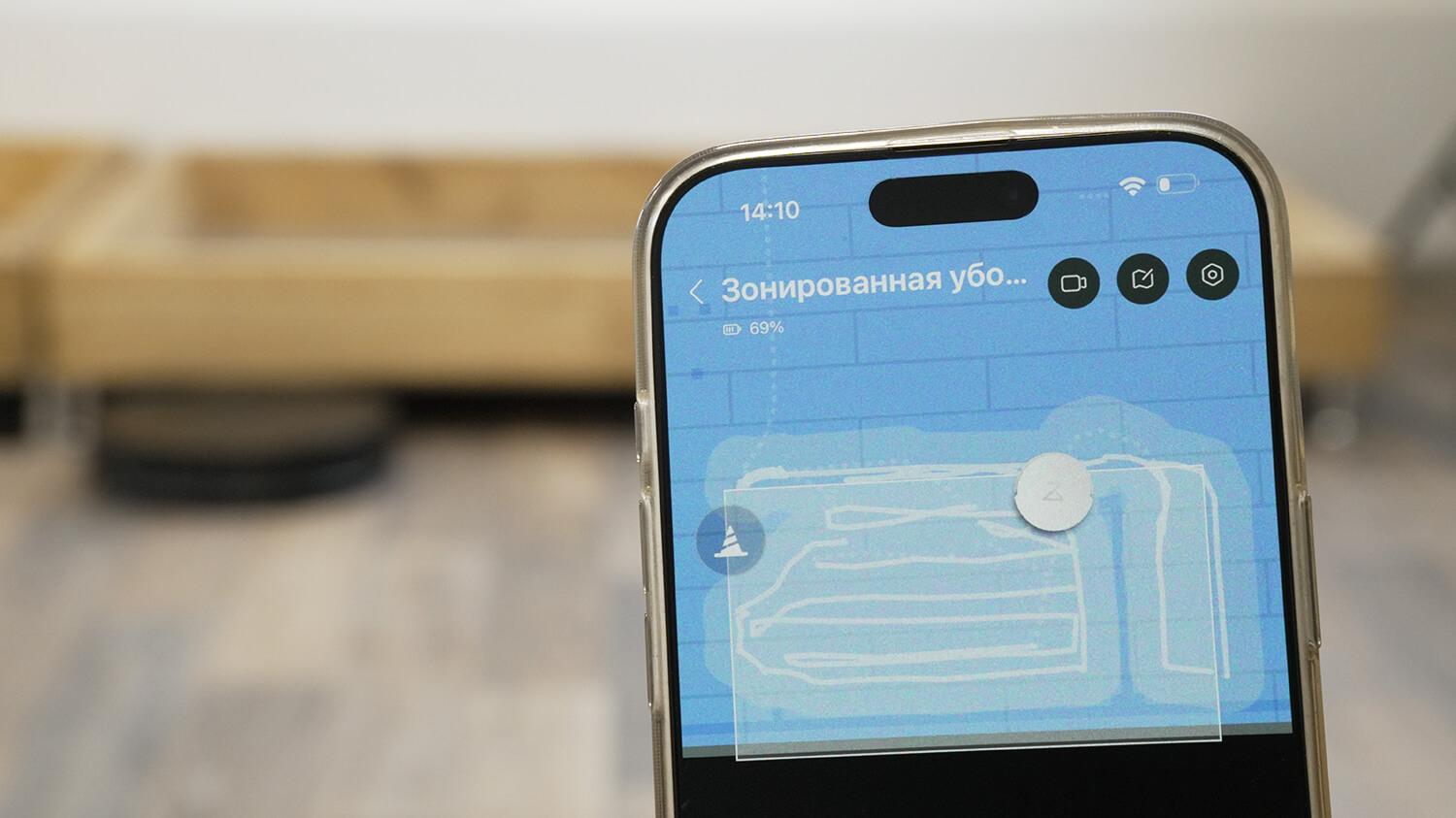
Cleaning under furniture with Roborock
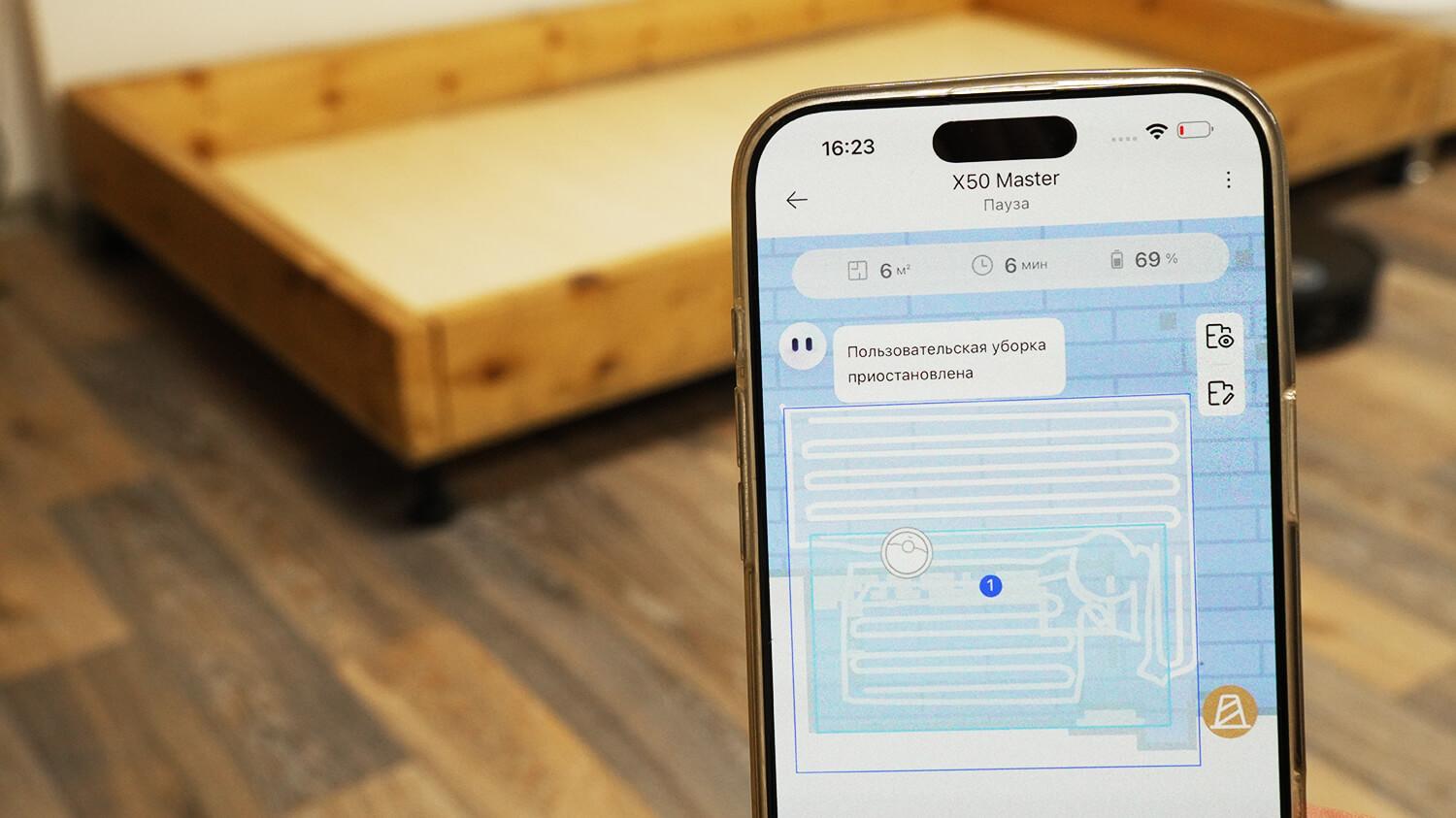
Cleaning under furniture Dreame
It's also worth noting an important detail. For the Roborock Saros 10R to exit its niche, it needs 8 cm of clearance; 8.5-9 cm is even better to ensure no issues. However, for the Dreame X50 Master, the clearance should be at least 12 cm, as the robot exits the station and enters again with its lidar raised. In this case, it will likely be necessary to trim the facade, as the clearance needs to be higher than the standard 10 cm base.
Personal opinion
So what's the bottom line? Both robot vacuum cleaners are certainly interesting and deserve to be in the top 10 for good reason. overall rating At the time of this comparison, the Dreame X50 Master scored 249 points, while the Roborock Saros 10R with a built-in dock scored 241. The gap is minimal, but it's there, just as there are small, but for some, significant real-world differences between robot vacuums.
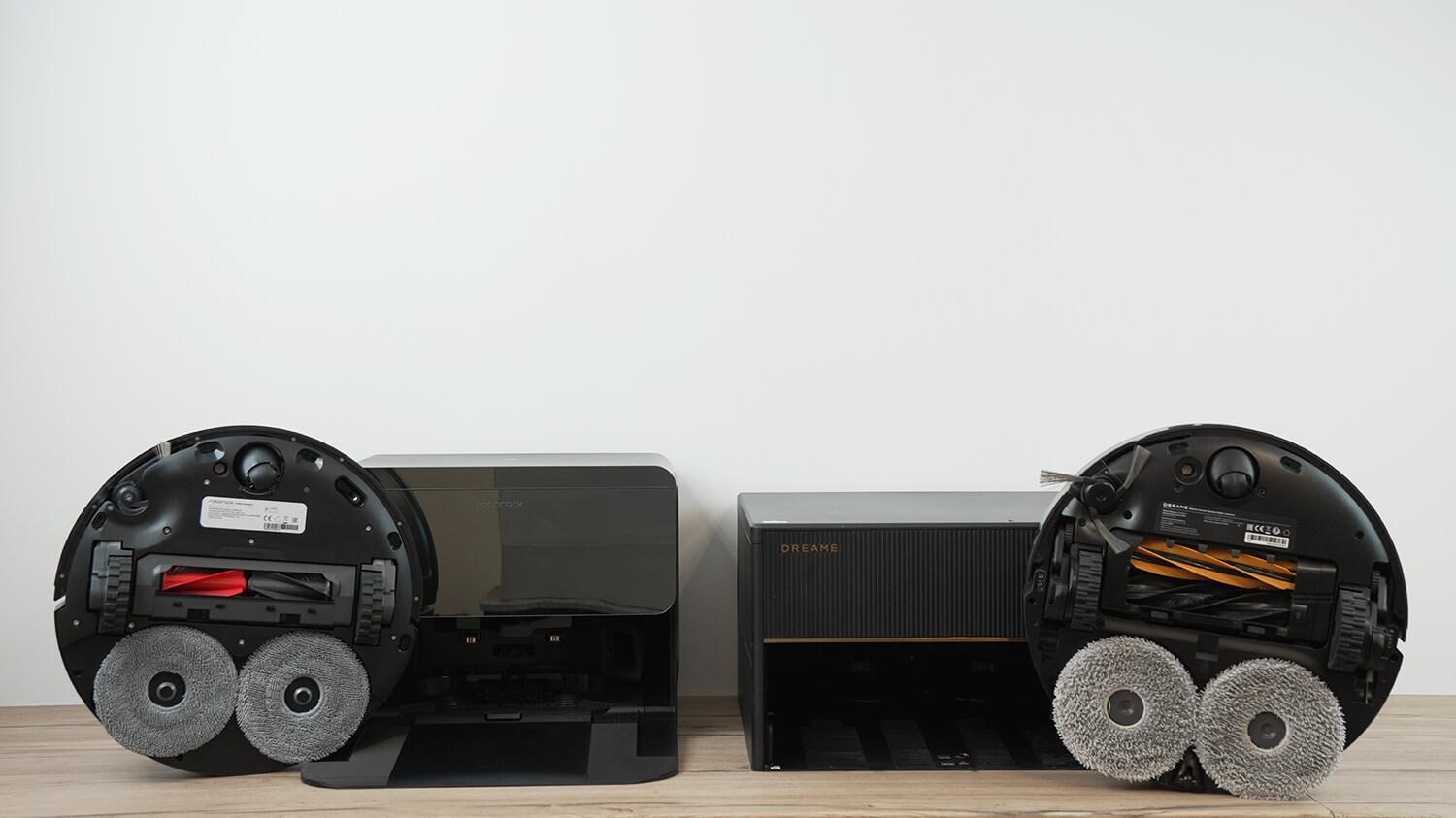
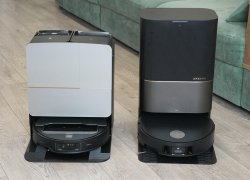
Robots and stations
In my opinion, the Dreame X50 Master is objectively slightly better. Even in terms of the built-in station itself, it's more practical. The bottom is easier to clean, and there's physical access to the internal dirty water compartment, which is admittedly very difficult to access, but at least it's possible. And the robot itself, as mentioned earlier, is slightly more effective at cleaning floors in blind spots, has better maneuverability, cleans behind curtains, and more accurately navigates objects in the dark. And, of course, the price is better all around.
The Roborock Saros 10R, on the other hand, is thinner, quieter, and has a better anti-tangle system. The station is better assembled internally, allowing quicker access to the internal components, but this is more convenient for service centers for repairs. Few owners will need to disassemble it. This would be especially useful for cleaning the dirty water compartment, which is not disassemblable from the factory.
In any case, by choosing one of the compared built-in models, you'll become the owner of a robot vacuum cleaner with the best features and cleaning performance. It's simply a matter of choosing which features are more important to you and which brand you prefer.
All that remains is to hope that brands implement convenient access to the internal tanks in their new built-in stations, allowing for periodic maintenance. Especially since Dreame already had a convenient option with a dirty water compartment that was partially accessible for cleaning.
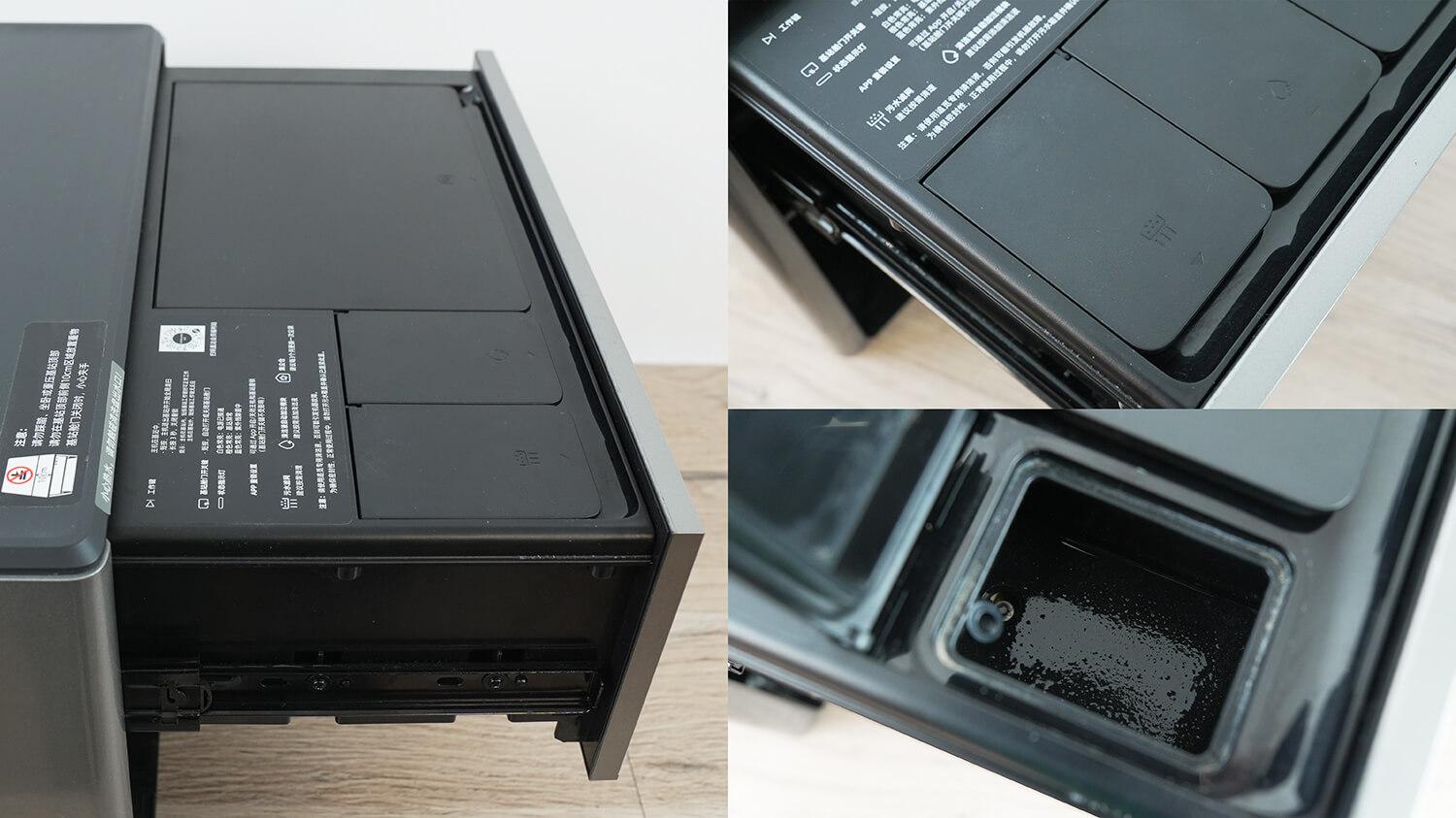
Dreame Serviced Station
It's unclear why they removed it. Or maybe you could just design it so that nothing gets clogged at all, and all the dirty water flows directly into the sewer without overflow.