Comparing the Xiaomi Mi Robot Vacuum Cleaner and the iRobot Roomba 616
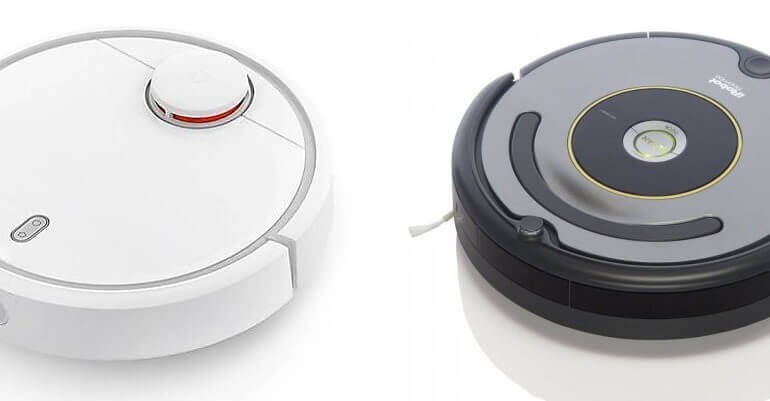
Not long ago, a robot vacuum cleaner was releasedXiaomi Mi Robot Vacuum Cleaner, which not only successfully launched in the household robot market but also provided significant competition to manufacturers like iRobot and iClebo. Xiaomi managed to integrate all the most important features and specifications into its relatively low price, attracting many customers. Below, we'll share our personal opinion on which model is better, providing a brief comparison of the Xiaomi robot vacuum cleaner and the iRobot Roomba 616.
Why we compare it to the iRobot Roomba 616
Most people, when comparing Xiaomi and iRobot robots, put forward the model from the American manufacturer as a contender iRobot Roomba 980, which is fundamentally wrong. The fact is that this robot vacuum cleaner is in a completely different price range; it's like comparing an inexpensive Chinese car to a Mercedes or Infiniti. However, despite this, the Xiaomi Mi Robot Vacuum Cleaner isn't that far behind the Roomba 980, which makes it even more appealing.
We chose the 616th Rumba for comparison for two reasons:
- This model is also quite popular and has more positive reviews than the Roomba 980 or 960.
- The prices of the compared robot vacuums are almost identical. The average price of the Xiaomi in 2019 is $170, while the iRobot costs $19.90. The American manufacturer's 700 and 800 series models are also more expensive, making the Roomba 616 the most fair comparison option.
Comparison criteria
To understand which robot vacuum cleaner is better—a Xiaomi or an iRobot—you only need to analyze three factors: technical specifications, package contents, and functionality. Another less important, but still necessary, comparison criterion is design. This will ultimately help you determine the merits of each model. So, let's get started.
Equipment
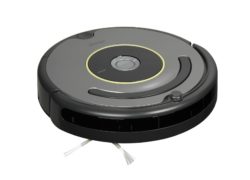
The Roomba 616 comes with a charging base, user manual, and a two-year warranty. A motion limiter and remote control are not included. The manufacturer also did not include any cleaning accessories.
The Xiaomi robot's package is similarly sparse. The box includes a charging base, power cable, instructions, warranty card, and a cleaning brush. A magnetic strip to restrict movement is available for purchase separately. As we can see, the differences in the package are minimal, but it's worth noting that this robot vacuum has a one-year warranty instead of two.
So, in this comparison, it’s a draw – 1:1.
Technical specifications
It's more important to compare the specifications of iRobot and Xiaomi. Let's make a brief comparison in table form:
| Xiaomi Mi Robot Vacuum Cleaner | iRobot Roomba 616 | |
| Type of cleaning | Dry | Dry |
| Cleaning area | up to 250 sq.m. | up to 60 sq.m. |
| Dust collector | 0.4 l | 0.5 l |
| Battery | Li-ion, 5200 mAh | Ni-Mn, 2200 mAh |
| Opening hours | up to 180 minutes | 60 minutes |
| Noise level | 55 dB | 60 dB |
| Overall dimensions | 345*96 mm | 340*95 mm |
| Weight | 3.8 kg | 2.1 kg |
| Control | Via smartphone (Wi-Fi), buttons on the case | Remote control, buttons on the case |
As we can see, the Xiaomi robot's specifications don't significantly outperform the iRobot. The most important features are its cleaning area, which is several times larger, and its battery capacity. The noise level is slightly lower, but the Xiaomi's dust bin capacity, weight, and dimensions are smaller. The Chinese robot can be controlled via Wi-Fi, which is a big plus. Overall, the score is 4:3 in favor of the Xiaomi.
Functional capabilities
The final criterion for comparing iRobot and Xiaomi robot vacuum cleaners is their capabilities, which influence cleaning performance. First, let's talk about the Chinese robot.
The Xiaomi Mi Robot Vacuum Cleaner operates in two modes: room perimeter sweeping and serpentine sweeping. The vacuum cleaner's orientation within the room is determined by a scanning laser rangefinder, which is currently one of the most reliable methods of orientation. A significant advantage of this model is its convenient and easy-to-use mobile app control. The app also features a room map feature, allowing you to track the robot's movements.
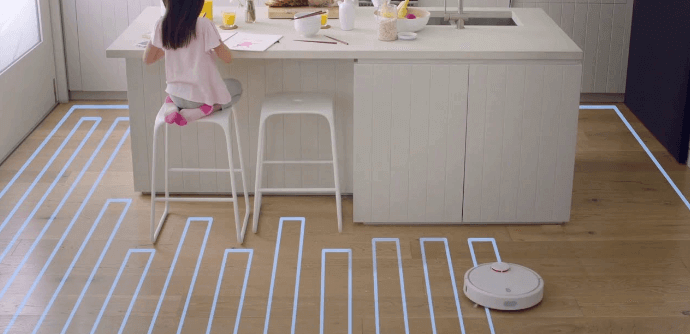
How Xiaomi Works
The Xiaomi vacuums using its main and side brushes. Cleaning quality is quite high. The robot does a good job of cleaning floors, but it can leave small debris right next to obstacles and in corners, which is a common problem with all robotic vacuums. We had no particular complaints about the Xiaomi's performance.
Now let's move on to iRobot Roomba 616It has four cleaning modes: perimeter, zigzag, wall-mounted, and perpendicular. The robot vacuum cleaner features a freewheel function, preventing the idle robot from getting tangled in cords and other objects. Furthermore, it boasts a higher-quality brush system: two main brushes and one side brush, which improves debris collection efficiency.
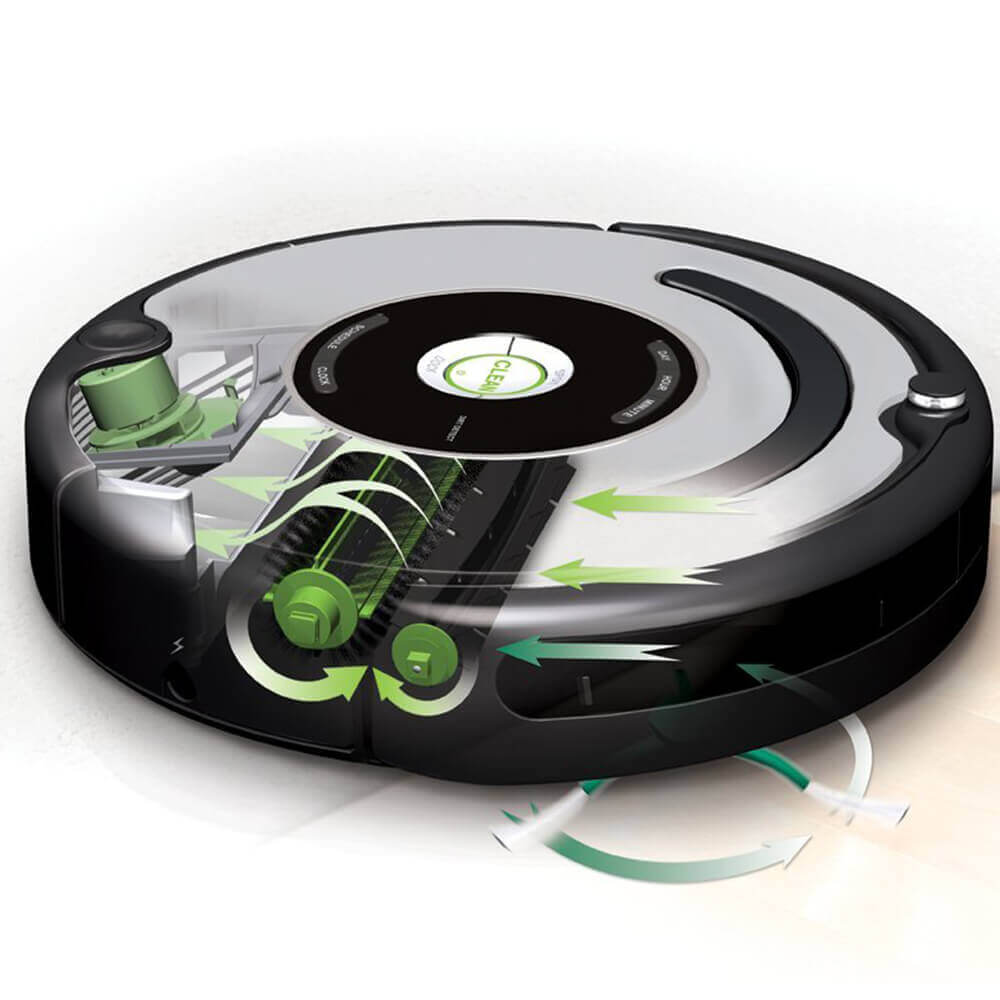
Floor cleaning technology
The Roomba 616's navigation is slightly inferior to the Xiaomi's, as the American robot vacuum may pass over the same spot several times and sometimes takes a long time to find its base. Purchasing a separate remote control certainly simplifies operation. With the standard version, you have to manually start the vacuum, which is not particularly convenient.
So what to choose?
In summary, I'd like to note that the compared robot vacuum cleaners are roughly on par. However, the Xiaomi Mi Robot Vacuum Cleaner has better specifications, is more user-friendly, and delivers cleaning performance comparable to the iRobot. It's also $30 cheaper, a small plus. In terms of design, our subjective opinion is that the Xiaomi looks more modern and less overused. However, iRobot enthusiasts will appreciate its classic black and gray design.
The only significant reason we don't recommend choosing a Chinese robot vacuum is the poor quality of service. While this isn't yet available on the market, the same can't be said for similar products. iRobot service centers are available not only in Moscow but also in other regions. Therefore, if the robot breaks down, warranty coverage will be less of a hassle.
Hello! Is it worth buying the Xiaomi RoboRock S5 Max robot vacuum cleaner with wet cleaning? It seems to have better parameters? Thanks!
Hello! Yes, it's better, and it makes sense :)
I own both an iRobot and a Xiaomi. One BIG caveat: the iRobot's specs suggest a shorter runtime and cover a smaller area (how can I limit it? Teach me! )))), but it moves more than 1.5 times faster and thinks much faster—1.5 times, maybe even twice as fast. Conclusion: despite its worse "paper" specs, the iRobot cleans the same amount of space in less time!